Table of Contents
ToggleA cluttered bathroom sink steals both space and peace of mind. Whether you’re working with a compact apartment bathroom or a sprawling master bath, the area around your sink becomes ground zero for everyday essentials, toothbrushes, skincare products, medications, cleaning supplies. Without a solid storage strategy, these items pile up on the counter, making the sink harder to use and the whole space feel chaotic. The good news? Smart bathroom sink storage doesn’t require renovation or expensive cabinetry. With the right approach to organization, you can double your usable space and keep everything within arm’s reach. This guide walks through practical solutions that fit real bathrooms and real budgets.
Key Takeaways
- Assess your actual storage needs by categorizing items into daily essentials, weekly/monthly products, and things to relocate—this prevents over-investing in solutions that don’t fit your household.
- Maximize under-sink cabinet space with pull-out shelves, stackable containers, and moisture absorbers to prevent mildew while working around plumbing fixtures like the P-trap.
- Utilize vertical wall storage with floating shelves, magnetic strips, and adhesive hooks to reclaim counter space without major renovations or expensive cabinetry.
- Install drawer dividers and tiered shelf organizers to transform vanity drawers into organized zones where every item has a designated place.
- Maintain your bathroom sink storage system with monthly 10-minute resets to check expiration dates, replace worn liners, and ensure wall-mounted shelves remain secure.
- Use clear or labeled containers consistently throughout your bathroom sink storage setup so household members can easily find items and return them to their proper locations.
Assess Your Current Storage Needs
Before buying shelves, organizers, or cabinets, spend 15 minutes thinking about what you actually use around your sink daily. Pull out everything: toothbrushes, soap, skincare bottles, medications, cleaning cloths, hair tools. Separate items into categories, daily essentials, weekly or monthly products, and things you can move to other rooms (expired meds belong in a medicine cabinet or disposed of properly, not cluttering your counter).
Measure your sink area carefully. Note the width of your vanity, the depth from sink to wall, and the height from countertop to any backsplash or mirror. Also check what’s already installed: does your sink sit over a cabinet with existing shelves, or is it a pedestal sink with zero under-sink storage? If you have plumbing beneath (P-trap, drain lines), that eats into cabinet space and limits what you can store below.
Be honest about traffic: if you share the bathroom with kids or a partner, everyone’s items end up in this zone. Factor in growth, a teenager’s skincare routine isn’t your routine. Understanding your real needs prevents over-investing in solutions that don’t fit your household.
Under-Sink Cabinet Organization
The space under your sink is prime real estate, but it’s also tricky. You’ll have a P-trap (the curved PVC or metal pipe that holds water and prevents sewer gas) and often hot water lines. Never block or store anything directly against these, they need breathing room for maintenance and leak detection.
Start with a pull-out shelf or sliding drawer organizer. These 18- to 24-inch deep trays slide out to let you see what’s at the back without fishing around. They’re typically plastic or metal and cost $15–$40. Avoid wire shelving directly on cabinet bottoms: they can scratch finishes and don’t contain spills well.
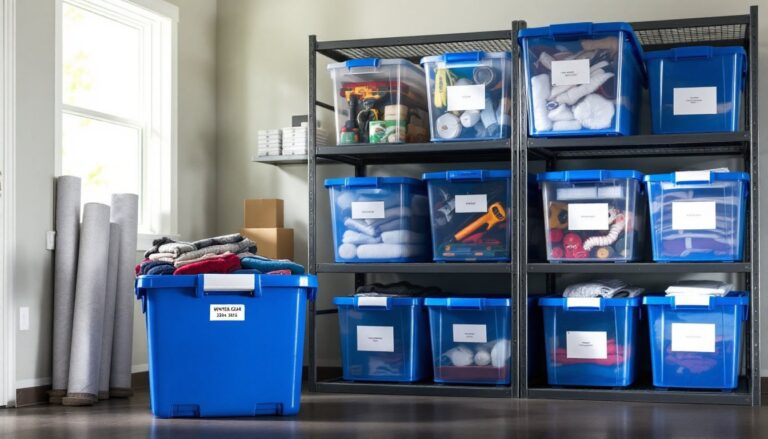
Use stackable containers or under-sink organizer bins (clear plastic works best so you see contents). Group items: cleaning supplies in one bin, toilet paper rolls or paper towels in another, refill bottles grouped together. Label containers if you share the bathroom, it saves the “where’s the extra soap” hunt.
For moisture management, place a small moisture absorber or open box of baking soda in the cabinet to prevent mildew. Wipe down shelves monthly and check for leaks or standing water, which signals a plumbing issue that needs professional attention.
If your under-sink space has cracks or damage, seal them with caulk before organizing, you don’t want moisture wicking into walls. Proper prep here prevents bigger headaches later.
Wall-Mounted and Vertical Storage Solutions
Vertical storage is your secret weapon for small bathrooms. Wall space goes unused while counters overflow. Start by assessing your wall condition: solid drywall on studs, tile, or something else? This determines your mounting method.
Floating shelves mounted to studs with heavy-duty brackets can hold 25–50 pounds depending on bracket quality and stud spacing (studs run 16 inches or 24 inches on center). Install shelves 12–18 inches above the sink or counter for easy reach. Use shelf liners (adhesive-backed felt or rubber) to prevent products from sliding and to protect shelves from moisture and spills.
Magnetic strips mounted on tile or drywall hold metal containers and small metal organizers, great for bobby pins, tweezers, or nail clippers. Adhesive hooks (removable, rated for 5–10 pounds) work on tile and painted surfaces without drilling. Check the product weight limit and replace them if they start to peel: a falling container of skincare products isn’t just messy, it’s a safety hazard.
Wall-mounted wire baskets or corner shelves fit awkward spots and cost $20–$60. Over-the-toilet shelving (if you have a toilet near your sink area) adds three shelves without touching walls. These are stable if anchored to the wall, not just balanced on the toilet.
One mistake homeowners make: overloading shelves. Heavy glass bottles or lots of stacked products will sag unsupported shelves or pull fasteners loose. Distribute weight evenly and never exceed the bracket’s rated load.
Drawer and Vanity Dividers
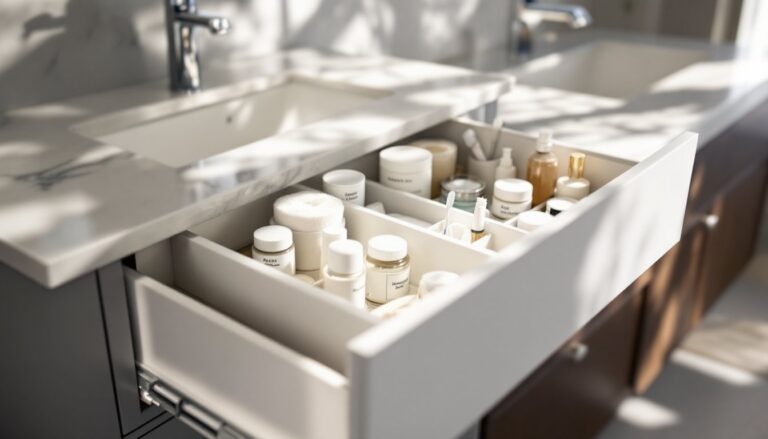
If you have a vanity with drawers, dividers transform them from junk drawers into organized zones. Adjustable drawer dividers cost $8–$20 and let you create compartments that fit your specific items, narrow slots for brushes, wider sections for bottles.
Tiered shelf organizers stack neatly inside drawers, creating two levels of storage from one drawer. This works well for skincare bottles, medication bottles, or hair products. Measure your drawer depth first: you need at least 6–8 inches of depth for tiered storage to be useful.
Drawer liners (non-slip rubber or felt) protect cabinet finish and prevent small items from sliding around when you open and close drawers. Replace them every 1–2 years or when they look worn: wet or deteriorating liners trap moisture under stored items.
For deep drawers, a pull-out drawer organizer or sliding shelf insert works the same way as under-sink pull-outs, you see everything without digging. These are particularly useful if your vanity has a single deep drawer instead of multiple shallow ones.
Label divider sections if you live with others. A simple label maker or painter’s tape with a marker lets everyone know where items belong, and cleanup becomes faster. This simple step cuts down on “where’s the hair gel” conflicts.
Over-the-Sink and Mirror Storage Ideas
Space directly above your sink or mirror often goes wasted. Before installing anything here, make sure you won’t block light, spray water onto electronics, or create a bump-your-head hazard when leaning over the sink.
Over-the-mirror cabinets add storage without eating floor or wall space elsewhere. These are typically recessed or surface-mounted and cost $50–$200 depending on size and finish. Make sure your mirror is securely fastened to studs if you’re mounting a cabinet above it: a drywall anchor rated for 50+ pounds works for lighter cabinets, but for anything heavier, hit studs or call a handyperson.
Floating shelves mounted 6–12 inches above the sink hold everyday items like toothbrush holders, hand soap dispensers, or small decorative containers. Keep heavier items away from the sink edge, a dropped glass jar of bath salts is a cleanup nightmare and a safety risk.
Adhesive shelf organizers or wire racks fit on the wall directly behind the sink or in corners above the counter. These let you store items vertically without permanent installation. Check that adhesive is rated for bathroom moisture: some fail over time in humid conditions.
Clear acrylic organizers or tiered stands sit on the counter itself but take up less footprint than individual bottles sprawled out. A 2- or 3-tier acrylic stand ($15–$35) holds 8–15 bottles in a compact footprint and looks intentional rather than cluttered. These work well for skincare routines where you have multiple bottles you use daily.
Maintenance Tips for Long-Term Organization
Organization only sticks if you maintain it. Set a monthly 10-minute reset: pull everything out, wipe shelves or drawer liners, check expiration dates on medications and skincare, and put things back in their zones. Expired products take up valuable real estate and can degrade over time, potentially becoming safety hazards.
Check for moisture damage quarterly. Bathroom humidity is high, especially if you run the exhaust fan for only a few minutes (it should run 20–30 minutes after a shower). Moisture can warp wooden shelves, promote mold on liners, and damage product packaging. If you notice mildew spots on shelf liners or cabinet corners, replace the liner and increase ventilation.
Secure all wall-mounted storage annually. Vibration from plumbing, fans, or just heavy use can loosen fasteners. If you notice shelves that tilt or brackets that bend, tighten or replace them immediately, a falling shelf is a safety hazard and a waste of organized space.
Use clear or labeled containers consistently. If you swap to opaque containers, label them clearly. When housemates can’t find the item they need, they’ll bypass your system and clutter the counter again, undoing all your work. Transparency (literal and figurative) keeps everyone accountable. When people can see what’s stored and where, they’re more likely to put things back where they belong.
Conclusion
Bathroom sink storage isn’t one-size-fits-all, and it doesn’t require a designer or a renovation budget. By assessing your actual needs, using vertical space, adding dividers and organizers, and maintaining your system monthly, you’ll transform a cluttered counter into a functional, organized zone. Start with one area, under the sink or a single shelf, and expand from there. Small wins build momentum, and a clutter-free bathroom makes every morning routine feel simpler and calmer. Storage solutions from sites like Real Simple and Remodelista offer both inspiration and practical product recommendations if you want to see how others approach similar spaces. The key is choosing solutions that fit your space, your stuff, and your lifestyle, then sticking with them.