Table of Contents
ToggleBathroom clutter happens fast. Bottles pile up, tubes explode, and suddenly you’re hunting for toothpaste in a tangle of hair clips and cotton rounds. Bathroom storage drawers transform that chaos into order, but finding the right solution requires understanding what actually works for your space. This guide covers the types of storage drawers available, how to pick the right fit for your bathroom layout, installation fundamentals, and organization strategies that stick. Whether you’re retrofitting an existing vanity or building from scratch, these insights will help you reclaim your bathroom counter.
Key Takeaways
- Bathroom storage drawers reduce clutter, protect products from moisture and mildew, and increase home value by signaling a well-maintained space to potential buyers.
- Under-sink drawer organizers ($40–$150) and wall-mounted units ($80–$300) are the two primary types of storage drawers; choose based on available space, moisture exposure, and how frequently items are accessed.
- Measure twice before selecting storage drawers, prioritize moisture-resistant materials like solid wood or plastic-laminate finishes, and match drawer style to your existing bathroom fixtures for design cohesion.
- Wall-mounted bathroom storage drawers require locating wall studs with a stud finder and using 2.5-inch lag bolts for secure fastening; toggle bolts can substitute for drywall-only mounting but limit weight to 25–30 pounds.
- Maintain storage drawer performance by segmenting compartments with dividers, rotating stock every 6 months to remove expired items, and wiping down interiors quarterly to prevent mildew and humidity buildup.
- Keep bathroom storage drawers operating smoothly by checking ball-bearing glides monthly, replacing damaged guides ($15–$30), and ensuring the exhaust fan runs 20 minutes after showers to reduce moisture.
Why Bathroom Storage Drawers Matter for Your Home
A cluttered bathroom isn’t just an eyesore, it wastes time and money. You buy duplicates because you forgot what you already own. Your morning routine gets slower. Moisture and heat degrade products faster when they’re stacked haphazardly on open shelves.
Storage drawers solve these problems. They hide visual clutter, which makes even a small bathroom feel larger and more organized. Drawers also protect products from humidity better than open shelving: moisture and mildew have fewer surfaces to settle on. For families sharing one bathroom, drawers keep each person’s items separated and accessible without constant rearranging.
Beyond function, organized storage increases home value. Potential buyers notice bathroom organization during showings. A well-designed vanity with integrated or aftermarket drawers signals that the home is cared for. It’s a small detail that pays dividends.
Types of Bathroom Storage Drawers to Consider
Under-Sink Drawer Organizers
The space beneath your bathroom sink is prime real estate that most people waste. Sink base cabinets typically have a hollow interior, no shelves, just a P-trap (the U-shaped pipe) taking up a small corner. Under-sink drawer organizers slide into this gap and create instant storage.
These are usually pull-out drawer units made from plastic or wood with compartments for cleaning supplies, extra toiletries, and linens. They slide smoothly on ball-bearing glides (metal tracks that support weight evenly) and pull completely free, so you can access items at the back without contorting your arm. Some designs include removable dividers, so you customize compartment sizes.
Pre-made under-sink organizers cost $40–$150 depending on material and size. Installation is straightforward: measure the interior depth and width, confirm the P-trap clearance, and slide the unit in. No tools required, though a level helps ensure smooth operation.
Wall-Mounted and Floating Drawer Units
If your existing vanity doesn’t have drawer space, wall-mounted units mount directly to drywall or tile above the toilet, beside the mirror, or anywhere you have wall space. These floating drawer cabinets hang from heavy-duty wall anchors or studs (the vertical framing members inside your walls, typically spaced 16 inches apart center-to-center).
Floating units range from single-drawer organizers to multi-drawer cabinets. Materials include painted wood, stainless steel, or melamine (a durable plastic-like surface). They’re visually cleaner than freestanding shelves and easier to clean around. Finding and fastening to wall studs ensures the unit won’t sag or pull away, critical when holding 30–50 pounds of products and toiletries.
Wall-mounted drawers cost $80–$300 depending on size and finish. Installation requires locating studs with a stud finder, drilling pilot holes, and using lag bolts or heavy-duty brackets. If you hit a stud, mounting is solid: if you only hit drywall, use toggle bolts or heavy-duty anchors, though weight capacity drops significantly.
How to Choose the Right Storage Drawer for Your Bathroom
Start by measuring. Jot down the width, depth, and height of available spaces, under the sink, wall space, or corner gaps. Measure twice: miscalculations lead to returns and wasted time. Also note the style of your existing fixtures. A sleek modern vanity clashes with ornate vintage drawers: aim for cohesion.
Consider moisture exposure. Bathrooms are humid: wood drawers in particle board or plywood warp if water seeps in. Solid wood, marine-grade plywood, or plastic-laminate finishes handle moisture better. Avoid cheap particleboard for under-sink storage where pipe leaks can occur. Stainless steel or sealed wood work in splash zones.
Think about access frequency. Items you grab daily (toothbrush, deodorant) belong in top drawers at waist height. Heavy items like extra towel rolls go lower. Rarely used backups (hair tools, nail kits) can go higher or deeper where reaching is less convenient.
Budget matters, too. A $50 plastic organizer solves immediate clutter. A $300 custom floating cabinet is an investment that raises bathroom aesthetics and resale appeal. Research reviews on storage furniture sites like Houzz or Remodelista to see real photos and durability feedback from homeowners.
Installation Tips and Best Practices
For under-sink organizers: Empty the cabinet first. Remove old trash bags and cleaning supplies. Vacuum out dust and debris. Measure the clear interior space, accounting for the P-trap, don’t forget the vertical space it occupies. Slide the drawer unit in and test the pull action: it should glide smoothly without binding. If the floor is uneven, shim the front edge with plastic shims until the drawer operates freely. Avoid overpacking: a stuffed drawer gets stuck and wears out glides faster.
For wall-mounted units: This requires a bit more precision. Use a stud finder to locate vertical framing studs behind the wall. Mark stud locations with a pencil. Wall studs are your anchor points for weight-bearing. If your drawer unit spans multiple studs, locate at least two. Drill pilot holes (small-diameter holes that prevent wood from splitting and guide screws straight) at marked stud locations. Use 2.5-inch lag bolts or carriage bolts rated for drywall and stud fastening. Pre-drill with a smaller bit to avoid cracking the cabinet sides.
If you hit only drywall (no stud), toggle bolts or heavy-duty expanding anchors work, but limit weight to 25–30 pounds per anchor. Confirm your hardware before installation. Use a level tool to check that the cabinet is plumb (perfectly vertical) before fully tightening. Uneven mounting causes drawer bind and sag.
Wear safety glasses when drilling overhead. Dust and debris fall downward. If mounting near tile, use a carbide drill bit designed for ceramic: standard bits slip on glaze. Wear work gloves when handling sharp cabinet edges.
Organizing and Maintaining Your Bathroom Storage Drawers
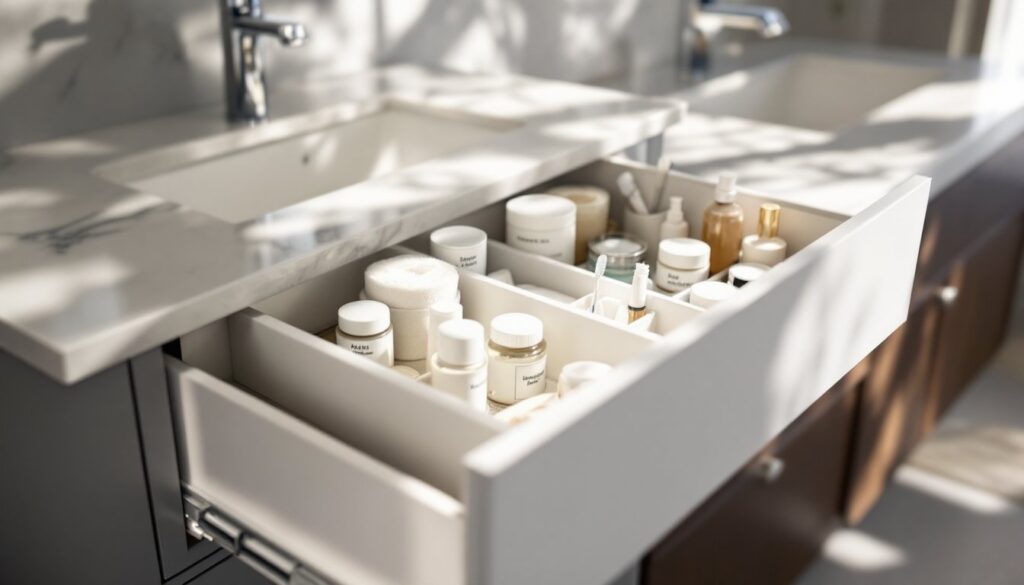
Once installed, use dividers or small bins to segment compartments. Bathroom clutter thrives in unstructured space, a flat drawer becomes a junk pile fast. Assign zones: one section for hair tools, another for skincare, another for medications (keep these away from heat and humidity if possible, toward the back of under-sink drawers). Label dividers with a label maker or waterproof tape so family members know where things belong.
Rotate stock. Check expiration dates every 6 months. Sunscreen loses potency, foundation separates, and supplements degrade. Expired products take up space and cost money to replace. Donate or recycle unopened, unexpired items you don’t use.
Keep drawers dry. Wipe down the interior quarterly with a dry cloth. If you notice moisture or mildew, increase bathroom ventilation by running the exhaust fan during and 20 minutes after showers. Store silica gel packets or small bowls of baking soda in drawers to absorb excess humidity. Check under-sink areas after plumbing work or if you notice water pooling.
For wood drawers, dust with a microfiber cloth monthly. Avoid spraying cleaners directly on wood: spray the cloth instead. Wipe glides with a dry cloth to prevent dust buildup that can jam smooth operation. If a drawer starts sticking, check for bent guides or debris. Straighten guides gently with a rubber mallet (a hammer wrapped in cloth), or replace them if damaged. Most hardware stores sell replacement ball-bearing glides for $15–$30.
On an organizational note, sites like Martha Stewart offer ideas for small-space organization that translate well to bathroom drawers, think vertical stacking, vertical dividers for bottles, and clear containers so you see what’s inside without opening each one.