Table of Contents
ToggleEvery bedroom has the same problem: stuff. Whether you’re storing off-season clothes, extra bedding, or items you can’t quite part with, under bed storage boxes have become the go-to solution for homeowners and renters alike. These unassuming containers unlock square footage you’ve been overlooking your entire life, the space between your mattress and the floor. In 2026, storage box designs have evolved far beyond flimsy plastic bins. Today’s options range from rolling containers with sturdy wheels to upholstered wooden boxes that look intentional rather than makeshift. This guide walks you through everything you need to know about selecting, installing, and using under bed storage to transform a cramped bedroom into one that actually breathes.
Key Takeaways
- Under bed storage boxes unlock 40–50 cubic feet of usable space without requiring renovation or additional room costs, making them essential for apartments and smaller homes.
- Choose plastic rolling containers ($40–$100) for frequent access and lighter items, or invest in wooden and upholstered under bed storage ($100–$500+) for heavier loads and better bedroom aesthetics.
- Always measure your clearance height at multiple points, assess weight capacity based on contents, and maintain 1–2 inches of breathing room to ensure smooth sliding and air circulation.
- Organize under bed storage strategically using dividers, labels, and seasonal rotation of items like off-season clothes to maximize functionality and prevent duplicate purchases.
- Protect contents with moisture control measures like silica gel packs in humid climates, and use breathable fabric boxes instead of vacuum-seal bags for long-term storage.
- Keep a quick inventory list and install battery-operated LED strips under the bed for visibility, transforming a cramped bedroom into one that feels spacious and organized.
Why Under Bed Storage Is a Game-Changer for Your Home
Under bed storage addresses a fundamental bedroom challenge: vertical space is expensive, but horizontal space under the bed is free. A queen-size bed frame typically leaves 12–16 inches of clearance, enough for purpose-built storage boxes. That translates to roughly 40–50 cubic feet of usable volume, the equivalent of three or four standard dresser drawers.
The real benefit isn’t just capacity. It’s accessibility without visual clutter. When you shove items under the bed, they’re out of sight but still retrievable. Compare this to attic storage (hard to reach, temperature swings) or closet shelves (visible, compete for prime real estate). Under bed storage fills the gap perfectly. For apartments and smaller homes, this becomes essential rather than optional. You’re essentially adding a whole extra storage zone without renovating, building shelves, or renting a unit across town.
Beyond pragmatism, well-chosen under bed storage maintains bedroom aesthetics. A sleek wooden box on a frame looks intentional. Rolling plastic containers feel temporary but functional. Either beats piles of stuff visible from the doorway. The psychological win of a tidy bedroom, even if everything’s still in the house, matters more than most people admit.
Types of Under Bed Storage Boxes to Match Your Needs
Plastic Storage Bins and Rolling Containers
Clear plastic containers are the workhorse option. They’re affordable ($15–$50 each), lightweight, stack easily, and you can see contents without opening them. The trade-off: they can crack under weight, don’t age well (UV degrades plastic), and feel temporary. But for storing seasonal clothes, holiday decorations, or spare linens, they get the job done.
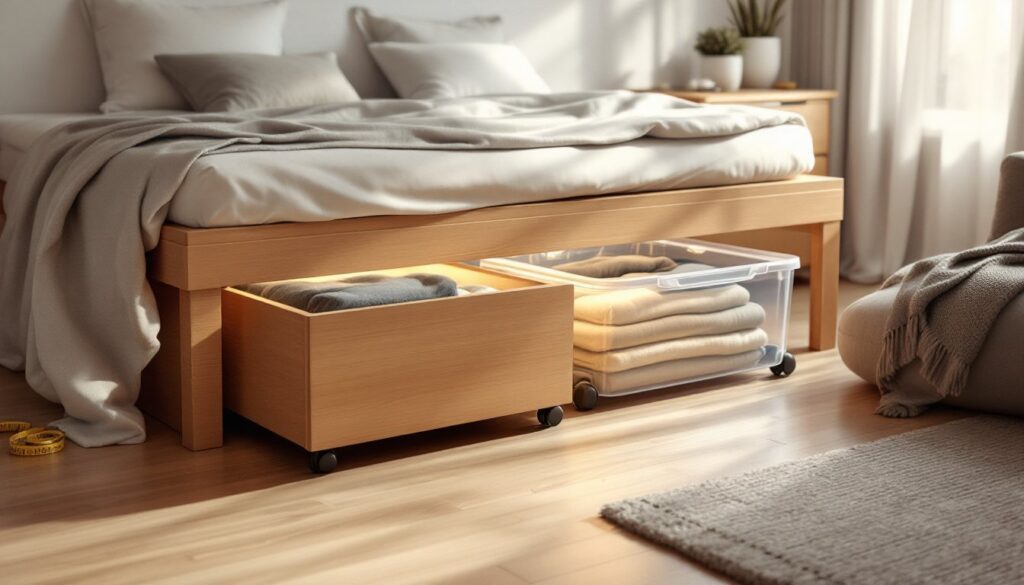
Rolling containers solve a real friction point, getting things in and out. Heavy boxes require sliding and straining: rolling boxes with ball-bearing wheels let you extract a box with one hand. They typically cost $40–$100 per unit but save your back over time. Ensure wheels lock firmly: rolling storage should stay put once positioned.
Plastic works best for dry goods. Moisture can collect inside, especially in basements or damp climates, so avoid storing anything vulnerable to mold (leather, unprotected photos, certain fabrics). Ventilation holes on the bin help but aren’t foolproof.
Wooden and Upholstered Options
Wooden under bed storage boxes feel more like furniture. They integrate visually if the bed hangs low enough to hide them, or they double as a statement piece if slightly visible. Hardwood or plywood construction runs $100–$300+ per box. They’re sturdier than plastic, don’t degrade from light, and can support heavier loads.
Upholstered boxes add a design layer, fabric, leather, or linen covering makes them look intentional. Some even serve as benches or ottoman-style seating. These premium options ($200–$500+) work best in bedrooms where storage is part of the aesthetic rather than purely utilitarian.
Wood requires more maintenance. It can warp in humidity swings, and the finish may scratch or fade. If you’re handy, building a custom under bed box from 3/4-inch plywood takes a weekend and costs materials only. Basic plans online show how to assemble a simple frame with casters and a hinged or removable lid. For inspiration on style-forward solutions, designs featured on home organizing platforms show everything from sleek built-ins to bohemian fabric-wrapped boxes.
How to Choose the Right Under Bed Storage Box for Your Space
Step 1: Measure Your Clearance. Get a tape measure and check the space between the bottom of your mattress and the floor. Most beds sit 10–16 inches high: adjustable bed frames vary. Jot down both the height and the length/width available. Pro tip: measure at multiple points, some floors aren’t perfectly level, and bed frames settle over time. You want at least 1–2 inches of breathing room so the box slides smoothly and air circulates.
Step 2: Assess Weight and Load. What’s going in the box? Light items (seasonal clothes, stuffed animals, paper) tolerate flimsy plastic. Heavy loads (books, tools, tile samples) demand solid wood or reinforced plastic with a sturdy frame. Plastic wheels start failing around 50 pounds per container: solid casters handle 150+ pounds. Check the manufacturer’s weight rating before buying.
Step 3: Consider Access Frequency. If you retrieve items weekly, rolling containers or boxes with lids are essential. If it’s “store it and forget it” (holiday decorations), static plastic bins suffice. Wooden boxes with hinged lids offer a middle ground, slower to open but more stable.
Step 4: Think About Your Room’s Look. A minimalist bedroom needs low-profile, neutral boxes. A farmhouse room tolerates rustic wood. An apartment in a high-rise might embrace visible plastic as honest and practical. There’s no wrong choice, but honesty about your style saves buyer’s remorse. Resources like Apartment Therapy showcase real bedrooms with working storage that fits various aesthetics.
Step 5: Plan for Moisture Control. In humid climates, plastic bins with air gaps are preferable to sealed wood. In dry climates, either works fine. If you’re in a basement bedroom or a region with seasonal humidity swings, add moisture absorbers (silica gel packs, activated charcoal) to any box holding fabrics or paper.
Once you’ve chosen the type, buying is straightforward. Check Amazon, Target, Wayfair, or local furniture stores. Read reviews for wheel durability and plastic thickness: cheap bins crack fast under real use.
Practical Tips for Maximizing Under Bed Storage
Organize with Dividers and Labels. Don’t just cram stuff into a box. Use smaller organizers, ziplock bags, or dividers to separate categories. Label everything, either with a label maker or a marker. When you need a specific sweater in February, you’ll thank yourself.
Rotate Seasonally. The best under bed storage holds off-season items. Summer clothes go under in winter: winter coats migrate under in summer. This clears closet space year-round and keeps things fresh. It’s a simple habit with outsized benefits.
Keep an Inventory. Maintain a quick list (even a phone note) of what’s stored where. “Box A: winter sweaters, scarves, gloves. Box B: spare pillows, quilts.” You’ll use the storage more intentionally and avoid buying duplicates.
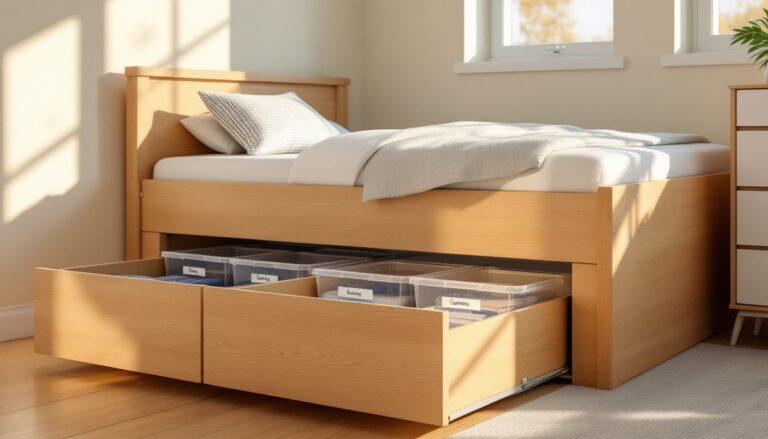
Check Clearance Under Drawers. Many bed frames have integrated drawers or storage built-in. Make sure an under bed box doesn’t interfere with those. Slide it in partially if needed, you don’t have to hide it completely.
Use Vacuum-Seal Bags Strategically. Vacuum bags compress clothes to 1/3 their original volume, but they risk damage if punctured and aren’t great long-term (bags degrade, fabric weakens). Use them for temporary overflow, not permanent storage. Breathable fabric boxes work better for anything staying more than a season or two.
Protect Wooden Boxes from Spills. If a box will sit on hardwood, carpet, or laminate floors that absorb moisture, place a thin plastic mat or felt pads underneath. This prevents wood staining or warping if humidity or a spill occurs. For DIY builds, a coat of polyurethane sealer adds durability.
Install a Light Strip for Visibility. For boxes without glass or clear plastic panels, a battery-operated LED strip on the underside of the bed makes it easier to see inside without pulling the box out. It’s a small upgrade that saves frustration.
For custom builds and DIY modifications, design ideas shared on IKEA-focused DIY sites show how standard shelving units and frames can be adapted for under bed use with wheels or adjustable feet, a practical middle ground between off-the-shelf bins and full custom carpentry.
Conclusion
Under bed storage boxes are no longer an afterthought, they’re a core part of smart bedroom design. Whether you choose durable plastic rolling containers, natural wood boxes, or something in between, the key is honest measurement, realistic weight assessment, and intentional organization. Pick boxes that match your space, your access habits, and your room’s aesthetic. Keep items dry, rotated, and labeled. Done right, this single project reclaims dozens of cubic feet and transforms a stuffed bedroom into one that feels spacious and functional. Start measuring today.