Table of Contents
ToggleIf you’re running out of closet space or tired of clutter creeping across your bedroom floor, under bed storage bins are a practical solution that doesn’t require renovations or professional installation. These containers slide neatly into the gap between your bed frame and floor, turning wasted space into functional storage for seasonal clothes, bedding, shoes, and more. Unlike bulky dressers or armoires, under bed plastic storage bins stay hidden behind your bed skirt, keeping your bedroom looking clean while giving you access to the items you actually use. Whether you’re furnishing a small apartment or just maximizing storage in a master bedroom, choosing the right bins, and organizing them properly, makes a real difference in how livable your space feels.
Key Takeaways
- Under bed plastic storage bins transform wasted space into functional storage for seasonal clothing, extra bedding, and holiday decorations without requiring renovations or professional installation.
- Measure your bed’s clearance height, length, and width before purchasing—shallow bins (6–8 inches) fit most beds and work for flat items, while deep bins (12–15 inches) maximize volume for bulkier seasonal gear.
- Plastic bins outperform fabric or wood alternatives because they’re moisture-resistant, easy to clean, stackable, and don’t absorb odors—making them ideal for humid climates and long-term storage.
- Label all bins clearly with contents and season, organize items by category rather than randomly filling containers, and use dividers inside larger bins to prevent rummaging.
- Store only off-season or occasional-use items under your bed; keep everyday clothing in dressers or closets, and avoid moisture-sensitive items, food, heavy goods, and anything you access weekly.
- Protect stored fabrics and linens from mildew by adding silica gel packets, cedar blocks, or lavender sachets inside sealed bins, and position heavier bins toward the wall for even weight distribution.
Why Under Bed Storage Bins Are Essential for Modern Homes
Modern bedrooms are shrinking, and storage needs aren’t. Between off-season wardrobes, extra bedding, and items you don’t reach often, clutter accumulates fast. Under bed plastic storage bins solve this without eating up wall or floor space where your bed, nightstand, or desk live.
They’re also honest about what they are: temporary or long-term storage for things you don’t access daily. Your everyday clothes belong in a dresser or closet for quick mornings. But off-season jackets, winter boots, extra pillows, or holiday decorations? Those bins keep them accessible but out of sight, which mental real estate matters in a bedroom.
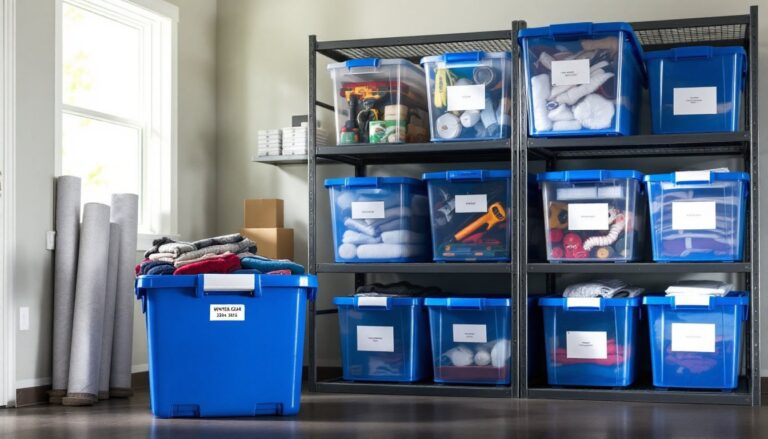
Plastic bins offer specific advantages over fabric or wood alternatives. They’re moisture-resistant (important in basements or humid climates), easy to wipe clean, stackable if you need to maximize vertical space in a closet or garage, and they don’t absorb odors. A typical queen-size bed leaves roughly 24 to 36 inches of vertical clearance, enough room for one or two bins depending on their depth.
Beyond the bedroom, under-furniture storage extends throughout your home. Small apartments and compact homes benefit most, but even larger houses with limited linen closet space appreciate the flexibility. You’re not reinventing storage: you’re using dead space that already exists.
Types of Under Bed Plastic Storage Bins to Consider
Shallow vs. Deep Bins: Choosing the Right Depth
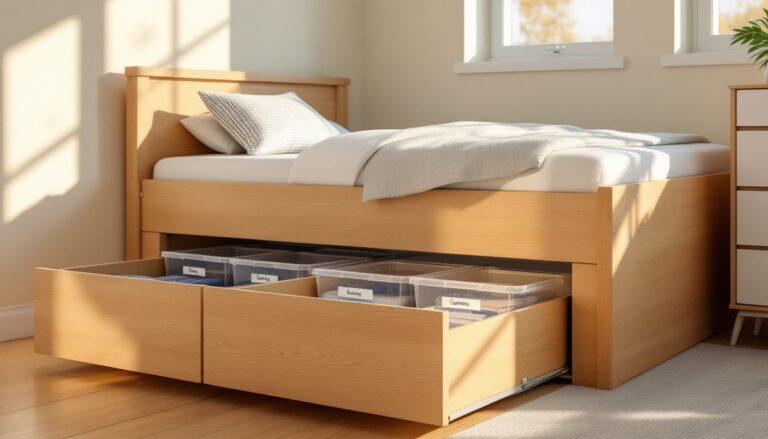
Bed clearance determines your bin depth. Most beds sit 12 to 18 inches off the floor, but platform beds, beds with storage drawers, or low-profile frames sit lower. Measure from the floor to the underside of your bed frame before shopping, this single number saves you from buying bins that don’t fit.
Shallow bins (6 to 8 inches tall) fit under nearly any bed and work well for flat items: extra sheets, tablecloths, wrapping paper, or sweaters folded flat. They’re easier to slide in and out since they’re lighter and take up less depth.
Deep bins (12 to 15 inches) maximize volume and fit under beds with more clearance. These work for bulkier items like winter coats, comforters, or stacks of storage boxes. They’re efficient per square foot of bed space, but they’re heavier when full and harder to extract from tight quarters.
A practical strategy: pair shallow bins for lightweight linens with one or two deep bins for seasonal gear. Label every bin clearly, writing directly on the plastic with a permanent marker, or using label makers, because you can’t peek inside opaque containers.
Wheeled vs. Stationary Options
Wheeled bins have small casters or wheels on the bottom, letting you roll them out without bending or tugging. If your bed frame sits low or your flooring is smooth (tile, laminate, hardwood), wheels are genuinely convenient. Downside: wheels add cost, they may roll if someone bumps the bed, and carpet friction makes them harder to move.
Stationary bins with a flat bottom cost less and sit stable. They glide on smooth flooring but require more elbow grease on carpet. For most DIY storage setups, stationary bins under a bed are fine, you’re not moving them weekly. Save wheeled bins for under-sink storage in kitchens or bathrooms where you access bins more regularly.
Consider your flooring type. Hardwood or tile? Wheels help. Plush carpet? Stationary bins are simpler and stay put when the house settles or kids jump on the bed.
How to Measure Your Space and Select the Perfect Fit
Measuring is non-negotiable. Most under bed storage mistakes stem from guessing dimensions or buying bins without checking your specific bed frame.
Step 1: Measure bed clearance. Use a tape measure from the floor straight up to the underside of your bed frame. Note this height, it’s your maximum bin depth. If your bed is 14 inches high, a 15-inch bin won’t fit.
Step 2: Measure the length and width under your bed. Measure from one foot to the other along the length, and from side rail to side rail (or storage rail to storage rail if your bed has them). Subtract 1 to 2 inches from each dimension to allow wiggle room when inserting or removing bins. A queen bed is nominally 60 by 80 inches, but real-world space underneath depends on your bed’s design.
Step 3: Account for bed skirts or dust ruffles. If you use a bed skirt, confirm it won’t block access to bins. Some bed skirts sit on the box spring and hang down: others attach to the frame. Measure around them.
Step 4: Check plastic quality and wall thickness. Cheaper bins (often under $10) use thinner plastic that cracks or warps. Mid-range bins ($15 to $30 each) offer durability and stackability if you later repurpose them in closets or garages. Buy one and test it before buying multiples.
Step 5: Verify lid fit and seal. Some lids are press-on: others snap or latch. Press-on lids are easier to remove but less dust-proof. Latching lids cost more but seal tighter, which matters if you’re storing fabrics or linens long-term. Test the lid action before committing to a brand.
What to Store in Under Bed Bins for Maximum Space Efficiency
Smart storage means matching items to container type. Not everything belongs under your bed, and poor choices lead to wasted space and accessibility headaches.
Best items for under bed storage:
• Seasonal clothing: Winter coats, sweaters, and heavy pants during summer: light dresses and shorts during winter.
• Extra bedding: Spare sheets, pillowcases, duvet covers, and blankets (especially true for guest rooms).
• Shoes: Flat storage works well: use dividers or shoe organizers inside bins to maximize pairs.
• Textiles: Table linens, beach towels, or fabric remnants you’re saving.
• Holiday decorations: Lights, ornaments, wreaths, and inflatables are bulky and rarely used, making them ideal candidates.
• Document storage: Tax returns, medical records, or warranty paperwork (though fire-rated safes are better for truly critical documents).
• Hobby supplies: Craft materials, sewing notions, or knitting yarn grouped by project.
Avoid storing:
• Moisture-sensitive items: Vintage books, important photos, or electronics (moisture under beds increases mildew risk in humid climates).
• Food or anything that attracts pests: Breadcrumbs travel far, and rodents find hidden food sources.
• Heavy items: Textbooks, dumbbells, or tool boxes strain your back when retrieving them and weigh down the bed frame.
• Items you need weekly: Under bed bins are for occasional access, not daily rotation.
If you’re storing items for longer than a season or two, consider small space living solutions that balance accessibility with organization. Understand the difference: under bed storage is for off-season or occasional use. If you reach for something every week, it belongs in your closet or a dresser.
Organization Tips to Keep Your Under Bed Storage Neat and Accessible
Shoving bins under the bed and forgetting them defeats the purpose. A few habits keep your storage system working.
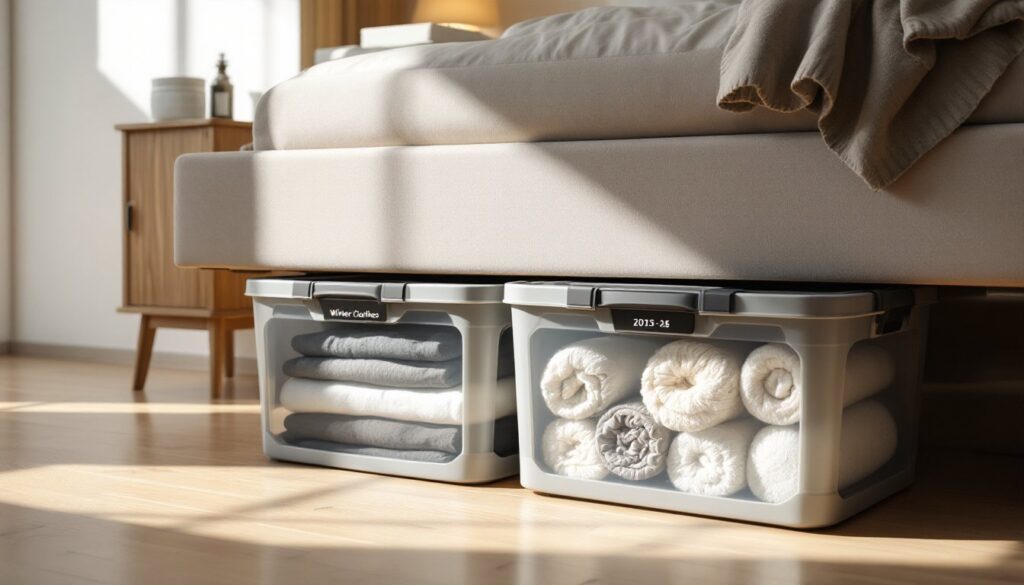
Label everything clearly. Write or print labels describing the bin’s contents and the season or year stored. “Winter Coats 2025-26” beats “Clothes” because you’ll know at a glance whether to retrieve it. Use waterproof labels if moisture is a concern.
Organize by category, not by container. Don’t put random items in bins just because they fit. Keep all winter clothing together, all holiday décor together, and all linens together. This saves time when you need one item, you know which bin holds it.
Use dividers or smaller containers inside larger bins. A large bin holding shoes, belts, and scarves becomes a jumble. Add a plastic divider or use smaller boxes to separate categories, so you don’t have to rummage.
Rotate seasonally. When fall arrives, pull out the winter clothes bin and return the summer clothes bin. Do this with intention, don’t just accumulate bins. This cycle forces you to reassess what you actually wear.
Keep an inventory list. Write down what’s under each bed, especially if you have multiple beds (guest room, kids’ rooms) or bins in closets elsewhere. A simple spreadsheet or note in your phone prevents buying duplicates or forgetting stored items entirely.
Protect from dust and pests. Sealed lids help, but adding moisture-absorbing packets (silica gel or activated charcoal) inside bins storing fabric protects from mildew. Cedar blocks or lavender sachets discourage moths if you’re storing wool or natural fibers.
Store heavier bins toward the wall. If you have two bins, place the heavier one (full of winter coats) closer to the wall and lighter bins toward the edge. This distributes weight more evenly under the bed frame and makes lighter bins easier to pull out.
Plastic storage solutions work best when they’re part of a broader bedroom organization system. Pair them with comprehensive home improvement how-tos that address closet organization and bedroom layouts. Real Simple’s tested under-bed storage solutions offer additional product recommendations and comparison details if you want independent reviews beyond our guidance.