Table of Contents
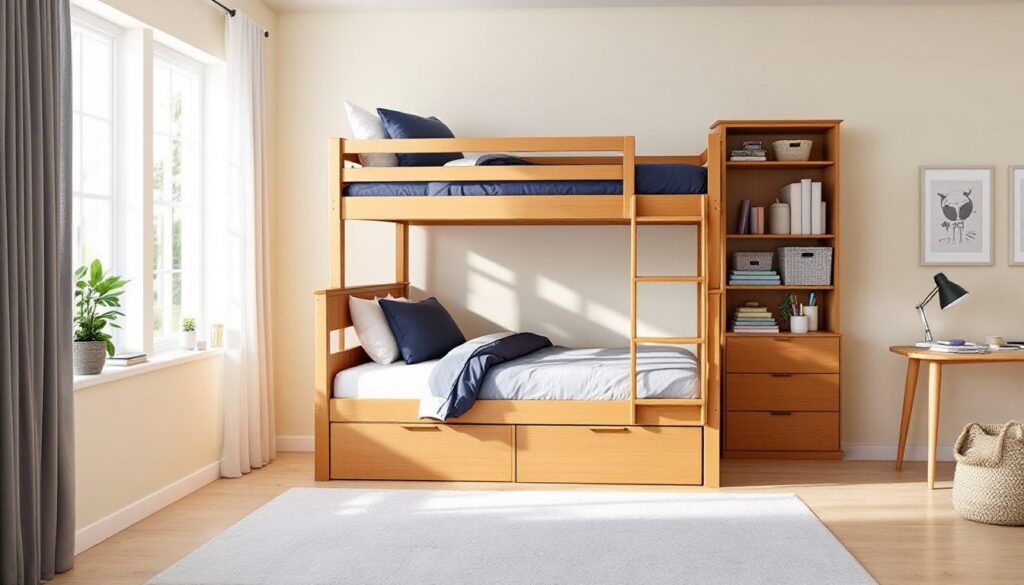
ToggleA twin over full bunk bed with storage solves one of the toughest space challenges homeowners face: fitting multiple sleeping areas into a compact footprint without sacrificing functionality. Whether you’re furnishing a kid’s shared bedroom, a guest room that pulls double duty, or a studio apartment where every square foot counts, this configuration maximizes vertical real estate while tucking away belongings beneath. Built-in drawers, shelving, or cubby storage transforms what could be wasted floor space into a practical organizational system. For DIY enthusiasts, understanding the anatomy of these pieces, and the options available, makes the difference between a crowded bedroom and a thoughtfully designed room that actually works. This guide walks you through what makes a quality twin over full with storage, how to select materials that won’t sag after two years, measuring your space correctly, and getting the assembly right the first time.
Key Takeaways
- A twin over full bunk bed with storage maximizes vertical space and solves multiple sleeping and storage challenges in compact bedrooms, making it ideal for shared rooms, guest spaces, and small homes.
- Solid wood frames with proper weight capacity (at least 250 pounds per bunk), secure safety rails (5+ inches above mattress), and adequate ceiling clearance (30+ inches for top bunk) are essential for safety and durability.
- Storage options—drawers, cubbies, and shelving—each offer different benefits; prioritize your actual needs before purchase, and ensure at least 9-12 inches of floor clearance when drawers are extended.
- Material selection directly impacts longevity: solid hardwood or plywood with hardwood veneer outperforms particleboard, and drawer slides should be ball-bearing (not plastic) with steel hardware for long-term reliability.
- Accurate measurement of ceiling height, wall clearance, floor space, and ceiling obstructions is critical before ordering, as most bunk bed frames stand 80-85 inches tall and require specific room dimensions.
- Assembly requires two people minimum, a power drill, proper tools, and patience; bolting the frame to the wall may be required by local code, and testing ladder stability before use is essential for safety.
Why Twin Over Full Bunk Beds With Storage Are Perfect For Modern Homes
Modern households are shrinking, or at least, they’re moving into tighter spaces. Urban apartments, starter homes, and shared bedrooms create real constraints. A twin over full bunk bed with integrated storage addresses this head-on by stacking sleeping surfaces and converting the footprint below into organization instead of empty air.
The twin-over-full layout specifically works because it gives you flexibility: the full-size bottom bunk can accommodate an adult or two kids, while the twin top suits a single sleeper or older child. This versatility makes the configuration valuable longer as children grow or as household needs shift. Instead of outgrowing the piece in a few years, families often keep these beds through multiple kids or transitions.
Storage-integrated designs eliminate the “I have nowhere to put clothes, toys, or books” problem that plagues small-bedroom living. Built-in drawers slide underneath: shelving holds bins: cubby cubbies organize. You’re not jury-rigging a dresser in the corner, you’ve solved storage as part of the furniture itself. The Metropolitan Home Storage Bed: demonstrates how thoughtful storage design can elevate an entire room’s function.
Essential Features To Look For When Choosing Your Bunk Bed
When evaluating a twin over full with storage, focus on frame construction, weight capacity, safety rails, and how storage actually integrates. A solid wood frame (hardwood or plywood core) will outlast a flimsy particleboard structure: check that support slats or a platform bed base, not just a thin center crossbeam, runs across the width. Weight capacity matters: a quality bed should support at least 250 pounds per bunk, and combined loads matter if two kids pile on the bottom.
Safety rails on the top bunk aren’t negotiable if anyone under 12 will sleep there. The rails should stand at least 5 inches above the mattress and attach securely to the frame. Check clearance too: the gap between mattress and ceiling on the top bunk should be at least 30 inches for comfortable sitting and turning: less than that feels claustrophobic and unsafe.
Look closely at ladder placement and angle. A steep ladder can feel unstable: gentler angles (around 60 degrees) are easier and safer, especially for younger kids. Some models hide a ladder inside a cubby or drawer, which saves floor space but can make access awkward.
Storage Options and Configurations
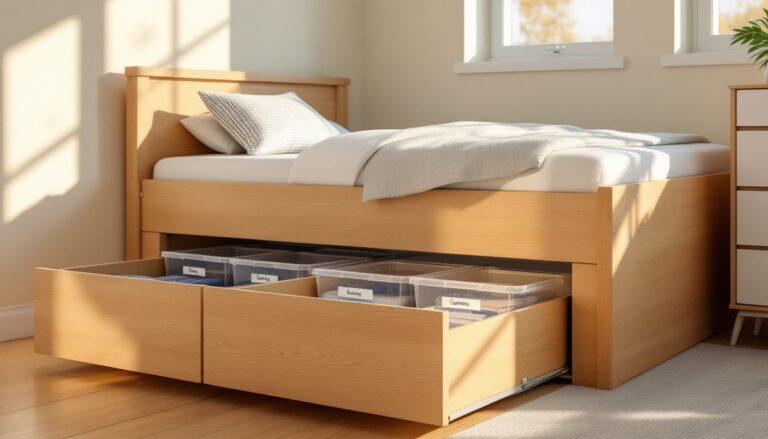
Storage comes in several flavors, each with tradeoffs. Underbed drawers slide smoothly and hold a lot, but they eat clearance between the bottom bunk and floor, aim for at least 9-12 inches when the drawers are open. Open shelving or cubbies make storage visible and accessible: kids see what they have and grab it easily. The downside: open shelves collect dust and require regular tidying. Closed cabinets hide clutter but take longer to access and need hinges that stay aligned over time.
Some beds combine all three: drawers for bulky items (blankets, out-of-season clothes), cubbies for frequently grabbed stuff (shoes, backpacks), and shelves for display or books. Assess your actual storage needs before buying. If you’re drowning in clothes and sports gear, drawers win. If you need easy access to school supplies and shoes, cubbies matter more.
Material Selection and Durability Considerations
Wood type directly affects longevity and cost. Solid hardwood (oak, birch, maple) is durable and can be refinished if scratched: it costs more upfront but lasts decades. Plywood with hardwood veneer offers stability at a mid-range price: the veneer looks like solid wood, and the plywood core resists warping better than particle board. Particle board or MDF is budget-friendly but prone to sagging under load and won’t tolerate moisture well, not ideal for bunk beds that’ll see spills and humidity.
For storage drawers and cabinet boxes, Baltic birch plywood is a solid choice: it’s stiffer than standard plywood and holds up to repeated opening and closing. Avoid beds where the entire box is thin particle board: those drawers fail within a few years.
Finish matters too. Lacquer or poly provides a wipeable, durable surface that handles kid-spills and scuffs better than stain-only wood. Avoid super-glossy finishes on top bunks, they can feel slippery. A satin or matte finish is safer and less prone to showing fingerprints.
Check hardware: drawer slides should be ball-bearing slides (smooth and sturdy) rather than cheap plastic wheels. Hinges and bolts should be steel, not zinc-plated pot metal that strips easily. These small details compound: cheap hardware fails fast and makes reassembly a nightmare. Resources like Fix This Build That offer detailed material comparisons for furniture builders.
Measuring and Planning Your Space
Before ordering, measure your actual room dimensions and the space where the bed will sit. You need ceiling height (account for mattress thickness, typically 8-10 inches for the top bunk), wall clearance on all sides for air circulation and access, and floor space for the footprint.
Standard twin mattresses are 38″ wide × 75″ long: full mattresses are 54″ wide × 75″ long. A twin-over-full frame will be roughly 55″ wide and 80-85″ tall (depending on rail height). Always verify the manufacturer’s exact dimensions and compare them against your space. Measure twice, moving a bed that’s too tall for the ceiling is expensive and frustrating.
Check for obstructions: light fixtures, ceiling fans, wall outlets, or ductwork above the bed area. The top bunk shouldn’t sit directly under a light or ceiling fan, both for safety and usability. If there’s an outlet nearby, plan to route the charger cables: if not, a power strip under the bunk can help without creating a fire hazard.
Floor clearance is also critical. You need at least 2 feet of space in front of the bunk to move around and access drawers. If the room is tight, measure the drawer depth too: a 20-inch deep drawer extending into your walkway changes whether this layout actually works.
Installation Tips and Assembly Guidelines
Assembly is a two-person job minimum, especially for larger frames. Lay out all parts and hardware before starting: missing pieces aren’t obvious until mid-build. Use a power drill with a Phillips bit for screws: a hand screwdriver works but will exhaust you. Have a socket set handy for bolts, and a level to ensure the frame sits square and stable.
Start by assembling the perimeter frame (the four sides) flat on the ground rather than standing it up. Use wood blocks under support points to keep screws and bolts from bottoming out prematurely. Tighten hardware in a cross pattern, left side, right side, left again, to distribute stress evenly. Don’t fully tighten bolts until the entire frame is square: you’ll need small adjustments as you go.
For the ladder, test the angle and grip before letting anyone climb. The rungs or steps should be at least 1.5 inches in diameter (so hands can wrap around) and spaced 10-12 inches apart. If the ladder feels wobbly, add diagonal bracing or check that all connection bolts are snug.
Slat or support systems must sit flat and level: uneven support causes mattress valleys and puts stress on one corner, leading to frame failure. If using a platform bed base (plywood) instead of individual slats, ensure it’s fully supported underneath with no gaps. Resources like The Handyman’s Daughter provide step-by-step furniture assembly tutorials for these scenarios.
Bolt the frame to the wall if local codes require it (many jurisdictions mandate this for children’s furniture to prevent tipping). Use appropriate wall anchors for your wall type, drywall anchors for drywall, lag bolts for studs. Check your local building code: if the manufacturer’s instructions call for wall anchoring, that’s your baseline.
Conclusion
A well-chosen twin over full bunk bed with storage isn’t just furniture, it’s a space solution that grows with your household. Prioritize solid frame construction, realistic weight capacity, practical storage that suits your actual needs, and accurate measuring before purchase. Assembly takes patience and a helper, but getting it right the first time pays off in years of stable, functional use. Start with Instructables or manufacturer guides if you want video walkthroughs, then approach the project methodically. Your future self will appreciate a bedroom that actually fits your life.