Table of Contents
ToggleA cluttered garage is a safety hazard and a productivity killer. When tools scatter across the floor and shelves crumble under the weight of disorganized clutter, even simple projects become frustrating. The good news? Smart garage tool storage doesn’t require expensive renovations or a blank-slate rebuild. Whether you’re working with 400 square feet or a cramped 2-car space, the right storage system keeps everything accessible, protected, and off the work surface. This guide covers practical garage tool storage ideas that maximize vertical space, protect your investments, and make finding the right wrench at 7 a.m. actually possible.
Key Takeaways
- Wall-mounted storage solutions utilizing studs, hooks, and magnetic strips keep frequently used tools accessible while reclaiming valuable floor space in your garage.
- Pegboards and shelving systems allow modular, organized tool storage by category, with a two-tier approach maximizing wall real estate without cluttered appearance.
- Enclosed cabinets and tool chests protect tools from dust, moisture, and theft while reducing visual clutter—use drawer dividers and silica gel desiccant packs to maintain long-term tool condition.
- Mobile workbenches with integrated storage and locking casters bring flexibility to garage projects by keeping most-used tools within arm’s reach and freeing floor space when rolled to a corner.
- Overhead ceiling-mounted racks and suspended shelves utilize underutilized space, though they work best for lightweight or infrequently accessed items rather than heavy power tools.
- Small garage tool storage demands vertical-first prioritization: wall systems, corner shelving, and magnetic strips pack significantly more capacity than floor-based storage while keeping pathways clear.
Wall-Mounted Storage Solutions for Easy Access
Wall-mounted storage is the fastest way to reclaim floor space and keep frequently used tools within arm’s reach. Hooks, clips, and magnetic strips transform bare wall into functional real estate.
Start with a wall stud layout. Studs run vertically every 16 or 24 inches and provide solid anchoring for heavy tools. Locate them with a stud finder or knock test (solid thud = stud: hollow = empty space). Mark their locations lightly with a pencil.
For hand tools, drive heavy-duty L-hooks into studs at a consistent height, roughly between 42 and 60 inches from the floor for comfortable reach. A 3/8-inch hook rated for 25+ pounds handles most situations. Hang screwdrivers, wrenches, and chisels by their handles or shanks. Magnetic strips mounted horizontally work well for metal-handled tools and keep them visible without taking up shelf depth.
Cable management hooks and clips secure power cords and hoses, preventing tangles and trip hazards. Drill impact drivers, circular saws, and sanders fit neatly into open-front wall-mounted holders or brackets bolted into studs.
Depth matters: wall-mounted solutions shouldn’t extend more than 6–8 inches from the wall. Anything deeper eats into working clearance and becomes a shin-biter in a tight garage. Paint the backing wall a light color to improve visibility and create visual separation from the rest of the garage.
Pegboards and Shelving Systems for Organization
Pegboards offer modular, adjustable storage that adapts as your tool collection grows. Standard 1/4-inch hardboard pegboard fits into most garage aesthetics and accepts countless hook and bin combinations.
Installation requires spacers behind the board, either metal pegboard spacers or wooden strips (1/2 inch or thicker). Without spacers, the board sits flat against the wall and hooks won’t grip properly. Mount it on studs using 3/4-inch wood screws every 12 inches vertically and at the edges. A 4-by-8-foot sheet typically needs four mounting points minimum.
Organize pegboards by tool category: one section for drilling bits, another for fasteners and tape, a third for measuring tools. Group similar items together so you know where to look. Add a label below each hook for quick identification, especially helpful when you’re tired or in a hurry.
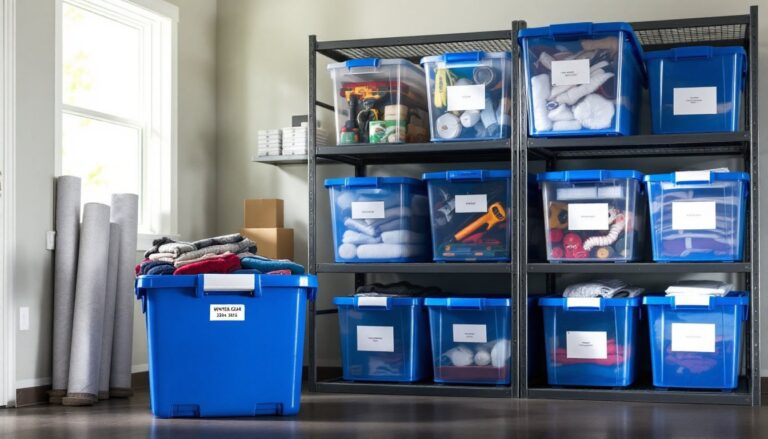
For heavier items, power saws, air compressors, or metal storage boxes, standalone metal shelving units or wall-anchored wooden shelves work better. Metal utility shelving, available at Storage Home Depot, typically handles 300–500 pounds per shelf depending on the frame gauge. Install shelves at 18, 36, and 54 inches from the ground to suit different tool heights. Always leave at least 18 inches of clearance above the top shelf for safe access.
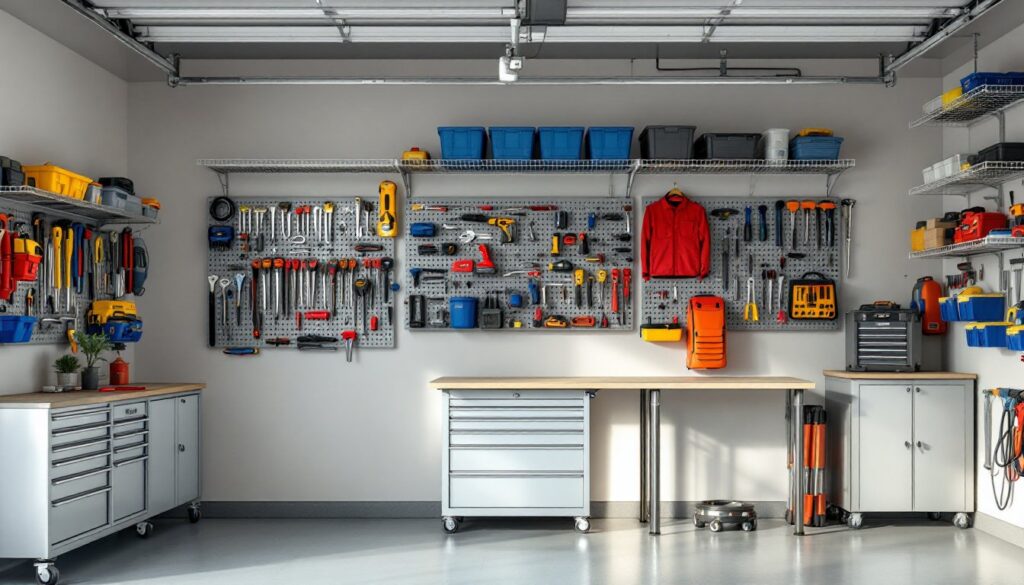
Combine pegboards with shelves: pegboards above for frequently grabbed items, shelves below for bulk storage and heavier equipment. This two-tier approach maximizes wall real estate without creating a cluttered appearance.
Cabinet and Drawer Storage for Protecting Your Tools
Enclosed storage protects tools from dust, moisture, and theft. Tool chests and cabinets keep sharp items, hazardous materials, and valuable equipment out of sight and out of mind until needed.
Metal tool chests come in two main styles: roll-around boxes (typically 18–36 inches wide) and stationary cabinets. Roll-around units offer mobility for projects that move between the garage and job site. Stationary cabinets bolt to wall studs and handle heavier loads. Both types should feature ball-bearing slides for smooth, quiet drawer operation under load.
Organize drawers by function: cutting tools in one, fasteners in another, measuring instruments in a third. Use drawer dividers or small plastic bins to prevent tools from sliding around under load and causing damage. Label drawer fronts so you don’t have to open every drawer hunting for a specific item.
Wood cabinets with lockable doors work for storing finishing products, adhesives, and solvents. A basic wall-mounted cabinet (24–36 inches wide) anchored to studs via a French cleat mounting system handles 50–75 pounds safely. French cleats, a 45-degree routed or cut joint where one half attaches to the cabinet and the other to the wall, distribute weight evenly and allow easy removal if you relocate.
Consider humidity control inside cabinets, especially for metal tools prone to rust. A small silica gel desiccant pack (rechargeable at $5–$15) absorbs moisture in enclosed spaces. Replace or refresh packs quarterly, or when they no longer feel dry to the touch. This simple step adds years to tool life in humid climates.
Mobile Storage and Workbenches With Built-In Organization
Mobile tool storage and combination workbenches bring flexibility to garage projects. A mobile workbench with integrated storage, drawers, shelves, or cabinets built into the base or sides, keeps your most-used tools within steps.
Look for units with locking casters (wheels) that hold position when the brakes engage. This prevents creeping during work and protects any surface from shifting weight. Benches should sit at roughly 36 inches high, matching standard workshop height and reducing back strain during assembly or detail work.
Built-in drawer slides matter for reliability. Ball-bearing slides glide smoothly even when fully loaded, while cheap friction slides jam after a year or two. Top-quality slides cost $20–$40 per pair but survive thousands of open-close cycles. Cheap slides fail within months of regular use.
If building custom mobile storage, use half-inch plywood for structural integrity. Pocket-hole joinery (using a Kreg Jig or similar) creates strong, clean joints without exposed fasteners. Add cross-bracing underneath to prevent racking (twisting) under side loads. Mount the caster assembly on a reinforced base frame bolted to the underside so weight distributes evenly across all four wheels.
Position mobile storage near your primary work zone or sawhorses, but not blocking the garage door or emergency exits. When not in use, roll it into a corner to free up floor space. For smaller garages, mobile storage becomes the centerpiece of your workshop, move it as projects demand and the garage transforms from storage room to active work zone.
Overhead and Vertical Space Solutions
Most garages underutilize the space above head level. Overhead storage, ceiling joists, mounted racks, and suspended shelves, frees up valuable floor and wall real estate.
Ceiling-mounted storage racks hang from floor joists (typically 2-by-10s running perpendicular to the garage door). Locate joists by tapping for solid spots or using a stud finder rated for ceiling work. Install lag bolts or steel brackets (3/8-inch diameter minimum) directly into joists spaced 16 or 24 inches apart. A properly installed overhead rack rated for 300–500 pounds distributes that load across multiple joists, making failure unlikely if installation is correct.
Suspended shelves work best for lightweight, infrequently accessed items: paint cans, seasonal decorations, or finished projects awaiting delivery. Heavier power tool cases or bulky equipment risk injury if they fall, so overhead storage is not ideal for high-traffic areas or directly above workstations.
Pulley hoist systems raise and lower storage as needed, reducing the challenge of reaching overhead items. A simple hand-operated hoist costs $30–$80 and can lift a bicycle, kayak, or storage container up to the joists. Install the hoist bracket into a solid joist and test it under load before hanging anything valuable.
Paint or seal overhead joists and any visible framing light colors to improve visibility and make the space feel larger. Bare wood absorbs light and makes overhead storage seem like clutter. Light-colored surfaces reflect light and organize the visual chaos. Mark joist locations on the garage floor with tape or paint so you remember where the support is when climbing a ladder.
Smart Tool Storage Tips for Smaller Garages
Limited square footage demands ruthless prioritization. In a 1-car garage or crowded 2-car space, every inch counts, and inefficient storage becomes a deal-breaker.
Start by inventorying tools honestly. If you haven’t touched the orbital sander in three years, it’s taking up space better used for items you actually use. Donate, sell, or store seasonal tools offsite. Smaller garages benefit from just-in-time tool selection: keep the essentials accessible and rent or borrow specialty tools as needed.
Vertical storage dominates small spaces. Wall-mounted systems, pegboards, shelving, and hooks, do more work than floor-based cabinets. Go tall and narrow rather than wide and short. Corner spaces are dead zones in small garages, so install corner shelving or angled pegboards to capture otherwise wasted area.
Magnetic strip organization saves surprising amounts of space. Ferrous metal tools (wrenches, chisels, drill bits in metal holders) stick to strips mounted on the wall or the side of a cabinet. No hooks, no shelf space consumed, just magnetic hold and instant access. This approach packs 20+ hand tools into 2–3 linear feet of wall space.
For DIY garage tool storage on a budget, consider that Home Depot Storage Buildings and Storage Shed Home Depot options can overflow into external structures if your garage is truly inadequate. A modest shed ($500–$1500) purchases breathing room without expensive renovation.
Multi-purpose furniture deserves consideration. A storage bench doubles as seating and provides underneath organization. A combination workbench and cabinet provides both a work surface and tool containment. By stacking functions, small spaces stay nimble and productive. Keep pathways clear, you should walk from the entry to the garage door without squeezing past storage. When storage creates an obstacle course, you’ve over-built.
Conclusion
Effective garage tool storage balances accessibility, protection, and space efficiency. Start with wall-mounted and vertical solutions, add enclosed storage for protection, and scale mobile or modular systems as your toolkit grows. Take time to locate studs, secure everything properly, and avoid overloading shelves or ceiling mounts. The best storage system is one you’ll actually maintain, so keep it organized, label everything, and remove tools you don’t use regularly. Your future self, the one looking for that specific wrench at midnight, will thank you for the effort today.