Table of Contents
ToggleIf you’re cramped for square footage, whether in a studio, small bedroom, or kids’ room, a loft bed with storage can feel like finding an extra room without breaking down walls. These elevated sleeping solutions reclaim valuable floor space by using the area underneath for storage, workspace, or just breathing room. A twin loft bed with storage or full-size version works equally well for teens, college students, or homeowners downsizing. In 2026, loft storage beds are smarter than ever, combining sturdy construction with practical built-in drawers, shelves, and compartments. This guide walks you through why they work, what types exist, how to pick the right one, and what to expect during assembly.
Key Takeaways
- A loft bed with storage reclaims 150–200+ square feet of usable floor space underneath the mattress, making it ideal for small studios, bedrooms, and cramped spaces without requiring renovations.
- Most residential loft storage beds are rated for 300–400 pounds per side, so always verify weight capacity and material durability before purchasing, especially if you exceed 250 pounds.
- A loft twin bed with storage comes in multiple configurations—drawers with shelving, closet enclosures, and hanging rails—so choose based on your actual storage needs for clothes, books, and seasonal gear.
- Measure your ceiling height and required clearance; aim for at least 48 inches underneath the mattress for comfortable workspace or desk use, with a minimum of 36 inches for storage alone.
- Quality drawer slides using full-extension ball-bearing systems and sturdy materials like solid wood or engineered wood combined with steel will prevent sagging and ensure your loft bed lasts for years.
- Assembly requires careful attention to leveling, bolt tightening in a crisscross pattern, and post-installation safety checks; a second person and proper tools (power drill, level, tape measure) make the process faster and safer.
Why Loft Beds With Storage Are Perfect For Small Spaces
Square footage is the enemy of small-space living, and a loft bed solves it in one move. By elevating your sleeping platform, you unlock the zone underneath, anywhere from 150 to 200+ square feet of usable space, depending on the bed’s footprint and height. That’s room for a dresser, desk, bookshelf, or storage bins without eating up wall space.
Unlike traditional beds that sit on the floor, loft storage beds are engineered to maximize vertical real estate. The built-in storage components (drawers, shelves, cubbies, or closets) mean you’re not adding more furniture to an already tight room: instead, the storage is integrated into the frame itself. This reduces visual clutter and makes a compact room feel more organized and open.
Load-bearing capacity is critical here. Most residential loft storage beds are rated for 300–400 pounds per side, which suits adult sleepers comfortably. Kids’ models often go 200–300 pounds. Always check the manufacturer’s spec sheet before purchasing, exceeding weight limits risks structural failure and safety hazards. If you’re heavier than the rated capacity or planning to use the bed with a partner, opt for a twin size loft bed with storage built for two or step up to a full-size frame.
Another practical win: loft storage beds reduce the need for standalone dressers and nightstands. That’s less to dust, less to move around when cleaning, and fewer pieces competing for floor real estate. For renters or anyone who moves frequently, this consolidation is golden.
Types Of Loft Beds With Built-In Storage Options
Not all loft storage beds are created equal. Storage comes in several configurations, and picking the right one depends on what you need to stash and how you like to organize.
Loft Beds With Drawers And Shelving
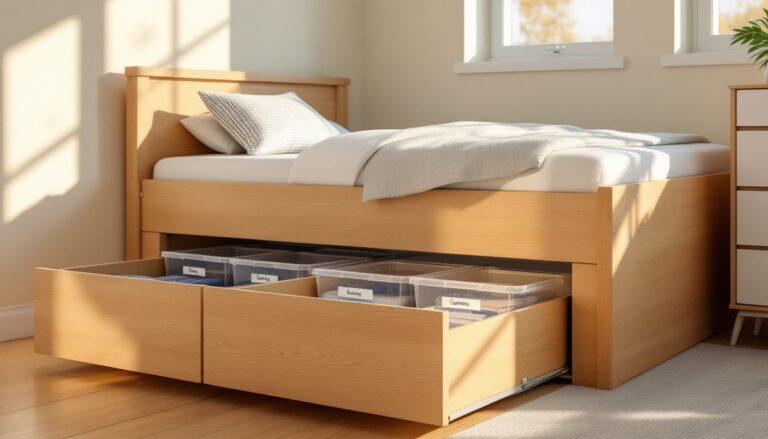
This is the most common setup. A loft twin bed with storage in this category typically features a series of under-bed drawers (usually 2–4 units) mounted on a sliding rail system, plus one or two open shelves or a small bookcase alongside. The drawers keep clothes, linens, and seasonal gear hidden and dust-free, while shelves hold books, decor, or frequently used items you want to grab without opening a drawer.
Drawers on full-extension ball-bearing slides are the gold standard, they glide smoothly and hold their position even when fully loaded. Budget models sometimes use cheaper side-mount rails that don’t extend fully: you’ll waste space at the back and struggle to access items. Test the drawer action in person if you can: if it feels sticky or wobbly, keep looking.
Shelves add flexibility. Open shelving is quick to access but collects dust if you don’t keep it tidy. If you’re housing electronics, books, or display items, a loft storage bed with shelving works well. Some designs include a mix of closed storage (drawers) and open shelving, giving you both concealment and visibility.
Loft Beds With Closets And Hanging Storage
A loft bed with closet space is less common but invaluable if you need room for hanging clothes, coats, or long-garment storage. These setups typically feature a small wardrobe enclosure or hanging rail integrated into the bed frame’s side or underneath the mattress platform. They’re usually found on higher-end or custom builds.
Hanging storage takes up vertical space smartly, a single closet rod can hold 30+ items without eating floor real estate. The trade-off is that true closets require more headroom, so your loft bed needs to sit at least 6.5–7 feet high to avoid scraping your head when reaching for clothes. That’s not always feasible in rooms with standard 8-foot ceilings.
A middle-ground option is a loft twin bed with storage that includes a hanging rail or overhead racks mounted on the frame itself (not enclosed). These open-rail systems are cheaper and easier to customize but leave fabrics exposed to dust. Some DIYers add a simple curtain rod or fabric panel to create a makeshift closet without a full enclosure.
How To Choose The Right Loft Bed For Your Space
Before you hit “add to cart,” measure your room and understand your actual storage needs.
Measure twice, buy once. Loft beds come in standard sizes (twin, full, queen), but footprints vary. A twin size loft bed with storage is usually 39″ wide and 75″ long: a full runs 54″ by 75″. Check the height of the lofted frame from floor to mattress top, you need at least 36–48 inches of clearance underneath to sit comfortably or work at a desk. If your ceiling is 8 feet, a 5-foot-tall loft leaves you roughly 3 feet of headroom below the mattress, which is tight but workable for storage alone. For a workspace or lounge area, aim for 4+ feet of clearance.
Weight limits matter more than marketing suggests. If you’re over 250 pounds or plan to place the bed in a room with multiple heavy sleepers rotating through, check the spec carefully. Twin loft storage bed models range from 250–400 pounds: full-size options often go higher. Exceed the limit and the frame can warp, sag, or collapse unexpectedly.
Material choices affect durability and assembly complexity. Solid wood (pine, oak, birch) is sturdy and easy to repair: it’s also heavier and more expensive. Steel frames are lighter and very strong but prone to rust if humidity is high. Engineered wood or plywood combined with steel usually offers the best balance of cost and durability for residential use. Avoid particle board or MDF in a loft bed, these materials don’t hold fasteners well over time and can sag under concentrated load.
Storage type depends on what you’re storing. Need to hide textbooks and seasonal clothes? Drawers win. Want quick access to art supplies, books, or collectibles? Shelves are faster. If hanging garments are a priority, look for a loft storage bed with a dedicated rail or closet section. Some designs on platforms like IKEA Hackers showcase creative modifications to add custom storage that wasn’t in the original design, worth exploring if you can’t find an off-the-shelf match.
Budget ranges widely. A basic twin loft with simple under-bed storage runs $300–600. Mid-range models with quality drawers and shelving go $700–1,500. Custom or premium pieces (especially solid wood with elaborate storage) easily hit $2,000+. Don’t just chase the cheapest option, poor fasteners, flimsy drawers, and weak joints fail quickly and become a safety hazard.
Installation And Assembly Tips For Homeowners
Most loft storage beds ship flat-packed and require assembly. It’s not impossible for a solo DIYer, but having a second pair of hands makes the job faster and safer.
What you’ll need: A power drill with a Phillips and square-drive bit, a level (critical for safety), a tape measure, a rubber mallet for tapping joints, and work gloves. Some kits include an Allen wrench set for bolts. Keep all hardware organized, a muffin tin works perfectly for sorting nuts, bolts, and dowels by location. Read the manual twice before opening a single screw.
Prep your space. Clear a large area of the room, you need room to lay out panels, assemble sub-frames, and position the main structure. Unbox all parts and verify everything is present against the parts list. Check for shipping damage or cracks, especially in wood frames. A dented steel corner brace is fine: a split on a main post is a deal-breaker and should be returned.
Assembly sequence matters. Most loft bed kits tell you to build the side rails first, then the head and foot panels, then connect them into a rigid box frame. This is correct, it keeps parts stable as you work. Use a level constantly. A bed that’s off-square or tilted will feel wobbly and put stress on fasteners over time. Before tightening all bolts fully, get the frame roughly square, then gradually tighten in a crisscross pattern (like torquing a car wheel) to distribute pressure evenly.
Drawer slides and shelves go in last, after the main frame is rock-solid. Align drawer slides carefully using the hardware’s pre-marked holes: a misaligned drawer will bind and eventually derail. A couple of DIYers have documented full builds on community platforms like Instructables, showing common mistakes, worth a quick search if your specific model has a well-reviewed guide.
Safety check before sleeping. Test the frame’s stability by pressing down firmly on the mattress and corners, it should not flex noticeably or creak. Check all bolts and fasteners again: vibration and settling during the first few uses can loosen them. Inspect it again after two weeks of use. If anything feels off, stop using it immediately and identify the issue. A wobbly loft bed is a fall hazard, especially for kids.
For custom builds or modifications (like adding a closet rail or extra shelving), you may need a circular saw or miter saw to cut new pieces, plus exterior wood screws (2.5″ to 3″) rated for the application. Pressure-treated lumber isn’t necessary indoors, but untreated pine or birch must be sealed or primed to resist moisture and mildew, especially in humid climates. Wood-building guides on Ana White’s site walk through bed-building fundamentals if you’re starting from scratch.
If your room has a sloped ceiling, active moisture issues, or unusually high traffic, consider hiring a professional furniture assembler or carpenter. It’s an investment, typically $150–300 in labor, but worth it for peace of mind and a finished product that won’t shift or fail.
Conclusion
A loft bed with storage isn’t just a trendy space hack, it’s a practical structural solution that works for studios, kids’ rooms, and anyone who’d rather maximize usable floor space than wall-mount another shelf. Whether you choose a twin loft bed with storage featuring simple drawers, a loft twin bed with storage that includes shelving, or a more elaborate loft storage bed with closets and hanging rails, the core benefit is the same: you’re working smarter, not harder, with your square footage. Measure carefully, choose the right materials and load rating for your needs, and don’t skip assembly or safety checks. Done right, a well-built loft bed will serve you reliably for years.