Table of Contents
ToggleA king bed with storage drawers solves one of the most persistent bedroom dilemmas: finding room for linens, seasonal gear, or everyday clutter without eating up floor space. Whether you’re squeezing a master suite into a smaller home or just tired of under-bed chaos, storage bed frames have become the go-to for homeowners who refuse to sacrifice either comfort or organization. The good news is that today’s options go far beyond clunky platform beds, you can find styles that blend seamlessly with modern, rustic, or transitional décor. This guide walks you through the benefits, styles, and practical details to help you choose a storage bed that actually works for your space and lifestyle.
Key Takeaways
- A king bed with storage drawers combines a spacious 76×80-inch sleeping surface with 30–50 cubic feet of under-bed storage, eliminating the need for separate dressers or shelving units in smaller bedrooms.
- Choose from three main styles—upholstered (contemporary feel, requires regular vacuuming), wooden (durable and versatile, easier to clean), or platform (low-profile and modern)—each suited to different décor and maintenance preferences.
- Before purchasing a king bed with storage drawers, measure doorways, stairwells, and available floor space, and decide between four-drawer (standard, easier to move) or six-drawer models (more capacity, slightly bulkier).
- Invest in quality drawer slides rated for 75+ pounds and confirm the bed has a weight capacity of at least 1,000 pounds to support two adults plus mattress and bedding.
- Maintain your storage bed by regularly dusting wooden frames, vacuuming upholstered fabric monthly, lubricating drawer slides every six months, and checking frame bolts to ensure long-term functionality and appearance.
Why Choose a King Bed With Storage Drawers
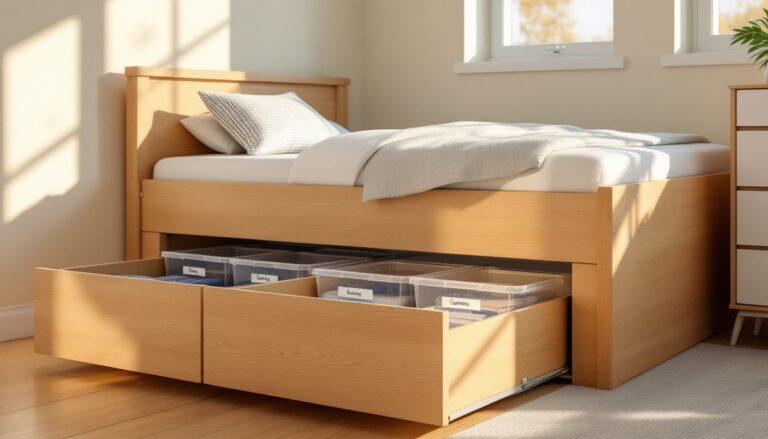
A king bed with storage drawers tackles two problems at once: it gives you a spacious sleeping surface (76 inches wide by 80 inches long in standard dimensions) and hides storage right beneath where you sleep. For bedrooms under 12 feet wide, that means you’re not adding a separate dresser or shelving unit, the bed itself does double duty.
Space-Saving Benefits and Design Flexibility
The math is straightforward. A typical king bed frame with four to six drawers can hold anywhere from 30 to 50 cubic feet of storage, depending on drawer depth. That’s room for extra pillows, throw blankets, off-season clothing, or bedding you rotate seasonally. In a room where every square foot counts, that’s a genuine quality-of-life upgrade.
Beyond the practical side, a storage bed offers design flexibility. You’re no longer forced to push your bed against a wall to hide clutter underneath. The drawers keep everything organized and out of sight, so you can float the bed in the room, position it differently during furniture rearrangement, or simply enjoy a cleaner, more intentional bedroom aesthetic. The king bed with storage drawers from Metropolitan Home demonstrates how a well-designed frame becomes a statement piece rather than purely functional furniture.
For families with kids, guests who occasionally need a place to store items, or anyone downsizing, the extra storage capacity pays dividends. You’re essentially borrowing vertical space by using the under-bed area efficiently, something that flat platform beds without drawers leave unused.
Top Styles and Materials to Consider
Storage beds come in three main camps: upholstered, wooden, and platform designs. Each has distinct advantages depending on your bedroom style and how much wear and tear you anticipate.
Upholstered, Wooden, and Platform Options
Upholstered storage beds feature a fabric or leather headboard and frame, giving them a softer, more contemporary feel. Fabrics range from linen and performance textiles (smart if you have kids or pets) to velvet and microsuede. The drawback: fabric traps dust and can stain, so you’ll need to vacuum regularly and handle spills quickly. They’re ideal for modern or transitional bedrooms.
Wooden storage beds come in solid hardwoods (oak, walnut, cherry) or engineered wood with a veneer. Hardwood is more durable and ages beautifully: engineered wood is budget-friendly but less resistant to moisture and impacts. Wood works with almost any décor, farmhouse, mid-century, traditional, or eclectic, and it’s easier to clean than fabric. The trade-off is weight and potential for surface scratches that require touch-up stain or finish. If you’re building one from scratch, resources like Ana White and Fix This Build That offer solid DIY plans for wooden storage beds.
Platform beds with storage are lower-profile frames (often 12–18 inches tall) that incorporate drawers or shelving underneath. They pair well with modern, minimalist, or Japanese-inspired interiors. The lower height can be a plus if you have mobility concerns, but it also means less clearance under the bed, something to consider if you have a lot of storage items or need to slide things in and out frequently.
When selecting materials, think about longevity. A solid wood frame with quality drawer slides will outlast a particle-board frame by years. Drawer slides rated for 75+ pounds per drawer are worth the investment: cheap slides jam and derail. Upholstered beds benefit from stain-resistant fabric treatments (many manufacturers offer this at purchase or as an upgrade).
Selecting the Right King Bed With Storage for Your Bedroom
Before you buy, measure your bedroom doorways and stairwells. A king bed frame is roughly 76 inches wide and 54–60 inches high (depending on headboard). If you’re moving it through a narrow hallway or up stairs, you need to confirm it fits, some beds disassemble for transport, but others don’t.
Next, measure the floor space available and count how many drawers you actually need. Four drawers (typically two on each long side) are standard and offer good storage without making the frame unwieldy. Six drawers give more capacity but add a bit of bulk and take up more floor clearance, which matters if you have rolling furniture, a robot vacuum, or pets that need to squeeze underneath.
Consider drawer orientation and depth. Side-mounted drawers (on the left and right of the frame) are easier to access if your bed is against a wall. Under-bed drawers (running along the front or sides) work if you have full clearance. Standard drawer depth ranges from 8 to 12 inches: deeper drawers let you stack items but reduce vertical clearance. If you’re storing mostly folded clothing or linens, 8–10 inches is plenty. For off-season coats or bulky items, go deeper if your room height allows.
Budget matters too. A solid hardwood or high-quality upholstered king storage bed runs $800–$2,500 depending on materials and drawer count. Engineered wood or budget upholstered options start around $400–$800. If you’re handy, DIY builds range from $300–$1,000 in materials and can be customized exactly to your space. Beginner-friendly tutorials exist at The Handyman’s Daughter, though building a bed frame requires basic carpentry skills and at minimum a miter saw, drill, and pocket hole jig.
Finally, confirm weight capacity. A king storage bed must support two adults plus the mattress and bedding, typically 600–800 pounds total. Any bed you choose should be rated for at least 1,000 pounds. Check the product specs: if a listing doesn’t state weight capacity, that’s a red flag.
Maintenance Tips to Keep Your Storage Bed in Top Condition
Storage beds, like all furniture, need care to stay functional and attractive.
For wooden frames: Dust regularly with a soft cloth or microfiber duster to prevent grime buildup in grain and crevices. Once or twice a year, apply furniture polish or a light wood conditioner to maintain finish and prevent drying. Wipe up spills immediately, water and wood are not friends, especially around drawer seams where moisture can swell wood and jam mechanisms.
For upholstered frames: Vacuum the fabric monthly with an upholstery brush attachment to remove dust and pet hair. Blot spills with a clean, damp cloth: don’t rub, which pushes stains deeper into fibers. For stubborn stains, use a mild upholstery cleaner (test on a hidden area first) or hire a professional. Keep the frame away from direct sunlight if possible, UV fades fabric over time.
For drawers: This is critical. Slide drawers open and closed smoothly before adding weight: if they stick or squeak, apply a silicone-based furniture slider spray or dry lubricant to the slide tracks, never use WD-40 or oily lubricants, which attract dust. Don’t overload drawers beyond their weight rating. If a drawer begins to wobble, check that the frame screws and bolts are tight: use a socket wrench or adjustable wrench to tighten them every six months or as needed. Rotate items stored in drawers seasonally to distribute weight and prevent permanent compression of fabrics.
General: Avoid dragging the bed across floors, lift and move it, or place furniture sliders under the legs. Keep humidity levels between 30–50% in your bedroom to prevent wood warping and fabric mildew. If you disassemble the bed for moving, photograph how bolts and brackets connect before taking it apart: reassembly is much easier with a visual reference.
Conclusion
A king bed with storage drawers is one of the smartest investments a homeowner can make for a bedroom that’s both comfortable and organized. Whether you choose upholstered, wooden, or platform construction, the key is matching the style to your décor and being realistic about storage needs, drawer access, and available space. Measure twice, pick quality hardware, and commit to basic maintenance, drawer slides lubricated and frame bolts checked, and your storage bed will perform reliably for years.