Table of Contents
ToggleA cluttered corporate office drains focus and kills productivity. Whether you’re managing a home office hybrid setup or a dedicated workspace, finding room for files, supplies, and equipment often feels impossible in tight quarters. The difference between chaos and control comes down to one thing: smart storage. This guide walks you through practical, hardworking solutions that fit real offices, not Pinterest fantasies. You’ll learn how to reclaim wall space, choose furniture that carries its weight, and organize systems that actually stick.
Key Takeaways
- Extra space storage for corporate offices maximizes productivity by eliminating clutter, reducing search time, and creating visual order that supports focus and professional appearance.
- Vertical storage systems—including wall-mounted shelving, cabinets, and floating desks—reclaim floor space and should always be anchored to studs spaced 16 inches on-center for reliable weight support.
- Dual-purpose furniture like storage ottomans, lateral filing cabinets, and credenzas adapts to evolving office needs while maintaining flexibility and professional aesthetics.
- Effective organization systems require clear filing structures with color-coded folders, labeled transparent containers, and FIFO (first in, first out) supply rotation to prevent overbuying and waste.
- Monthly purges, shelf inspections, label rotation, and climate control maintenance ensure your extra space storage system remains functional and accessible long-term.
Why Corporate Offices Need Smart Storage Solutions
Office clutter isn’t just unsightly, it costs you time and mental energy. Papers pile up. Supplies scatter. Equipment gets lost. When you can’t find a cable or a file in under 30 seconds, that’s productive time evaporating.
Smart storage does three things: it maximizes square footage, keeps frequently used items within arm’s reach, and creates visual order that helps your brain work faster. Corporate spaces face unique pressures: client calls happen on video, emails get answered at odd hours, and that one corner often morphs into a catch-all zone.
The goal isn’t perfection, it’s function. A well-organized office means fewer distractions, faster workflows, and a professional appearance whether someone’s visiting or joining a virtual meeting from your desk. Storage systems that work for corporate spaces do double duty: they hide mess while staying accessible.
Most offices waste vertical space. Walls sit empty while horizontal surfaces pile high. The fix starts by thinking up instead of out.
Vertical Storage Systems That Maximize Your Office Space
Walls are your best friend in a cramped office. Vertical storage pulls clutter off the floor and desk, freeing up the square footage that actually matters.
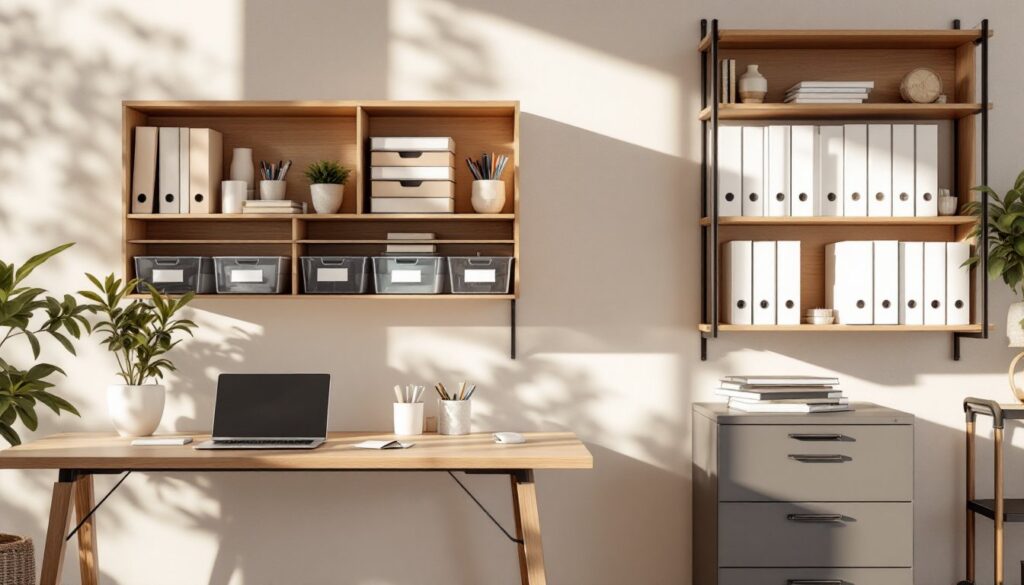
Wall-mounted shelving is the workhorse of office storage. Open shelves let you see what’s stored and grab items fast, perfect for books, binders, and everyday supplies. Fixed shelving anchors to studs (check your stud finder before drilling), handles weight reliably, and costs less than modular systems. For drywall-only locations, use heavy-duty toggle bolts rated for your load. Shelves typically handle 15–50 pounds per linear foot depending on depth and material: thicker shelves and closer stud spacing bump that number up.
Wall-mounted cabinets hide clutter while keeping it organized. Metal or wood cabinets with doors create a cleaner visual line than open shelves, especially useful if you’re on video calls from your desk. Cabinets with adjustable shelves adapt as your storage needs shift.
Floating desks mounted directly to studs free up floor space and eliminate table legs. They work well for smaller offices where every inch matters. Standard desk depth runs 24–30 inches: measure your workspace before committing.
Corner shelving units and wall-mounted towers use otherwise wasted corner space. These angles catch light differently and can make a room feel less boxy. They’re ideal for storing reference materials or decorative items that need visibility.
Wall-Mounted Shelving And Cabinet Options
Choosing between open and closed storage depends on what you’re storing and how often you access it. Keep current projects and daily-use supplies on open shelves where they’re visible and reachable. Store less-used materials, archives, and sensitive documents behind cabinet doors.
Installation matters more than product choice. A shelf bolted to drywall alone will fail under weight. Always anchor to studs, they’re spaced 16 inches on-center in most homes and offices. If studs don’t line up with your preferred shelf placement, move the shelf or use heavy-duty drywall anchors (rated for 25–75 pounds depending on type) as a backup only, never as your primary support.
Measure twice, mark lightly with pencil, and use a level to ensure shelves sit horizontal. Shelves that tilt encourage items to migrate and look sloppy. For cabinets, confirm the wall is plumb (vertically straight) before hanging: out-of-plumb walls make doors sit crooked.
Material choice affects durability. Metal shelving resists sagging under load and works in humid spaces. Wood shelving offers warmth and integrates better with office décor, but requires quality fasteners and proper stud spacing to avoid deflection over time. Particleboard costs less but won’t handle the same weight as solid wood: it also shows wear faster if supplies slide across the surface.
Furniture-Based Storage That Serves Double Duty
Not every storage solution needs to mount to a wall. Standalone or semi-built-in furniture moves with you and adapts as your office evolves.
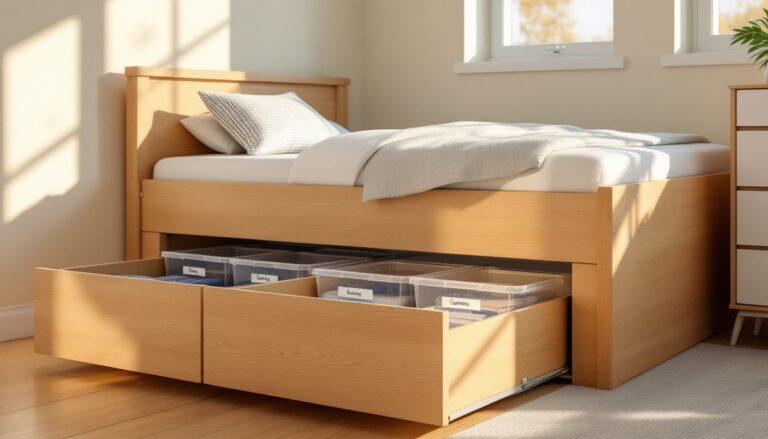
Storage ottomans and benches hide supplies while providing seating. They work well under windows or along walls where space feels wasted. Choose pieces with internal compartments, not just surface storage, to maximize capacity.
Filing cabinets remain the backbone of paper-heavy offices. Lateral filing cabinets (side-opening drawers) take up less floor space than vertical models and handle four-drawer depths easily. Look for models with smooth-gliding drawers and safety stops that prevent tipping when fully extended. Weight matters: filing cabinets are heavy, so ensure your floor can handle point loads (especially important in older buildings or second-floor offices).
Credenzas and buffets work like low cabinets behind a desk or along a wall. They create surface storage (tops can hold monitors or decorative items) plus enclosed storage below. This furniture style bridges the gap between office-grade and home-grade pieces, making it popular for hybrid workspaces.
Rolling carts and mobile units add flexibility. Three-tiered carts fit tight spaces and move between rooms as needed. Secure carts with brake casters so they stay put during video calls or when you’re reaching high shelves. Metal carts withstand wear better than plastic for daily-use office environments.
Desk organizers and hutches sit on top of existing desks, adding vertical storage without new furniture. Hutches mount directly above your desktop, creating a second tier for books, supplies, and décor. They’re useful when wall mounting isn’t an option, though they can make a desk feel cramped if oversized.
When choosing furniture, measure doorways and hallways first. Many storage pieces fit the office space but not the path to get there. Confirm weight limits for rolling carts and verify that cabinet doors open fully without hitting walls or adjacent furniture.
Organizing Office Supplies And Equipment Efficiently
Storage capacity means nothing if you can’t find what you need. A filing system, labeling scheme, and supply rotation keep offices running smoothly.
Paper files demand a clear naming system. Use broad categories (Projects, Clients, Admin, Archives) and subcategories if needed. Color-coding folders speeds up visual scanning, easier than reading every label when you’re in a hurry. Archive old files monthly: they shouldn’t take up prime real estate in active storage.
Digital files eliminate some paper, but most offices still maintain hybrid systems. Scan important documents and store digitally, then shred originals after a retention period. This shrinks physical file volume and creates searchable backups.
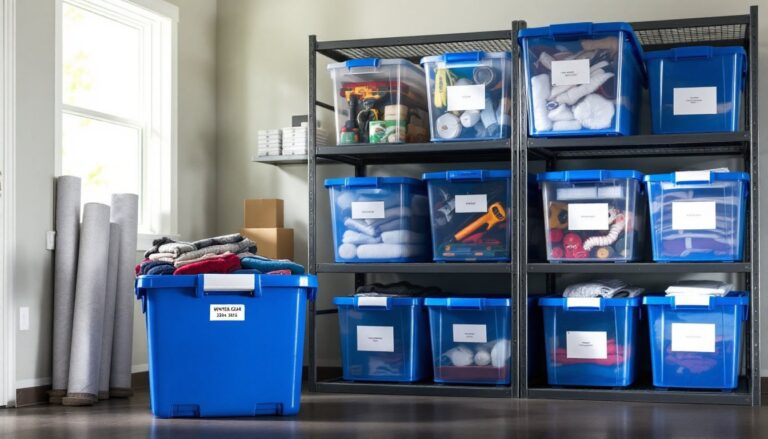
Supply inventory prevents overbuying and waste. Store pens, notepads, cables, and other consumables in clear containers with labels. Group like items together, all charging cables in one drawer, all writing supplies in another. Transparent containers let you see inventory levels at a glance without opening each one.
Equipment storage needs airflow. Don’t stack monitors or printers in tight enclosed spaces: heat buildup shortens their lifespan. Use dust covers when equipment sits unused for weeks. Cables coiled neatly in labeled bins prevent tangles and make setup faster when you need to swap devices.
Resources like Real Simple and IKEA Hackers offer proven strategies for container organization and budget-friendly storage hacks. Label everything, even supplies that seem obvious, colleagues (or future you) will appreciate it. Consider using a label maker for a polished, consistent look across storage systems.
Rotate supplies using FIFO (first in, first out) logic. New supplies go behind older stock so nothing expires or becomes obsolete sitting in the back. This practice works especially well for printed materials, archived files, and perishable office items.
Maintenance Tips For Long-Term Storage Organization
Storage systems work only if you maintain them. Clutter creeps back in, labels fade, and systems get abandoned. Prevent that slide by building habits that stick.
Monthly purges take 15 minutes. Walk through your storage areas and ask: Do I use this? Does it have a home? Is it stored safely? Toss broken supplies, recycle outdated files, and relocate items that migrated to wrong spots. This prevents the “storage is full” feeling from returning.
Shelf inspection catches problems early. Check that bolts stay tight, shelves remain level, and nothing leans at dangerous angles. Wooden shelves can sag over years under consistent weight: a level and shims can restore them. Metal shelves won’t sag but may develop rust in humid spaces, wipe them down and apply touch-up paint if needed.
Label rotation keeps your system legible. Printed labels fade and peel. Reprint and replace them yearly or when they become hard to read. A small investment in a quality label maker pays dividends in usability.
Furniture repositioning keeps spaces fresh and functional. If a filing cabinet sits in a high-traffic area, move it to a corner. If wall shelves block windows, relocate them. As your work evolves, your storage layout should too. This flexibility prevents the sense that your office “can’t change.”
Climate control protects stored items. Keep humidity moderate (40–50%) to prevent rust on metal storage and mold on paper. Avoid storing near heating vents or air conditioning units that create temperature swings. Offices in humid climates should use dehumidifiers in storage areas if moisture is a concern.
Resources like Apartment Therapy provide strategies for maintaining organized spaces over time. The key is treating maintenance as part of the storage system, not an afterthought. A five-minute monthly reset beats a chaotic overhaul twice a year.
Conclusion
Smart office storage works because it’s built for how you actually work, not how you wish you worked. Start with vertical storage to reclaim floor space, add furniture pieces that earn their place through dual function, and create organization systems you’ll maintain long-term. The best storage system is one that feels natural to use, not a source of friction. With these strategies in place, your corporate office becomes a space where focus wins and productivity thrives.