Table of Contents
ToggleMost homeowners don’t think about storage unit size until they’re staring at a driveway full of boxes with nowhere to put them. Whether you’re downsizing, renovating, or dealing with a major life transition, figuring out what size storage unit for a 3-bedroom house isn’t something you can eyeball, it requires a straightforward calculation based on what you actually own. This guide walks you through the math, gives you realistic options, and shows you how to pack smart so nothing gets wasted.
Key Takeaways
- A 10×10 storage unit is the ideal choice for most 3-bedroom homes, comfortably fitting full furniture from one to two rooms plus 400–500 boxes.
- Calculate your actual storage needs room-by-room rather than guessing; a typical 3-bedroom home generates 400–600 cubic feet of stored items, plus an additional 20 percent for packing materials and air gaps.
- Climate-controlled units protect moisture-sensitive items like wood furniture, leather, and electronics from temperature swings and humidity that cause permanent damage.
- A 5×10 unit works well for seasonal storage or single-bedroom furniture, while a 10×15 or larger unit is overkill for most homeowners unless storing multiple rooms or a vehicle.
- Maximize your storage unit’s capacity by placing large furniture against back walls, using shelving to double usable space, labeling boxes by room and contents, and maintaining a 2-foot access aisle for retrieval.
- Review your stored inventory every 2–3 months to remove items as you sell them and avoid paying long-term fees for things you should donate.
Understanding Your Storage Needs
Before you call a storage facility, be honest about why you need the unit. Are you storing seasonal items (holiday decorations, winter clothes) that’ll come home in a few months? Are you emptying a bedroom while renovating? Or are you keeping furniture and boxes indefinitely while you downsize your main living space?
Each scenario changes the calculation. Seasonal storage might need just a 5×5-foot unit, while a full bedroom purge could demand twice that. Also consider climate: if you’re storing electronics, wood furniture, or anything moisture-sensitive, you’ll want a climate-controlled unit, which typically costs more but protects your stuff. A damp 10×10 space will wreck a leather couch faster than you’d think.
Temperature swings and humidity cause wood to swell and shrink, varnish to bubble, and metal to rust. Climate control isn’t fancy, it’s insurance for items you actually care about.
Calculating Total Square Footage
The real work starts here. Grab a notebook and walk through your house room by room, making a rough list of what’s going into storage. Don’t just guess “a lot of stuff”, actually count pieces.
Bedroom furniture: One queen bed frame (disassembled) takes up roughly 15 cubic feet when boxed: a dresser another 20. Nightstands, a bookshelf, and a desk? Another 30 cubic feet combined. One fully furnished bedroom equals about 65–80 cubic feet of space.
Kitchen and dining: A dining table and four chairs take 40 cubic feet. Small appliances, boxed dishware, and pots gobble up another 20. If you’re storing dishware, you’re talking stacks of boxes that add weight fast, estimate 5-7 boxes per shelf in your kitchen, and a box of plates weighs around 40 pounds.
Living room: Sofa (disassembled) runs 30–40 cubic feet: an entertainment stand and bookshelf another 20–25 cubic feet.
General rule: Take your estimate and add 20 percent for packing materials, air gaps between boxes, and the fact that you’ll forget something on your first pass. If you think you need 300 cubic feet, you probably actually need 360.
One way to visualize this: detailed sizing guides confirm. That’s a useful baseline.
Common Storage Unit Sizes For 3-Bedroom Homes
Here’s what you’ll actually find at a typical facility, and what each unit holds.
5×5 unit (250 sq ft): Think of this as a closet on steroids. It holds roughly 100–150 boxes, a small dresser, and maybe a nightstand. Use it for seasonal items, holiday decorations, a few boxes of off-season clothes. Not for a bedroom’s furniture.
5×10 unit (500 sq ft): Now you’re talking. This fits one bedroom’s furniture (bed frame, dresser, nightstand, a small bookshelf) plus 200–300 boxes. It’s the sweet spot for someone storing furniture from one room plus miscellaneous household items.
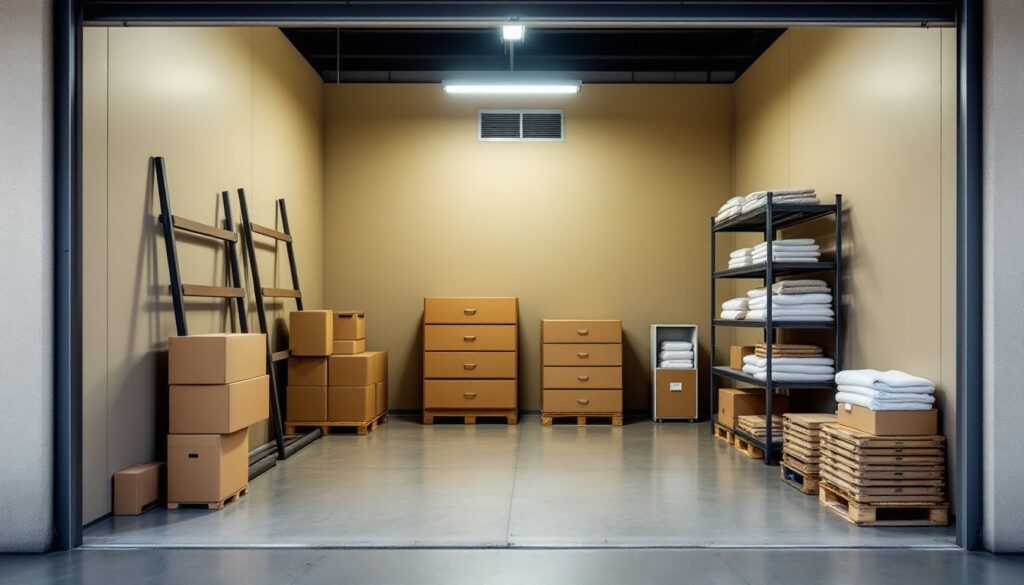
10×10 unit (1,000 sq ft): The mid-range workhorse. Fits furniture from an entire 3-bedroom house, 400–500 boxes, and you’ll still have room to walk around and find things. This is what most families downsizing or renovating a single room actually rent.
10×15 unit (1,500 sq ft): Overkill for most 3-bedroom homes unless you’re storing a basement’s worth of stuff or keeping a second car. Costs 40–60 percent more than a 10×10 for maybe 15–20 percent more usable space because of layout awkwardness.
10×20 unit (2,000 sq ft): You’re in storage locker territory now. Rent this only if you’re storing two fully furnished bedrooms, a living room, a garage’s tools, and a car. Most homeowners never need it.
Most 3-bedroom homes fit comfortably in a 10×10 unit. If you’re only storing one or two rooms’ worth of furniture plus boxes, a 5×10 works fine. The home decor and improvement tips from established sources can help you think through what items truly deserve storage versus what you should donate or sell.
Downsizing vs. Long-Term Storage
Downsizing and long-term storage behave differently, and it matters for your unit choice.
Downsizing scenario: You’re moving from a 3-bedroom to a 2-bedroom or apartment. You’re keeping furniture you love but don’t have room for right now. You might rent for 3–6 months while you sell the extra stuff or find permanent homes for it. A 5×10 or 10×10 unit covers this, pick the size based on how many full rooms’ furniture you’re keeping. Plan to revisit your inventory every month or two and move items out as you sell them.
Long-term storage scenario: You’re renovating a bedroom, attic, or garage and need somewhere to park furniture and boxes for 6–12 months or longer. You’re not actively culling items: you’re just making them temporarily invisible. In this case, climate control becomes more important (especially if you’re storing anything wood, leather, or electronic). A 10×10 unit is usually right, and you’ll want to revisit it every three months to make sure nothing’s deteriorating. Also budget for potential price increases, storage rates often climb 3–5 percent annually, and long-term renters sometimes get locked into price-lock agreements.
Tips For Maximizing Your Storage Unit
Renting a unit is half the battle: packing it efficiently determines whether you can actually fit everything.
Start with large furniture. Disassemble bed frames, remove sofa legs, and stack dressers with soft materials (blankets, towels) between drawers to prevent scratching. Place the largest pieces against the back wall, think of your unit like a jenga puzzle, with heavy, stable items as the foundation.
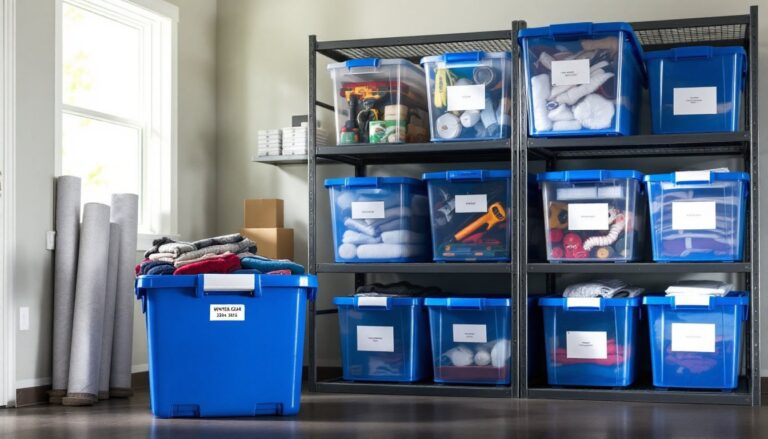
Box strategically. Label boxes clearly with room and contents (“Master Bedroom, Winter Clothes” beats “Misc Box 17”). Keep frequently accessed items toward the front. Stack boxes vertically when possible: most standard boxes handle 40–50 pounds safely, but double-check yours. Never stack boxes higher than eye level if you need to access them.
Use vertical space. Shelving units ($40–80 at home improvement stores) aren’t just organizational, they can double your unit’s usable capacity. A 4-shelf, 36-inch-wide unit takes up about 8 square feet of floor space but holds 20+ boxes per shelf.
Protect items. Wrap furniture in moving blankets or plastic sheeting. Use corner guards on wood frames. Flat-screen TVs go in their original boxes if you have them: otherwise, wrap and store vertically, never flat. Budget-conscious renovators and organizers that share packing hacks and inventory systems.
Leave aisles. You’ll need to access items, and you might need to add or remove boxes later. A 2-foot path down the middle of a 10×10 unit costs you 200 square feet but saves your sanity.
Don’t store hazardous materials. No propane, gasoline, pesticides, or anything flammable. Facilities have strict rules, and you risk losing your deposit, or worse, a fire.
Conclusion
For a 3-bedroom home, a 10×10 storage unit handles most situations: full furniture from one or two rooms plus boxes. If you’re just storing seasonal items or a single bedroom set, a 5×10 works. The key is calculating your actual volume, not guessing, and choosing climate control if you’re keeping anything moisture-sensitive. Pack smart, label everything, and revisit your inventory every few months to make sure you’re not paying to store things you should’ve donated months ago.