Table of Contents
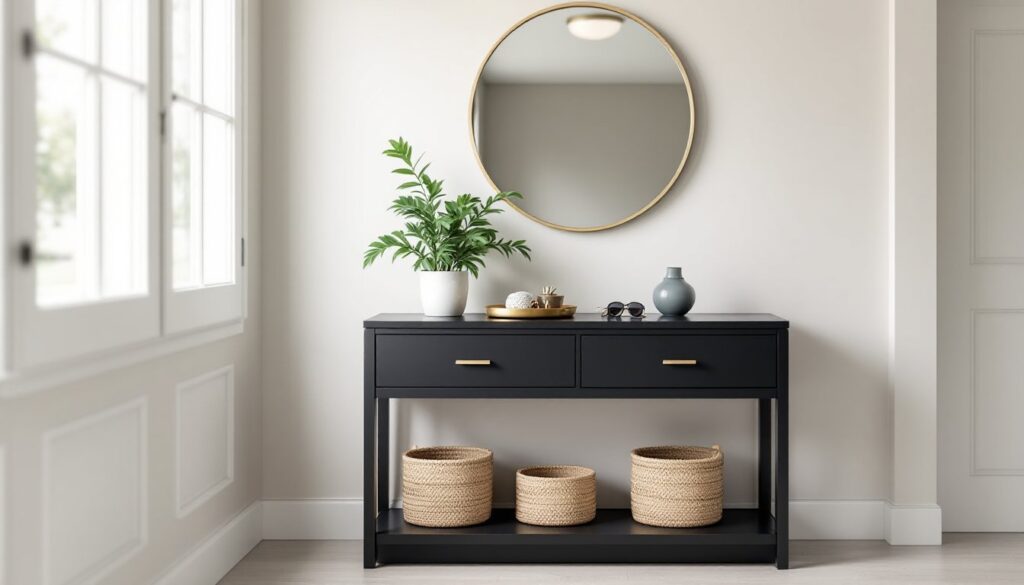
ToggleYour entryway is the first impression guests have of your home, and it’s also where keys, mail, shoes, and clutter tend to pile up fast. A black entryway table with storage combines style with function, anchoring your foyer while keeping essentials organized and out of sight. Whether your space is sprawling or tight, whether you prefer sleek modern lines or rustic farmhouse charm, there’s a black storage table designed to fit. This guide walks you through what makes these pieces work, what styles suit different homes, how to size one correctly, and how to keep it looking intentional rather than like a dumping ground.
Key Takeaways
- A black entryway table with storage provides both style and functionality, grounding your foyer while keeping clutter organized and hidden from view.
- Black is a hardest-working neutral that hides dust and fingerprints better than lighter finishes, complementing nearly any color scheme or home style.
- Measure your entryway carefully—aim for at least 6 inches of clearance on either side when doors swing open, and keep depth to 12–16 inches to avoid eating into floor space.
- Modern minimalist black tables cost $300–$800, while industrial and farmhouse styles range $600–$1,500 and age more gracefully with authentic materials and construction.
- DIY black entryway storage tables can cost under $200 using hairpin legs, a painted wood top, and basic drawer slides, making them an accessible budget-friendly option.
- Keep the table surface minimal with only a key tray and one or two plants, while using drawers, closed shelves, and baskets to hide seasonal items and daily essentials.
Why Choose A Black Entryway Table With Storage
Black is the hardest-working neutral you can choose for an entryway. It grounds a room, hides fingerprints and dust better than lighter finishes, and plays well with nearly any color scheme, whether your walls are soft whites, deep jewel tones, or bold pastels.
Storage is the real game-changer. Closed shelves, cubbies, or drawers mean you can stash wet boots, winter gloves, shopping bags, and that pile of papers without them being visible to everyone who walks through your door. Open shelving still offers functionality while letting you display baskets, decorative boxes, or curated accessories.
A quality entryway table also anchors the space, giving your foyer intentionality rather than a pass-through feel. It signals that someone lives here thoughtfully, not that the house simply happens to have a front door. From a practical standpoint, it provides a landing zone where keys, phones, and packages have a designated home, reducing the chaos that spreads into the rest of your house.
Popular Styles And Designs For Black Storage Entryway Tables
Modern And Minimalist Options
Contemporary black entryway tables emphasize clean lines, flat-panel drawers, and minimal hardware. These pieces often feature matte or semi-gloss black finishes paired with wood tones, metal legs, or white accents. Look for tables with recessed handles or push-to-open mechanisms that keep the front surface uncluttered.
Minimalist designs work especially well in smaller foyers because they don’t visually compete for space. A sleek console with one or two drawers and a lower shelf can hold plenty while taking up minimal footprint. Pair it with a mirror above and wall-mounted shelving on either side, and you’ve got a functional, gallery-like entryway that looks intentional.
These tables often cost between $300–$800 depending on materials and construction. Solid wood with quality joinery lasts longer than particleboard with veneer, though budget options exist in both camps. Watch for cam locks and full-extension drawers, signs of better hardware that won’t wear out after two years of daily use.
Industrial And Farmhouse Styles
Industrial black tables pair black metal frames or wrought iron details with reclaimed wood tops, creating a statement-making, character-filled look. These tables feel heavier, more grounded, and work brilliantly in homes with exposed brick, concrete floors, or metal accents elsewhere.
Farmhouse-inspired black tables lean into contrast: black painted wood paired with galvanized metal hardware, white-washed wood shelves, or cream-colored linens draped below. They blend the warmth of wood with the crispness of black, giving a “vintage barn meets cozy home” vibe that’s still hugely popular. Interior design inspiration from Homedit often showcases these styles paired with vintage lanterns, fresh flowers, and woven baskets.
Both styles embrace visible materials and construction. You’ll see mortise-and-tenon joinery, metal brackets, reclaimed or distressed wood surfaces. This authenticity costs more, expect $600–$1,500 for genuine industrial or high-quality farmhouse pieces, but it also ages gracefully and becomes more beautiful with use.
How To Select The Right Size And Layout For Your Space
Measure your entryway first. You need at least 6 inches of clearance on either side of the table when doors (entry door, closet doors, interior doors) swing open. Walk through that swing arc yourself, many DIYers forget this step and end up with a table that blocks the door or makes traffic awkward.
Height matters more than most realize. A standard entryway table sits between 28 and 36 inches tall. If you’re hanging a mirror above it, aim for 24–30 inches between the table surface and the bottom of the mirror. This creates a balanced proportion and makes the mirror actually useful rather than forcing you to crane your neck.
For depth, most foyers work with 12 to 16 inches. Anything deeper eats into your floor space and creates a stubbed-toe hazard. Shallow is actually better, it forces intentional styling and prevents the table from becoming a catch-all for coat racks and bins.
Length depends on your wall. A 48-inch table works in most standard foyers: smaller homes (or tight corners) might suit 36-inch versions. In grand entryways with high ceilings, a 72-inch statement table can define the zone without looking cramped. Wider rooms can handle pairs of smaller tables flanking a focal point like a mirror or console.
Don’t guess. Measure the wall where you’re placing the table, note door openings and electrical outlets, and bring those dimensions when shopping. A tape measure costs $5: fitting the wrong table costs hundreds in returns and hassle.
Budget-Friendly And DIY Solutions For Black Entryway Storage Tables
If you’re handy and want to save money, a DIY black entryway table is a solid weekend project. Start with a solid wood top (pine, oak, or birch) from a lumber yard, most suppliers can cut a 1×12 or 1×14 to length for a few dollars extra. Sand it smooth, then paint with two coats of semi-gloss or satin black paint for durability and easy cleaning.
For legs, consider metal hairpin legs (around $15–$30 per set, readily available online), which screw into pre-drilled threaded inserts in your wood top. This approach gives modern, industrial vibes and takes about an hour to assemble. Add two or three drawers using basic drawer slides ($20–$40 per pair) and reclaimed wood or plywood boxes, and you’ve got functional storage for under $200.
Alternatively, stack crates, boxes, or a salvaged dresser base beneath the table. Paint the whole thing black, add a wood top, and you’ve got vintage charm. Open shelving below lets baskets do the storage work, woven seagrass, wire, or fabric bins all hide clutter while adding texture.
When painting wood, use primer first (unless your paint is all-in-one primer), sand between coats with 220-grit or higher to avoid brush marks, and apply thin, even coats rather than one thick coat. Three thin coats beat two thick ones. Allow 48 hours drying before heavy use: black paint can hide dust, but it also shows fingerprints, so handle carefully while curing.
Prefabricated budget tables (under $300) from big-box retailers often use particleboard cores with veneer, they work fine for light to moderate use but won’t match the durability of solid wood or quality hardwood plywood. Furniture sourcing from MyDomaine guides you through both store options and DIY starting points.
Styling And Organizing Your Entryway Table For Maximum Functionality
A black entryway table only works if it’s organized. Without a system, it becomes a pile. Start with zones: one drawer or section for keys and sunglasses, another for outgoing mail, a shelf for baskets that hold scarves or gloves.
Keep the top surface minimal. A small tray for keys, a potted plant or two, and maybe a decorative object, that’s it. Everything else lives inside drawers, on closed shelves, or in baskets. The visual restraint actually makes the space feel larger and calmer. A narrow console table with mirrored top reflects light and adds depth, especially useful in tight foyers.
Use drawer dividers or small boxes inside drawers to prevent the dreaded “junk drawer” effect. Label basket spines so everyone in the house knows where to find or return items. Rotate seasonal items, winter gloves rotate out in June: beach towels rotate in.
Don’t forget the wall above and behind. A mirror magnifies light, a row of hooks holds coats, floating shelves add vertical storage. The table itself is just part of a system. An entryway that works looks intentional because every object has a home, not because the table is beautiful, though a well-chosen black piece certainly helps it all look cohesive.