Table of Contents
ToggleBedroom storage cabinets have become a game-changer for anyone tired of staring at clutter before bed. Whether you’re dealing with a closet that’s bursting at the seams or a bedroom that feels smaller than it should, the right storage solution can transform how you live in that space. Modern bedroom storage cabinets aren’t just functional, they’re designed to look good while keeping everything from seasonal clothing to bedding neatly tucked away. This guide walks you through what’s available, how to pick the right option for your room, and how to install bedroom storage cabinets like a pro.
Key Takeaways
- Bedroom storage cabinets eliminate clutter and protect your belongings from dust, sunlight, and humidity while making your space feel larger and more organized.
- Bedroom storage cabinets come in multiple types—including wardrobe armoires, modular closet systems, bedside units, and wall-mounted options—each suited for different layouts and storage needs.
- When selecting a cabinet, measure your space twice, assess your storage needs, and choose materials based on budget and climate; solid wood is durable but costly, while plywood and MDF offer affordable alternatives.
- Proper DIY installation requires locating wall studs with a stud finder, using 3-inch wood screws for secure mounting, and confirming level placement to ensure doors operate smoothly and cabinets remain stable.
- Before installation, gather essential tools including a stud finder, level, drill-driver, and shims, and never skip anchoring freestanding units to walls, especially in homes with children or pets.
Why Bedroom Storage Cabinets Are Essential for Organization
A bedroom should feel like a sanctuary, not a staging ground for your entire wardrobe. Bedroom storage cabinets solve one of the most common pain points in home organization: too much stuff, not enough space. Unlike simple shelving, cabinets hide clutter behind closed doors, instantly making a room feel larger and more intentional.
Beyond aesthetics, cabinets protect your belongings. Dust, sunlight, and humidity can damage fabrics and stored items over time, something an open shelf won’t prevent. A cabinet with solid doors keeps seasonal clothing, shoes, and accessories in better condition year-round. They also work in any bedroom layout. Whether you’ve got limited floor space or a sprawling master suite, there’s a cabinet configuration that fits your needs. The real benefit, though, is reclaiming your space and peace of mind. When everything has a designated home, mornings are simpler, and bedtimes are less stressful.
Types of Bedroom Storage Cabinets to Consider
Wardrobe Cabinets and Closet Systems
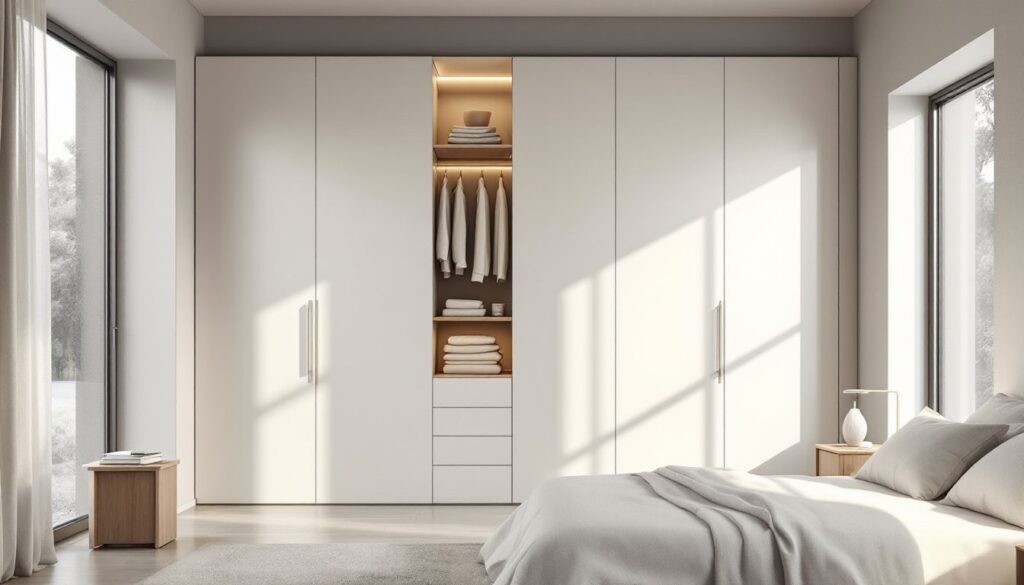
A wardrobe cabinet (or armoire) is a freestanding piece that functions as a portable closet. These work beautifully in bedrooms without built-in closets or when you need extra hanging space. Modern wardrobe cabinets come in various depths, typically 20 to 24 inches, and heights ranging from 60 to 80 inches. Some feature mirrored doors, which doubles as a dressing mirror while saving wall space.
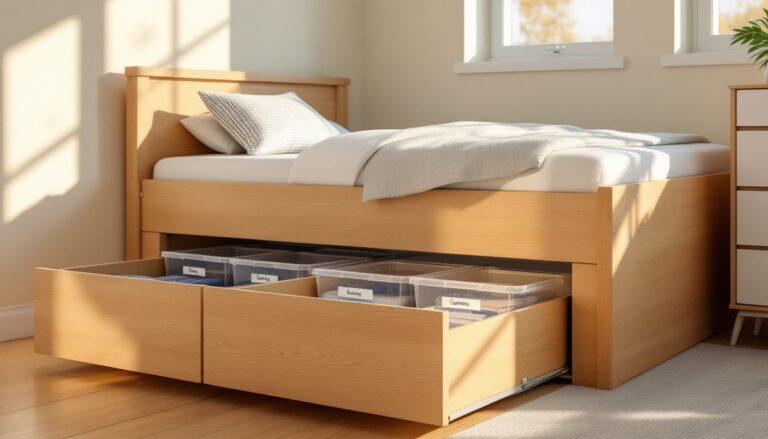
Closet system cabinets are modular units that mount directly to your wall or inside an existing closet. They’re customizable, allowing you to adjust shelf heights, add drawers, and mix hanging rods with shelving. These systems maximize every inch and work especially well in awkward corners or sloped ceilings. The Metropolitan Home Storage Bed incorporates integrated storage, demonstrating how modern furniture combines sleeping and storage functions seamlessly.
Bedside and Wall-Mounted Options
Bedside cabinets replace a traditional nightstand and offer drawer and shelf storage right where you need it most. They’re compact, usually 16 to 20 inches wide, but surprisingly functional. Some models include a single drawer for personal items and an open shelf for a lamp or book.
Wall-mounted cabinets hang above a dresser, desk, or along any available wall space. These don’t consume floor space, making them ideal for smaller bedrooms. Expect to install them 15 to 18 inches above furniture or 48 to 60 inches from the floor for easy reach. They come in depths of 10 to 15 inches and can be paired together for a gallery-style effect. Floating cabinets require proper wall anchors (hitting studs is essential for safety, more on that later).
How to Choose the Right Cabinet for Your Space
Start by measuring your space, not once, but twice. Take width, height, and depth measurements from multiple points. Wall studs, electrical outlets, and baseboards matter. Jot down where they are: they’ll influence where cabinets can go.
Next, assess what you’re actually storing. Shoes and handbags need different organization than folded sweaters or blankets. A wardrobe cabinet with hanging space works great for dresses and coats. Modular systems with adjustable shelves handle mixed storage better. Consider the cabinet’s material. Solid wood ages beautifully but costs more and requires finishing care. Plywood-core cabinets (with veneer surfaces) offer durability at a lower price point and resist warping better than solid wood in humid climates. MDF (medium-density fiberboard) is budget-friendly but less durable and can swell if exposed to moisture.
Style matters, too, but function comes first. A sleek, minimal cabinet looks great but might have awkwardly shallow shelves. A Home Office Storage Cabinets approach, organizing by zones and purpose, translates perfectly into bedroom storage. Think about access. Do you want everything visible, or would you prefer doors to hide things? Doors offer dust protection and a cleaner look: open shelving is faster to access but requires neat arrangement. Finally, budget realistically. Bedroom storage cabinets range from $200 for a basic wall-mounted unit to $2,000+ for a custom wardrobe system. Factor in installation costs if hiring someone: expect $150 to $400 for professional mounting.
DIY Installation Tips for Bedroom Cabinets
If you’re mounting a wall cabinet, preparation is everything. Locate wall studs using a stud finder, don’t guess. Mark them with a pencil. Most cabinets need at least two studs for secure mounting: use 3-inch wood screws rated for your wall type (drywall, plaster, or tile each requires different fasteners).
For freestanding units like wardrobes, ensure your floor is level. A sloped or uneven floor throws off door operation and makes shelves look awkward. Use shims (thin wood wedges) under the cabinet feet to level it. Some cabinets include adjustable leg levelers, much easier to work with.
Here’s what you’ll need:
- Stud finder (non-negotiable)
- Level (24 inches is standard)
- Drill-driver with bits for your fasteners
- Pencil and tape measure
- Shims (for freestanding units)
- Safety glasses and work gloves
- Possibly a second set of hands, most cabinets are heavy and awkward
Before drilling into walls, double-check the cabinet’s weight. A loaded wardrobe can easily exceed 150 pounds. Your wall anchors and fasteners must support the load. If your bedroom has older plaster walls instead of drywall, invest in toggle bolts or heavy-duty anchors: regular drywall anchors won’t cut it.
Steps for mounting a wall cabinet:
- Mark stud locations and your desired height with a pencil.
- Pre-drill pilot holes to prevent splitting.
- Align the mounting bracket with studs and secure with screws.
- Use a level to confirm the bracket is straight.
- Carefully lift the cabinet onto the bracket and secure from inside (if there’s access) or from underneath.
- Install shelves and organize by category.
For freestanding cabinets, assembly usually takes 30 to 90 minutes depending on complexity. Follow the manufacturer’s instructions closely. Many DIYers skip attaching the back panel or securing the unit to the wall, don’t. A cabinet that’s only sitting on the floor can tip forward if someone leans on an open door. If your bedroom has kids or pets, anchoring to the wall is a safety must.
Common mistakes to avoid: not measuring twice, guessing where studs are, undersizing fasteners, and skipping the level check. A crooked cabinet looks sloppy and doors won’t close properly. If you’re unsure about wall anchors or drilling into plaster, consult DIY project tutorials or woodworking guides that walk through installation for your specific situation. For beginners tackling their first cabinet project, beginner woodworking resources offer detailed visual guides that demystify the process.
Conclusion
Bedroom storage cabinets aren’t a luxury, they’re a practical solution to a real problem. Whether you choose a sleek wall-mounted unit, a versatile wardrobe, or a modular closet system, the right cabinet transforms clutter into order. Take time to measure your space, plan your storage needs, and install properly. Done right, your new cabinet will serve you well for years and finally give your bedroom the calm, organized feel it deserves.