Table of Contents
ToggleIf you’ve ever stared at the empty void under your bed and wished it served a purpose, you’re not alone. Bed frames with storage underneath solve one of the most frustrating bedroom challenges: finding room for linens, seasonal clothes, shoes, or tools without adding bulk or clutter. Whether you’re furnishing a compact apartment, a child’s room, or just want to maximize your square footage, storage bed frames deliver both function and style. These aren’t flimsy afterthoughts, modern designs range from drawers built into the frame itself to lift-up platforms and open shelving. Read on to discover which storage solution fits your space and how to pick one that works.
Key Takeaways
- Bed frames with storage underneath convert wasted under-bed space into functional square footage, providing 20–30 cubic feet for linens, seasonal clothes, shoes, and tools in compact bedrooms.
- Built-in storage drawers and sealed compartments reduce dust and allergens compared to open shelving, making them ideal for people with allergies or asthma.
- Storage bed frame styles include drawer systems (most affordable and practical), lift-up pneumatic designs (best for bulky items), and open shelving (ideal for frequently rotated items).
- Measure your room carefully and account for drawer clearance before purchasing; prioritize quality ball-bearing slides and hinges to avoid costly repairs and drawer jamming on carpeted floors.
- Budget ranges from $300–600 for basic platforms to $1,200+ for pneumatic lift-up beds; DIY options cost 30–50% less and offer complete control over materials and design.
Why Storage Bed Frames Are a Game-Changer for Small Spaces
A bed frame with storage underneath transforms dead space into functional square footage. In a 12×14 bedroom, the area under your bed represents roughly 20–30 cubic feet of untapped real estate, enough for a full wardrobe change, holiday décor, or backup linens. That matters when closet space is tight or when you’re renting and can’t add shelving to walls.
Storagebed frames also reduce the need for standalone furniture. Instead of squeezing a dresser or storage bench into an already crowded room, the frame itself handles the job. This opens up floor space, makes the room feel larger, and cuts down on visual clutter. The psychological benefit is real: an organized bedroom with fewer visible items feels calmer and easier to navigate, even if square footage hasn’t actually changed.
Built-in storage is also more dust-proof than open shelving. Drawers and sealed compartments keep dust mites and allergens away from your bedding and clothes. If you’re dealing with allergies or asthma, this is a genuine health advantage, not just a convenience. Most people find they can store off-season items longer without worrying about musty smells or visible dust buildup.
Types of Under-Bed Storage Solutions
Drawers and Sliding Storage
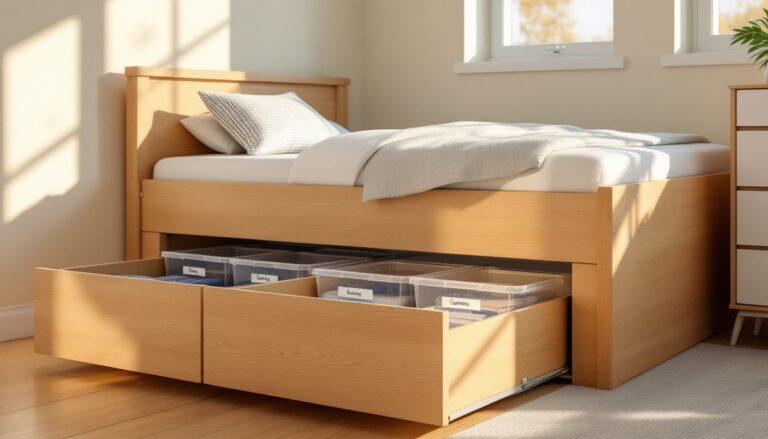
Built-in drawers are the gold standard for under-bed storage. Full-size bed frames typically accommodate two large drawers (one on each side), while queen and king frames can hold three to four. Drawers sit on ball-bearing slides or wooden runners, so they glide smoothly even when loaded with heavy items. Quality hardware matters here, cheap slides stick or derail, turning a convenient feature into a frustration.
Wooden drawer frames are common in mid-range and premium beds. The frame sits directly on the floor or on low legs, keeping drawers accessible without back-straining reaches. Drawers should have depth stops to prevent them from rolling out completely, and handles recessed into the frame keep them snag-free. If you’re building your own, plans like the farmhouse storage bed with drawers from Ana White offer detailed lumber lists and assembly steps.
One trade-off: if your room has thick carpeting or uneven floors, drawers may stick or bind. Test any bed on-site before committing, or choose one with adjustable slides. Some drawers also include dividers or fabric bins, helpful for organizing smaller items, though they add bulk and weight.
Open Shelving and Lift-Up Designs
Open shelving under the bed (sometimes called a platform or sled base) trades enclosure for easy access. You can see everything at a glance, great for frequently rotated items like seasonal bedding or guest pillows. These designs work well in modern or minimalist rooms where visual openness matters. The trade-off is that items collect dust unless stored in bins, and the look can feel cluttered if not carefully curated.
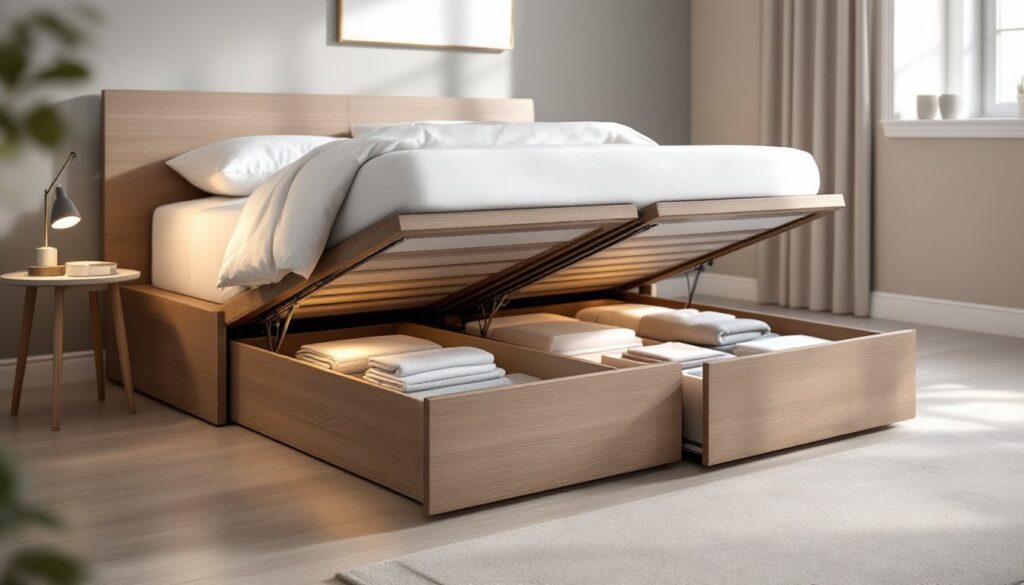
Lift-up or pneumatic storage beds are the premium option. The entire mattress platform hinges upward on gas struts, revealing a cavernous compartment beneath. These excel for bulky items: suitcases, comforters, totes, or sports gear. You don’t dig through drawers: you simply lift and grab. Pneumatic beds require zero force, the gas struts do the heavy lifting, so even kids can operate them safely. The downside? Higher cost (typically $800–2,500+ depending on size and frame material) and potential mechanical failure if struts wear out.
How to Choose the Right Bed Frame for Your Needs
Start by measuring your room. Account for door swings, clearance from the foot of the bed to the opposite wall, and whether you need room to pull drawers open fully. A queen bed frame with two side drawers needs about 5 extra inches of clearance on each side, non-negotiable if you actually plan to use the storage.
Next, identify your priority items. If you’re storing lightweight bedding or linens, drawers are fine and affordable. If you need to stash a large suitcase or steamer trunks, a lift-up bed is worth the investment. For shoes, off-season clothes, or tools, drawers with dividers or fabric organizers keep things tidy. Open shelving works best for items you’ll rotate monthly, guest linens, seasonal décor, but requires commitment to keeping them organized.
Consider your lifestyle and floor type. Carpeted floors can make drawers sticky: in that case, beds with sealed ball-bearing slides or lift-up designs perform better. If you have allergies, a drawer system with doors outperforms open shelving. Families with young kids? Make sure drawers have soft-close or slow-close slides to prevent pinched fingers. And if you’re renting, check your lease, some landlords restrict bed frame modifications.
Budget matters too. Basic platform beds with minimal storage run $300–600. Drawer-equipped frames range from $600–1,500. Pneumatic lift-up beds start around $1,200 and climb from there. Whatever your budget, prioritize quality hardware: cheap slides and hinges fail within a few years and are expensive to repair.
If you’re handy, Fix This Build That and The Handyman’s Daughter both offer free or low-cost plans for DIY storage beds. Building your own costs 30–50% less than buying, gives you exact control over materials and dimensions, and forces you to plan every detail, which prevents buyer’s remorse. You’ll also end up with a sturdier frame than budget options from big-box retailers.
For a finished look without the build, the Metropolitan Home Storage Bed combines solid construction, ample drawer space, and clean lines that fit most décor styles. It’s a mid-range option that scores high on durability and design.
Conclusion
Bed frames with storage underneath aren’t a luxury, they’re a practical solution for making small rooms work harder. Whether you choose drawers, shelving, or a lift-up platform, the key is matching the design to your actual storage needs and floor layout. Measure twice, test before you buy, and invest in quality hardware. Your future self will thank you every time you reach for something without hunting through a closet or digging in a dresser.