Table of Contents
ToggleA cluttered bathroom is a morning frustration nobody needs. Between towels, toiletries, cleaning supplies, and medications, most bathrooms lack adequate storage, and a cramped medicine cabinet above the sink isn’t cutting it. A bathroom storage cabinet with drawers solves this problem by combining concealed space with organized compartments that keep daily essentials within reach but out of sight. Whether you’re renovating a master bath or upgrading a guest bathroom, the right cabinet with drawers transforms wasted wall and floor space into functional storage. This guide walks you through selecting, installing, and organizing a cabinet that fits your bathroom layout, style, and storage needs.
Key Takeaways
- A bathroom storage cabinet with drawers eliminates clutter while protecting toiletries from humidity, dust, and moisture that cause product degradation.
- Vanity cabinets with integrated drawers range from 18–72 inches wide and require solid wood or quality plywood construction with dovetail joints and full-extension ball-bearing slides for durability in humid bathrooms.
- Proper measurements, level installation with wall-stud fastening, and 48-hour acclimation time prevent drawer misalignment and ensure your cabinet performs reliably for 10+ years.
- Organizing drawers by category with clear dividers, rolling towels vertically, and labeling sections maximizes accessibility and keeps daily essentials within reach while maintaining a calm bathroom aesthetic.
- Choosing moisture-resistant finishes and placing silica gel or dehumidifier pods inside drawers prevents mold buildup and extends the life of medications and cosmetics in high-humidity bathrooms.
Why Bathroom Storage Cabinets With Drawers Matter for Your Home
Bathrooms are high-traffic zones where clutter accumulates fast. Drawers in a storage cabinet solve a real problem: they hide mess while keeping items accessible and organized. Unlike open shelving, drawers protect items from humidity, dust, and prying eyes, especially important in a room where moisture levels spike during hot showers.
A cabinet with drawers also maximizes vertical and floor space. Shallow drawer compartments are ideal for small items like hair clips, razors, and medication bottles. Deeper drawers handle rolled towels, washcloths, and larger bottles. The result is a bathroom that looks intentional and calm instead of chaotic.
Beyond aesthetics, proper storage reduces mold and moisture problems. When items are contained in drawers and off countertops, air circulates more freely. This is especially valuable in bathrooms with poor ventilation or high humidity. A well-organized cabinet also keeps products in good condition, sunscreen, medications, and certain cosmetics degrade faster when exposed to heat and moisture.
Types of Bathroom Storage Cabinets With Drawers to Consider
Vanity Cabinets With Integrated Drawers
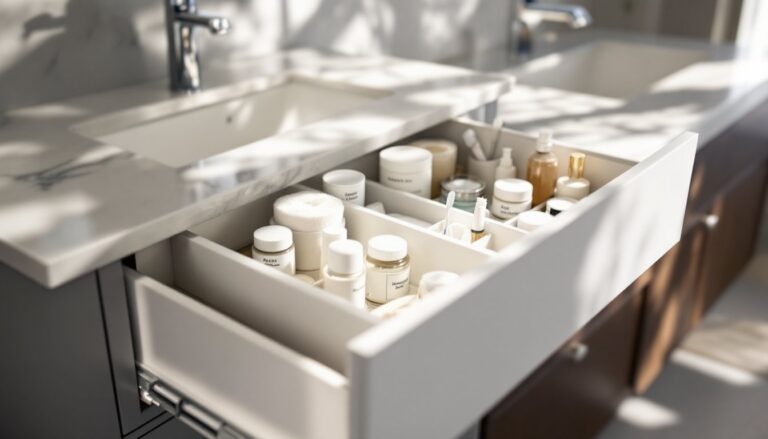
A vanity cabinet combines a sink basin, countertop, and storage in one unit. Many modern vanity designs include multiple drawers beneath the sink, typically two or three shallow ones running the full width. These are the workhorses of bathroom storage, housing everyday items like toothbrushes, deodorant, and hairbrushes.
Vanity cabinets range from 18 inches to 72 inches wide and sit 30 to 36 inches tall (standard countertop height). Quality matters here: look for solid wood, plywood construction, or high-grade veneer rather than particleboard, which swells and fails in humid bathrooms. Dovetail drawer joints (interlocking wood tabs) outlast stapled or glued joints by years.
Drawer slides are critical. Full-extension ball-bearing slides let drawers open fully so you access everything inside without reaching. Partial-extension slides cost less but require you to reach deeper. Soft-close mechanisms are a comfort feature, drawers won’t slam shut or pinch fingers.
Freestanding Storage Cabinets
A freestanding cabinet sits against a wall or in a corner without being built into the vanity. These work well in smaller bathrooms or as supplementary storage. They range from tall, narrow linen cabinets (12 inches wide, 60+ inches tall) to wider units with a mix of shelves and drawers.
Freestanding cabinets offer flexibility. You can move them if you relocate or remodel. Many styles include both open shelving for display and closed drawers for concealed storage. Quality construction uses the same standards as vanity cabinets, solid wood or quality plywood, dovetail joints, and smooth drawer glides.
One consideration: freestanding units don’t conceal plumbing or wall imperfections, so your wall surface and any visible pipes need to look intentional. Bathroom-specific freestanding cabinets have moisture-resistant finishes and are designed to tolerate steam and temperature swings.
How to Select the Right Cabinet for Your Bathroom Space
Before shopping, measure your bathroom carefully. Note the width of the wall or corner where you want the cabinet, the height from floor to any fixtures (toilets, windows), and check for electrical outlets or plumbing that might interfere. Take a photo of the space and any existing cabinetry so you can match style and finish.
Consider your storage needs. How many people use the bathroom daily? Do you store medications, first aid supplies, bulky hair tools, or cleaning products? Taller cabinets with deeper drawers suit households with lots of supplies. Smaller bathrooms need compact units.
Material and finish determine longevity in a humid environment. Solid wood finishes (painted, stained, or sealed) resist moisture better than unfinished particle board. Look for water-resistant varnish or polyurethane that prevents swelling. Soft-close drawer hardware adds $100–$300 to the price but reduces wear and feels premium.
Style should complement your bathroom. Modern bathrooms favor clean-lined cabinetry in white, gray, or natural wood. Traditional baths suit raised-panel doors and warmer finishes. Many homeowners find smart storage solutions specifically to be a source of design inspiration before purchasing.
Budget ranges widely. A basic 30-inch vanity cabinet runs $200–$500. Mid-range units with better hardware and finishes cost $500–$1,200. Custom or designer cabinets exceed $1,500. Freestanding cabinets typically cost 20–40% less than integrated vanities for the same footprint.
Installation Tips and Considerations
If you’re replacing an existing vanity, turn off the water supply and disconnect plumbing at the shutoff valves, you may need an adjustable wrench. Unbolt the old cabinet from wall studs (use a stud finder to locate them, they’re typically spaced 16 inches apart). If the old cabinet is glued or caulked, a reciprocating saw or pry bar helps.
For a new vanity, ensure the floor is level. Use shims (thin tapered wood wedges, typically 3 to 12 inches long) under the base to level the cabinet front-to-back and side-to-side. An uneven cabinet causes drawer misalignment and sag.
Secure the cabinet to wall studs using 3-inch wood screws through the cabinet’s mounting rail into studs. This prevents tipping and handles the weight of full drawers. If studs don’t align with the cabinet, use toggle bolts or heavy-duty anchors rated for damp environments. Never rely on adhesive alone in a bathroom.
If you’re uncertain about disconnecting plumbing, water pressure, or structural fastening, hire a plumber or cabinet installer. Professional installation typically costs $300–$800 but ensures plumbing connections are secure and the cabinet is level and stable. Step-by-step DIY project tutorials and maker guides from Instructables can also walk through simpler freestanding cabinet placement if you prefer a hands-on approach.
Allow new cabinetry to acclimate to your bathroom for 48 hours before use. Wood swells slightly in humid environments: premature drawer use can cause sticking.
Organizing and Maximizing Your Cabinet Storage
Once installed, smart organization makes drawers earn their space. Start by decluttering: pull out everything, toss expired medications (check your local pharmacy for safe disposal), dried-up products, and items you haven’t used in six months.
Group items by category: daily skincare, hair care, medications and first aid, cleaning supplies, and extra towels. Use drawer dividers or small clear plastic bins (3 to 6 inches tall, available at hardware stores) to corral small items. Clear containers let you see contents without opening drawers, a huge time-saver in a rushed morning.
Layering towels vertically (rolling them) rather than stacking flat saves space and makes retrieval easier. Store heavier items like extra toiletries on lower shelves or deeper drawers to keep the cabinet’s center of gravity stable.
Label bins and shelves if multiple people use the bathroom. Medications should be clearly marked and stored in a cool, dry drawer away from direct sunlight and heat. Keep frequently used items (toothbrush holders, deodorant, daily face wash) in the upper drawers closest to eye level.
Periodically audit your cabinet every three months. Toss empty bottles, consolidate partially used products, and wipe down shelves and drawer bottoms to prevent moisture and mold buildup. Remodelista curates home product guides and design inspiration for organizing solutions if you want professional-grade storage systems like custom drawer organizers or luxury storage containers.
Consider moisture control: place a small rechargeable dehumidifier pod or silica gel packet in a corner drawer. This is especially important in bathrooms without exhaust fans or in damp climates. Replace or recharge every two to three months depending on humidity levels.
Final Thoughts: Making Your Bathroom Storage Work Long-Term
A bathroom storage cabinet with drawers isn’t just nice to have, it’s a practical upgrade that reduces daily friction and extends product life. The key is choosing quality construction suited to a humid environment, securing it properly, and organizing contents thoughtfully. Whether you go with a vanity cabinet for active use or a freestanding unit for backup storage, the right cabinet turns a chaotic morning routine into a calm, functional space. Take time to measure, select the style that fits your bathroom, and don’t rush installation. A solid cabinet will serve you for 10+ years with minimal maintenance.