Table of Contents
ToggleLiving rooms are the heart of most homes, but clutter can quickly kill the vibe. Between remotes, throw pillows, books, and the inevitable pile of items without a home, storage becomes essential, not as an afterthought, but as part of your design strategy. The good news? Smart storage solutions can actually elevate your décor while hiding the chaos. Whether you’re dealing with a small apartment or a sprawling family room, there are practical, stylish ways to organize without resorting to plastic bins and sad shelving units. Here’s how to reclaim your living room with storage that works as hard as it looks good.
Key Takeaways
- Vertical wall shelving maximizes space and creates visual interest by utilizing prime real estate above sofas or console tables with floating shelves mounted securely to studs.
- Multi-functional furniture like ottoman storage benches and nested side tables provide hidden storage while serving their primary purpose, making them ideal for smaller living rooms.
- Living room storage ideas benefit from a layered approach: combine vertical shelving, multi-functional pieces, and stylish baskets to keep your space organized without appearing cluttered.
- Built-in cabinetry offers long-term, customizable storage solutions for committed homeowners, though it requires proper carpentry skills or professional installation for safety and durability.
- Woven baskets and canvas bins offer affordable, renter-friendly storage options that can be labeled, nested vertically, and chosen in coordinating colors to maintain a polished aesthetic.
- Thoughtful planning—measuring spaces, securing items to studs, and selecting quality hardware—ensures your storage solutions are both functional and visually appealing for years to come.
Vertical Wall Shelving Solutions
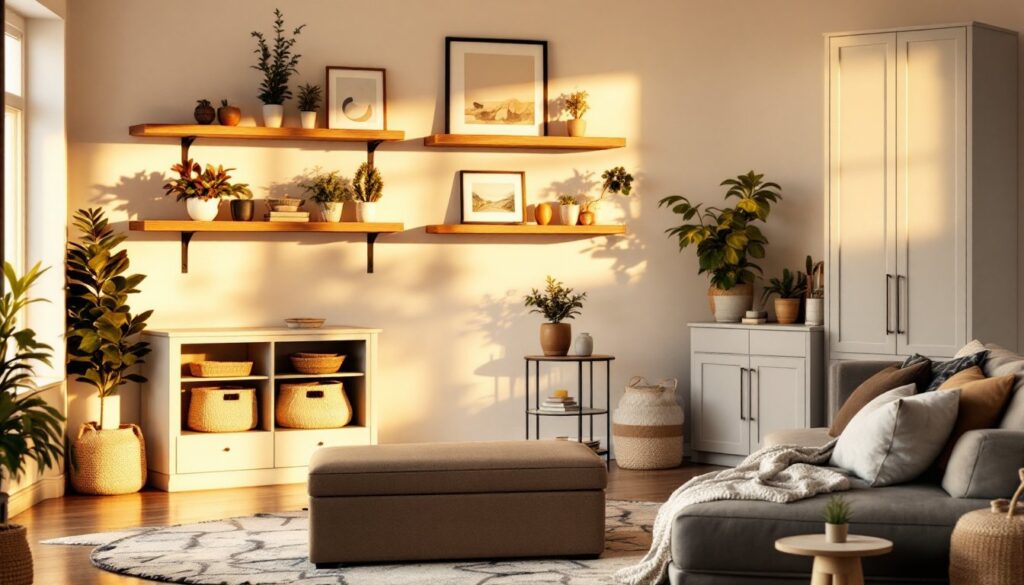
The wall above your sofa or behind a console table is prime real estate that most people leave empty. Floating shelves and wall-mounted systems pull storage off the floor and create visual interest simultaneously. Consider solid wood shelves (typically 10–12 inches deep for living rooms) mounted on metal brackets or cleats secured to studs. Hit the studs, never drywall alone, and use a stud finder if you’re uncertain.
For an efficient layout, install shelves at eye level or slightly above: 18 inches apart vertically is a good default. Keep them uncluttered: alternate decorative items with functional storage (baskets, small boxes) to prevent a cluttered look. A living room storage ideas guide can walk you through selecting materials and load ratings. If you rent or want flexibility, adjustable shelf systems (like track-mounted standards) let you reconfigure without permanent damage. Wood shelves in walnut, oak, or painted finishes pair well with industrial brackets for a modern farmhouse feel.
Multi-Functional Furniture Pieces
The smartest storage doesn’t look like storage. Multi-functional furniture pulls double (or triple) duty: it gives you a place to sit, set a drink, or rest your feet while hiding things underneath. This approach maximizes utility without eating up floor space, which is especially valuable in smaller rooms.
Ottoman Storage Benches
An ottoman with a hinged or lift-top is a workhorse piece. Choose one with a footprint of about 24″ × 36″ and 15–18″ height, large enough to hide blankets, magazines, board games, or throw pillows, yet low enough not to block sight lines across the room. Upholstered options in linen, leather, or velvet hide dust better than exposed wood, and they add softness to a room’s aesthetic. Make sure the hinge mechanism is sturdy and the interior isn’t flimsy particleboard that’ll collapse after a few uses. A quality ottoman should last decades, so it’s worth spending more upfront. Interior design platforms like Homedit showcase modern ottoman styles that seamlessly fit contemporary and traditional rooms alike.
Nested Side Tables
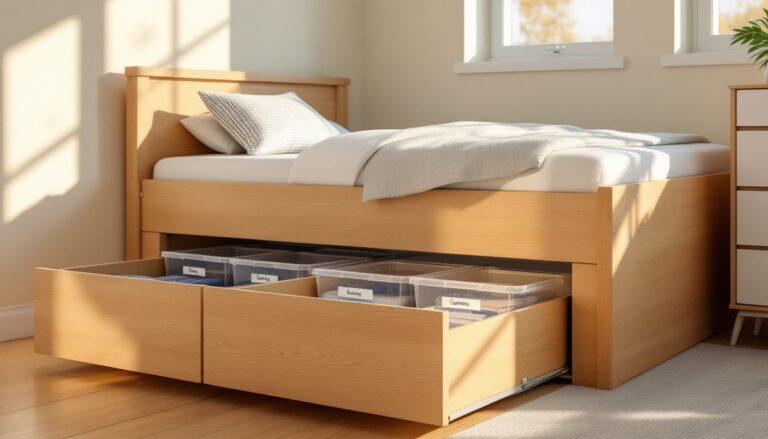
Nested tables (typically two or three pieces) slide under one another, so they take up minimal floor space but expand when you need extra surface area. Solid wood or metal frames work well here. Each table has storage potential: a shelf beneath the tabletop, a drawer, or a basket-style lower tier. Arrange them beside a sofa or in a corner, and you’ve got accessible storage plus flexible seating surfaces. They’re also easier to move around than a solid console, making them ideal if you like to rearrange seasonally. The Metropolitan Home Storage Bed concept demonstrates how furniture can be both functional and design-forward, the same principle applies to living room pieces.
Built-In Storage and Cabinetry
If you’re willing to commit to your space and handle structural changes, built-in cabinetry is the gold standard for storage. Wall-mounted cabinets with doors hide clutter completely, while open shelving or a mix of both lets you display items you’re proud of. Floor-to-ceiling built-ins maximize vertical space, especially in rooms with high ceilings like those discussed in living room vaulted ceiling wall decorating ideas.
Built-ins require some carpentry skill or a contractor: framing into studs, securing the cabinet box, ensuring it’s level and plumb, and finishing edges. Most building codes don’t regulate cosmetic cabinetry, but if you’re removing a wall or adding electrical outlets, you’ll need permits. Stock cabinetry (pre-built units from big-box stores) costs less and installs faster than custom options, but custom work lets you tailor dimensions and finishes exactly. Plan the interior layout thoughtfully: adjustable shelves beat fixed ones, drawer slides should be ball-bearing (not cheap plastic), and back panels keep items from slipping behind. If DIY carpentry isn’t your strength, hire a skilled carpenter, a wobbly cabinet is an eyesore and a safety risk.
Baskets and Bins for Hidden Organization
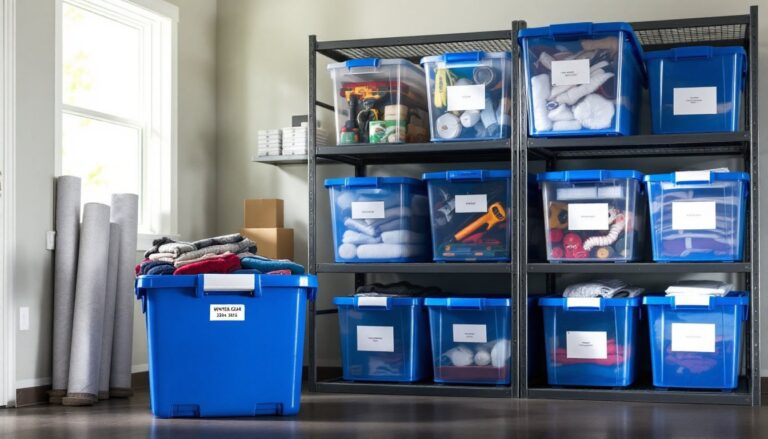
Sometimes you don’t need furniture, you just need containers. Woven baskets (seagrass, rattan, or wicker) slide under a console table, nestle beside a sofa, or sit atop shelves. They’re soft, textured, and hide remotes, magazines, blankets, and toys without looking institutional. Cotton canvas bins work for a modern look and are machine-washable if they get dusty. Measure your space first, a basket 16 inches wide fits nicely under most side tables, and heights between 10–14 inches tuck under shelves without cramping.
Label the baskets so family members know where things go: even a simple tag tied to the handle helps. Avoid dark baskets if your living room is already dim, light colors reflect more light and make the space feel larger. Stack smaller bins inside larger ones to nest storage vertically, or line them up under a shelf unit. This approach is renter-friendly, moveable, and inexpensive. IKEA living room hacks demonstrate creative ways to customize affordable containers to suit your style. For a more polished look, choose baskets in coordinating colors or materials so they appear intentional rather than random. If you’re storing items long-term, cedar or mothball-treated containers protect fabrics and paper from pests and moisture.
Conclusion
Living room storage doesn’t have to be an eyesore or require a renovation budget. Start with vertical shelving to test the waters, layer in multi-functional furniture that you’d buy anyway, and fill gaps with beautiful baskets. If you’re tackling a bigger project like built-ins, take your time planning and don’t skip the prep work, measure twice, level always, and secure everything to studs. The right storage system works quietly in the background, keeping your living room organized, stylish, and genuinely livable. Whether it’s a rental-friendly basket under the sofa or custom cabinetry that’ll last decades, the solution is out there. Your future self (and your guests) will thank you.