Table of Contents
ToggleA king size bed claims serious real estate in most bedrooms, but a king size bed frame with storage does double duty: it’s where you sleep and a hidden organizational powerhouse. For homeowners juggling limited closet space or keeping guest room essentials within arm’s reach, storage bed frames solve the clutter problem without requiring you to rent a storage unit. Whether you’re furnishing a master bedroom, a guest room that doubles as an office, or upgrading from an old frame that’s seen better days, a well-chosen storage bed frame pays for itself through sheer practicality. This guide walks you through the options, what to look for, and how to install one without calling a professional.
Key Takeaways
- A king size bed frame with storage maximizes hidden organizational space without consuming additional floor area, offering 8 to 12 cubic feet of capacity beneath the mattress.
- Choose between under-bed drawers for frequent access, lift-up storage for bulky items, or headboard storage for convenient bedside organization based on your specific needs and lifestyle.
- Measure your bedroom (requiring at least 10 feet width and 12 feet length for comfort) and verify mattress height compatibility before purchasing to avoid installation issues.
- Prioritize solid wood or quality particle board construction with strong internal bracing and check weight capacity reviews to ensure durability and prevent long-term sagging.
- Recruit a helper and allocate 2 to 4 hours for assembly; use proper tools, confirm the frame is square before fully tightening bolts, and install drawers last for optimal performance.
Why Storage Bed Frames Are a Game-Changer for Modern Bedrooms
The master bedroom isn’t getting any larger, but your stuff keeps multiplying. A storage bed frame leverages what would otherwise be wasted space under the mattress, typically 8 to 12 cubic feet depending on the frame design. For seasonal linens, off-season clothing, extra pillows, or rarely-used hobby gear, that’s real estate you’re already paying for.
Unlike wall-mounted shelving or bulky dressers, a storage bed doesn’t steal floor space. It’s invisible to anyone standing in your room and doesn’t change the furniture footprint. You get the organizational benefit without the visual clutter. Plus, if you ever move or redecorate, the bed moves with you, keeping storage portable and flexible. The bonus: on restless nights, you’re no longer staring at an empty void under the frame wondering what could go there.
Types of King Size Bed Frames With Storage
Storage bed frames come in several flavors, each suited to different needs and room layouts. Understanding the distinction helps you avoid buying the wrong style and then spending a weekend angry at your own choices.
Under-Bed Drawers and Lift-Up Storage
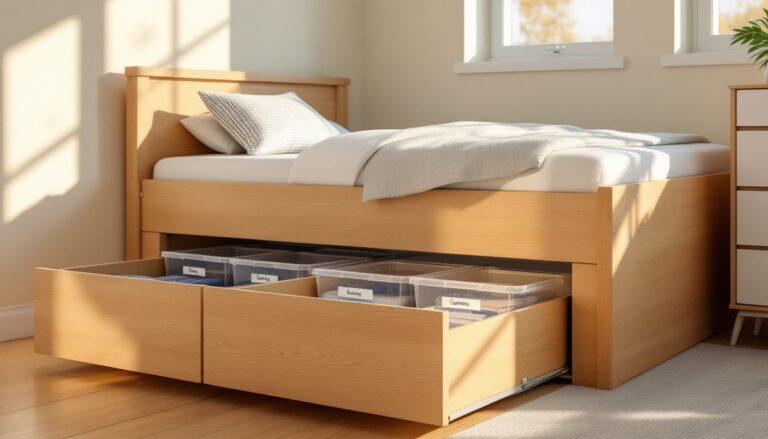
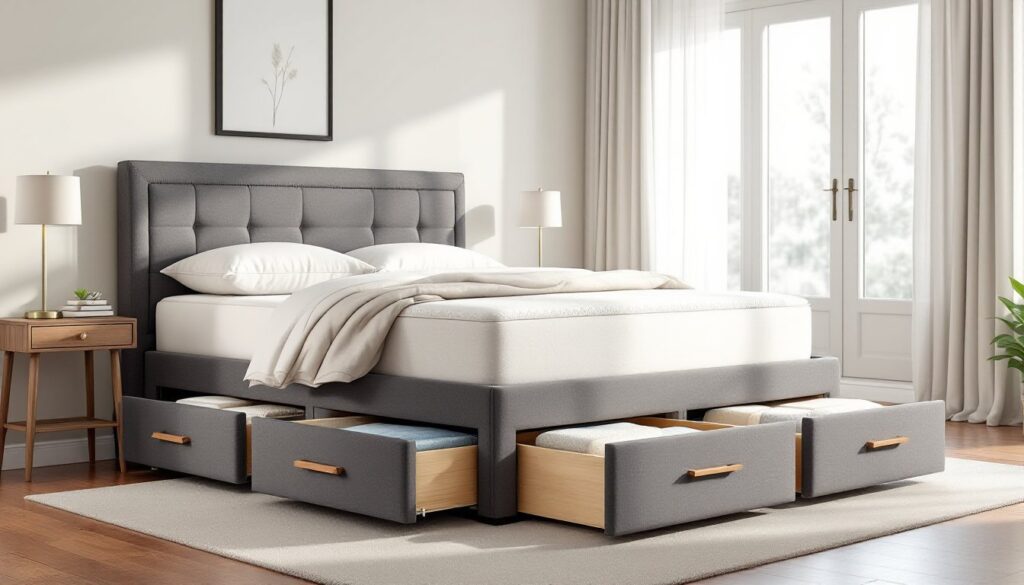
These are the most common and versatile options. Under-bed drawers roll out like dresser drawers and sit flush with the floor, making them ideal for frequently accessed items like extra blankets or seasonal clothing. They’re easier to access than lift-up storage and don’t require bending or lifting. Some frames come with two large drawers: others have four smaller ones. The trade-off is that drawers add height to the bed (typically 2 to 4 inches) and limit customization, you’re locked into the number of drawers the manufacturer provides.
Lift-up storage frames use hydraulic or mechanical hinges to raise the entire mattress platform, revealing a deep cavity beneath. Think of it like a car hood, except it’s holding your winter coats. Lift-up designs keep the bed profile sleeker since the drawers don’t stick out, but accessing items means raising the entire mattress (and potentially being discreet about your hoarding habits). Some folks find the hydraulics annoying after a few hundred cycles: others swear they’re convenient. Check reviews specific to the brand, hydraulic quality varies wildly.
Headboard Storage Solutions
Headboard storage shelves or cubbies sit at the head of the bed, tucking into an integrated structure. This works brilliantly if you’re the type who reads before bed, needs a nightstand alternative, or likes books, lamps, and a phone within arm’s reach. The downside: headboard storage doesn’t maximize the space under the mattress, so you’re not getting as much overall cubic footage. Headboards also constrain furniture arrangement: you’re locked into positioning the bed against a wall. If you like moving furniture around or renting (and landlords frown on wall-mounted structures), this isn’t flexible.
How to Choose the Right Storage Bed Frame for Your Space
Before you buy, measure twice and think about your life. A king size bed requires at least 10 feet of width and 12 feet of length to sit comfortably in a room without feeling cramped (that’s the bed itself plus 2 feet of walking clearance on three sides). If your bedroom is tighter, you’re gambling with traffic flow and future regret.
Next, consider what you’re actually storing. Are you stashing bulky off-season items (winter coats, holiday decorations) that need easy-access drawers? Then under-bed drawers make sense. Are you organizing small, frequently-used items (books, glasses, a phone charger)? A headboard with cubbies works better. Be honest about your habits, if you never use anything you can’t see, lift-up storage will frustrate you within six months.
Material matters too. Solid wood frames (oak, pine, maple) hold up well but cost more and require finishing. Particle board or MDF with veneer is budget-friendly and comes in various finishes but may sag under pressure if the internal bracing is cheap. Read reviews about weight capacity and long-term durability: a $300 frame that splinters in three years isn’t a bargain.
Check the mattress clearance if you’re buying a storage frame for an existing mattress. A 12-inch-deep mattress is standard for a king, but memory foam and pillow-top models run 14 to 16 inches. Measure your mattress height and confirm the frame’s interior dimensions accommodate it without pinching or tilting. Finally, consider the finish. If your bedroom is modern, a sleek platform or upholstered frame reads contemporary. Traditional bedrooms pair better with wooden frames or those with turned legs. The Metropolitan Home Storage Bed: offers a solid mid-range option if you’re shopping and want to see a practical example.
DIY Installation Tips and Best Practices
Most storage bed frames arrive flat-packed or as a kit requiring assembly. Here’s what you need to know before you start.
Prep your space. Clear a large area where you can lay out all pieces and check that nothing arrived damaged. Confirm you have every fastener, cam lock, or bolt listed in the instructions. Missing hardware halfway through is a project-killer. Lay out the parts in rough assembly order so you’re not hunting for that one mystery bracket at the end.
Recruit a helper. A king size bed frame is heavy, typically 150 to 250 pounds depending on material. Lifting the frame, aligning joists (the support beams running the length of the bed), and fastening the corners is a two-person job. Don’t try solo unless you enjoy frustration and potential injury.
Use the right tools. A cordless drill makes fastening screws exponentially faster than a screwdriver. An adjustable wrench handles bolts, and a rubber mallet helps tap pieces together without marring wood. Grab a level to confirm the frame isn’t twisted: a rocked bed feels wobbly and shifts over time.
Check for square. Before fully tightening every bolt, measure diagonally from corner to corner. Both diagonals should be equal (within 1/2 inch). If one is longer, the frame is racked (twisted), and you’ll feel it under the mattress. Loosen bolts slightly and tap the frame until diagonals match.
Secure the drawers last. If your frame has under-bed drawers, install them after the frame is square and level. Drawers should slide smoothly without binding. If they bind, the frame is slightly out of square or the drawer glides are misaligned, adjust before declaring victory.
For those wanting pre-made inspiration or free plans, Ana White’s DIY furniture site has detailed tutorials for building storage bed frames, and The Handyman’s Daughter walks through real-world builds with photos. If you’re considering an IKEA-based hack, KALLAX bedframe king-size builds show how creative builders stretch KALLAX shelving into functional storage beds. Expect assembly to take 2 to 4 hours with a helper, depending on design complexity.
Conclusion
A king size bed frame with storage transforms your bedroom from a single-purpose room into a functional, clutter-free retreat. Whether you choose under-bed drawers, lift-up storage, or headboard cubbies depends on your habits, space, and how often you access what you’re storing. Measure your room, know your mattress height, recruit help for assembly, and take your time. A properly installed storage bed lasts years and pays dividends every time you stash something away instead of piling it on a chair.