Table of Contents
ToggleThe area under your bathroom sink is prime real estate, it’s accessible, often temperature-stable, and already enclosed. Yet most homeowners treat it like a catch-all drawer, shoving cleaning supplies, plumbing tools, and half-empty bottles into a dark cabinet and hoping nothing leaks onto the floor. Under-sink bathroom storage doesn’t have to be chaotic. With some intentional planning and the right organizational tools, you can transform that cramped space into a functional zone that makes reaching for everyday essentials quick and painless. This guide walks you through assessing what you’ve got, choosing the right shelving and containers, and implementing solutions that actually stick around.
Key Takeaways
- Effective under bathroom sink storage starts with measuring your cabinet, inventorying items, and checking for moisture damage before implementing any organizational solutions.
- Installing pull-out shelves, expandable shelf risers, or narrow baskets can double usable space while accommodating pipes and plumbing fixtures safely.
- Use clear bins, labeled baskets, and drawer dividers to containerize items and prevent clutter—reserve fabric bins only for elevated shelves to avoid mold in humid environments.
- Store cleaning supplies in a dedicated caddy or plastic tray at eye level with proper labeling and separate containers to prevent accidental chemical mixing and contain spills.
- Place frequently used items like soap and toothbrush holders at eye level for quick access, and revisit your under-sink setup every three months to remove expired products and prevent mold.
- Install child-proof locks on cabinet doors and never transfer hazardous chemicals to unmarked bottles—safety must come before convenience.
Why Under-Sink Storage Matters for Your Bathroom
Under-sink bathroom storage is often overlooked, but it’s where you keep items you use daily, soap, toothbrush holders, cleaning products, and plumbing supplies. A disorganized cabinet wastes space, makes it harder to find what you need, and can turn into a breeding ground for mold and mildew in a humid environment. More importantly, hazardous chemicals stored carelessly around kids or pets are a safety risk.
When you organize this space properly, you’re not just tidying up. You’re creating a system that prevents spills, protects your cabinet structure from water damage, makes cleaning easier, and keeps essential items within arm’s reach. A well-planned under-sink storage setup also makes it easier to spot leaks early, you’ll notice pooling water or mineral deposits rather than discovering them when damage has already happened.
Assess Your Current Setup
Before you buy a single organizer, measure your cabinet and inventory what you actually store there. Use a tape measure to get the interior width, depth, and height. Note whether you have exposed pipes or a garbage disposal unit under the sink, these take up real estate and determine what shelving or containers will fit.
Next, pull everything out and sort it into categories: daily-use items (soap, toothbrush), weekly or occasional items (cleaning supplies), and things you rarely touch. Be honest about what you actually use. If that half-full bottle of something has been there for two years, it’s clutter, not inventory. Check for any water stains, mold spots, or soft spots in the cabinet bottom, these signal moisture issues you’ll need to address before installing new storage. Wipe down the interior with a dry cloth and let it air for an hour. If it’s damp, place a small bowl or container to catch moisture while you work on the project.
Maximize Vertical Space With Smart Shelving
The most common mistake is leaving the cabinet as a single empty box. Installing a pull-out shelf, tension rod, or a simple two-tier expandable shelf can double your usable area. Pull-out organizers are especially useful because they let you access items at the back without awkwardly reaching over pipes.
For a quick, no-tool solution, consider expandable shelf risers ($15–$30 range). These metal or plastic frames sit on the cabinet bottom and create a second level above them. They’re perfect for under cabinet bathroom storage because you can remove them if you need to access the P-trap (the curved pipe under the sink). If you want something more permanent, a fixed shelf made from ¾-inch plywood or MDF works well, secure it with L-brackets rated for at least 25 pounds to handle weight distribution safely.
Another option is a narrow pull-out basket that slides on under-sink cabinet rails. These cost between $20 and $50 and work especially well if you have an awkward pipe configuration. Measure your available depth carefully, typically 12 to 16 inches in standard bathroom vanities, so the shelf or basket doesn’t hit your plumbing when you pull it out. If your cabinet has exposed pipes, leave at least 2 inches of clearance around them to prevent damage and allow for future access if repairs are needed.
Organize With Bins, Baskets, and Drawer Dividers
Once you’ve maximized vertical space, containerize your items. Clear plastic bins or woven baskets make it easy to see what’s inside without opening everything. Label them so you and anyone else using the bathroom knows exactly where to find the hair styling tools, extra toilet paper, or under-sink bathroom storage for small bottles.
For cleaning supplies, use a shallow caddy or tiered organizer to keep bottles upright and separated by type. Store harsh chemicals (bleach, ammonia) separately from personal care items, and never mix chemicals, even accidentally. Use shelf liners or non-slip mats ($8–$15) to protect the cabinet surface from spills and make containers easier to slide in and out. Mats also improve traction if the cabinet floor is slippery from moisture.
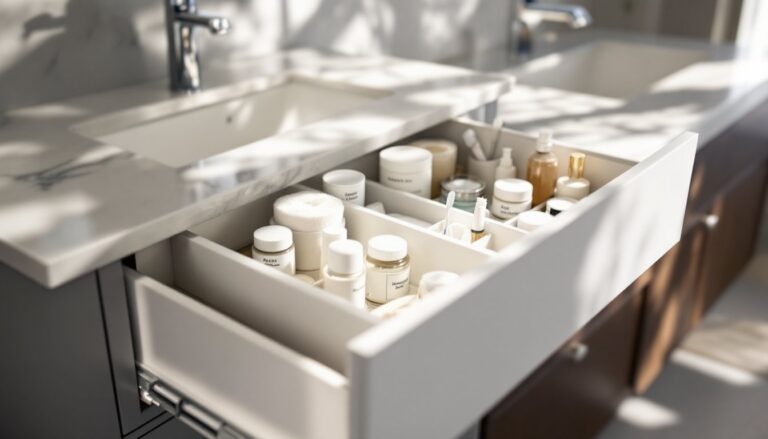
Drawer dividers work well if your sink cabinet has a false bottom or shelf with shallow depth. Acrylic or bamboo dividers ($10–$20) keep small items like nail clippers, hair ties, and travel-size bottles organized. Small fabric bins ($5–$8 each) are lightweight and flexible, they work around pipes and fit into odd corners. Stack them or arrange them side-by-side to use every inch.
For under cabinet bathroom storage specifically, avoid anything fabric or porous on the cabinet floor itself, they’ll absorb moisture and encourage mildew. Reserve fabric bins for elevated shelves, where airflow prevents dampness.
Keep Cleaning Supplies Safe and Accessible
Keep Cleaning Supplies Safe and Accessible
Cleaning products are essential but volatile. Store them in a dedicated caddy or small shelf basket at eye level or below, never above items you use daily, in case of a spill. Liquid cleaners, disinfectants, and bleach should each have their own container so they’re never accidentally mixed.
Use a small plastic tray or bus tub ($5–$10) as a catch-all for cleaning products. If a bottle leaks, the tray contains the spill and protects the cabinet from water damage. Check seals on bottles monthly, dried-out caps leak silently and damage cabinet finishes.
If you have young children, use a child-proof lock or magnetic cabinet latch ($10–$20) on the sink cabinet door. This is non-negotiable for safety. Store all hazardous substances in original, labeled containers. Never transfer cleaning products to unmarked bottles, it creates confusion and serious safety risks if someone accidentally ingests something toxic.
Keep a small roll of paper towels or a cloth rag in the cabinet for quick cleanups. Store them in a small bin or on a tension rod so they’re ready when you need them. The goal is to make spill prevention and quick response second nature. Creative storage hacks and budget-friendly solutions exist across platforms like IKEA Hackers, where you can find ideas for maximizing existing cabinets with affordable organizational tools that also apply to under-sink spaces.
Quick-Access Solutions for Daily Essentials
Items you reach for every single day should sit at eye level or on the easy-to-access top shelf, no bending, no digging. This includes soap dispensers, toothbrush holders, and everyday medications. Use a small tray or acrylic organizer to corral these items so they don’t shift when you open and close the cabinet.
A tension rod mounted horizontally across the top of the cabinet ($10–$15) is brilliant for hanging spray bottles or small cleaning cloths on hooks. This keeps them off the bottom and makes the space feel less cluttered. Mount it securely so it doesn’t slip when you hang weight on it.
Consider a slim pull-out organizer or sliding drawer basket for your most-used items. These typically cost $20–$40 and let you access everything without reaching to the back. If you don’t have space for a full drawer, even a small bamboo or metal shelf divider ($8–$12) can cordon off a dedicated zone for your daily essentials. When everything has a home, you’re far more likely to maintain the system long-term. Design inspiration and curated product ideas for bathroom storage solutions can be found on Remodelista, which offers practical approaches to storage that work across different bathroom styles and sizes.
Final tip: Revisit your under-sink setup every three months. Remove expired bottles, wipe down the cabinet floor, and adjust containers if your needs have changed. A little maintenance keeps mold and odors at bay and ensures your storage system stays functional year-round.