Table of Contents
ToggleKeeping firearms accessible for self-defense while storing them securely away from unauthorized hands, especially children, is a balancing act every responsible gun owner faces. Hidden gun storage doesn’t mean burying a shotgun in the backyard: it means integrating a secure safe into your home’s existing layout so you can reach it quickly if needed, but no one else can stumble upon it by accident. Whether you’re a long-time collector, a first-time handgun owner, or someone bolstering home security, the right concealment method combines accessibility, theft prevention, and peace of mind. This guide walks through seven practical hidden gun storage solutions that actually work in real homes, from wall-mounted safes behind picture frames to converted furniture and under-floor vaults. Each option balances security, speed of access, and aesthetics so your home doesn’t scream “guns inside.”
Key Takeaways
- Hidden gun storage must balance accessibility for self-defense with security to prevent unauthorized access, especially by children and thieves.
- Wall-mounted safes behind picture frames or artwork are highly effective concealment methods when properly anchored to wall studs with heavy-duty bolts rated for at least 400 pounds of shear force.
- Furniture-based gun safes like purpose-built nightstands and bookshelves blend seamlessly into home décor while providing secure compartments, though they should weigh at least 40 pounds and be bolted to walls or floors.
- Under-floor safes offer maximum security as they’re nearly invisible once installed, requiring careful installation along floor joists and local building code compliance.
- Closet storage solutions using high shelves, hidden compartments, or biometric safes keep firearms out of guest areas and are practical for handguns and ammunition.
- All hidden gun storage options require securing the safe to wall studs or floor joists to prevent theft, and regular maintenance of locks and hinges ensures long-term reliability.
Wall-Mounted Concealed Storage Solutions
Wall-mounted hidden gun safes are some of the most effective concealment methods because they’re hidden in plain sight behind everyday décor. A framed mirror, picture, or artwork swings open to reveal a compact safe bolted to the wall’s studs. These safes typically measure 12 to 24 inches wide and 8 to 16 inches tall, making them deep enough to hold a handgun, ammunition, or both without being obviously bulky when closed.
The key to installing one properly is anchoring it to the wall studs with heavy-duty bolts, not drywall anchors. Drywall alone won’t hold if someone tries to pry the safe away. Locate studs with a stud finder, then drill through the safe’s mounting bracket directly into the wood. For a gun safe, use lag bolts or concrete anchors rated for at least 400 pounds of shear force. A 1/2-inch lag bolt into a stud will do the job.
When mounting, leave enough space behind the artwork or frame to swing it open, at least 2 inches of clearance. If you’re worried about visible hinges, look for safes with hidden or offset hinges that don’t show when closed. Painting the frame or artwork to match your wall also helps it blend in. Most homeowners won’t need a permit for hanging a framed safe, but if your home is rented, check with your landlord first. When it comes to home ammo storage ideas, wall-mounted solutions keep both firearms and ammunition tucked away safely.
Furniture-Based Hidden Gun Safes
Convertible furniture pieces designed to hide guns look like normal bedroom or office items but contain a secure compartment. Nightstands, bookshelves, and desk organizers are popular choices because they’re common in every home and don’t raise suspicion.
Nightstand and Bedroom Storage Options
A purpose-built gun safe nightstand replaces your regular bedside table and includes a hidden safe compartment accessible from the top or side. Most designs use a push-to-open mechanism or combination lock so you can access your firearm in the dark without fumbling for keys. The safe compartment is typically rated for 30 to 60 pounds, enough for a full-size handgun, revolver, or small long gun.
When choosing a furniture-based safe, check the construction: solid wood or heavy-gauge steel is better than thin particleboard. A nightstand that weighs less than 40 pounds when empty probably won’t resist a determined thief. Look for models with anti-pry design and a minimum 10-gauge steel body. Bolt it to the floor or wall studs if possible, even if it looks odd. You can hide the bolts under the base or furniture feet.
Bookshelves work similarly, a false-back compartment or a hollowed-out book-sized safe sits among regular titles. These are better for long guns that fit vertically. For furniture pieces, assembly matters: many come flat-packed, so budget time and possibly a second pair of hands for setup. Review the home gym storage ideas on BrightHomeFix to see how functional furniture doubles as both storage and décor, the same principle applies to gun safes that blend into your bedroom or office.
Floor and Foundation Hiding Spots
Under-floor safes are among the most secure options because they’re virtually invisible once installed. A floor safe sits flush with or slightly recessed below the floor surface, covered by a rug, furniture, or flooring material.
Under-Floor Safes and Subfloor Access
Installing an under-floor safe requires cutting an opening in your flooring, which is doable but involves some commitment. First, identify a joist location, never cut between joists on a load-bearing floor, as that weakens the structure. Use a stud finder to locate joists, then measure 14.5 inches on center (the standard spacing). Cut your opening to fit the safe’s dimensions, typically 12 inches wide by 20 inches long by 8 inches deep.
Reinforce the opening’s edges with 2×4 lumber bolted to the joists to distribute load and prevent the safe from sinking. Set the safe in place and secure it with concrete or expanding anchor bolts. The safe’s lid should sit flush or slightly below the floor surface. Over it, lay your rug or reinstall flooring, vinyl, tile, or carpet all work. An under-floor safe is especially practical in basements or utility rooms where you won’t disturb a finished look.
Before cutting, confirm your home’s structure. If you have a basement, cutting the first floor is straightforward. If it’s a second story, consider hiring a contractor to assess. Some jurisdictions require permits for structural modification, so check local building codes. Resources like Instructables have detailed woodworking guides if you want to see similar installation techniques. The benefit: a gun safe that’s nearly impossible to spot and very difficult to steal.
Closet and Shelving Concealment Ideas
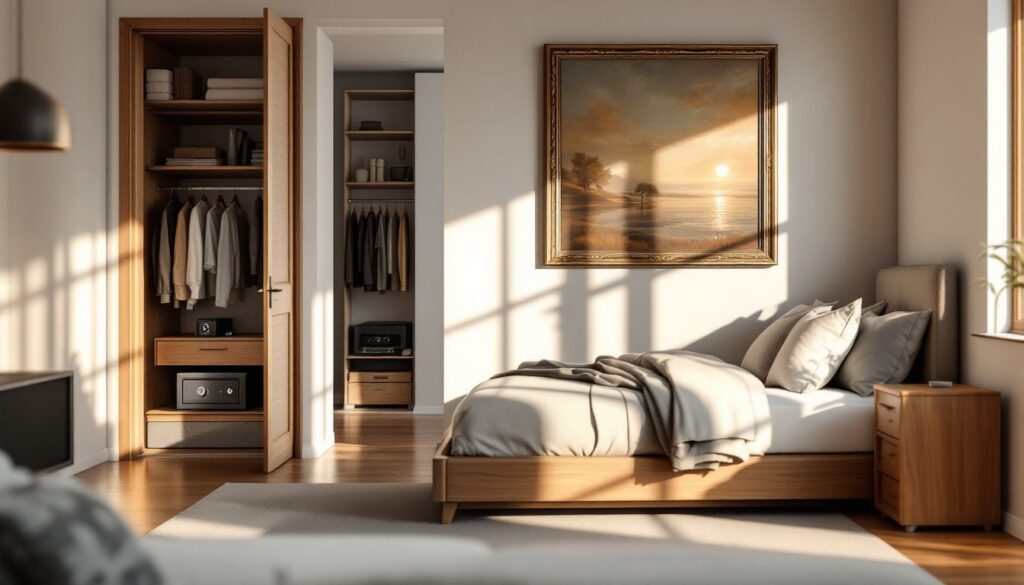
Closets are natural storage zones that already have privacy, which makes them ideal for hidden gun safes. A small safe tucked on a high shelf, behind winter coats, or inside a hollow shelf is out of sight and usually out of mind, as long as it’s anchored so it can’t be easily grabbed.
If you’re building custom closet shelving, consider framing a small, closed-off compartment at the back or top of the closet. This compartment is just large enough for a compact safe and is covered with a removable panel or hinged door that matches the rest of the closet. From the outside, it looks like a standard shelf or cabinet. Building this requires basic framing skills: 2×4 lumber, 1/2-inch plywood, and drywall screws or 2.5-inch deck screws. Frame around the safe, screw plywood backing to the frame, then cover with a false panel or door.
For simpler solutions, mount a small biometric or combination-lock safe directly to a closet wall stud at eye level or higher. Disguise it with a hanging garment bag, shelf riser, or stored luggage in front of it. Biometric safes (finger-print activated) are faster to access than combination locks in an emergency and are less likely to be guessed by an intruder.
Closets work well for handguns and light ammunition. For larger collections, consider Ana White’s DIY furniture plans, which include detailed instructions for building custom cabinetry and concealed storage. Always bolt any closet safe to the wall studs or shelving framework, a safe sitting loose on a shelf is a liability. Closet storage also keeps firearms away from guest areas, which is important if you have visitors or renters.
Conclusion
Hidden gun storage balances accessibility with security. The best option depends on your home’s layout, the size of your collection, and how quickly you need to access your firearm. Wall-mounted safes offer speed and discretion: furniture options blend in seamlessly: under-floor safes provide maximum security: and closet solutions are practical and affordable. Whichever method you choose, always bolt the safe to studs or joists, keep the combination or key in a secure place, and regularly check that locks and hinges remain tight. For comprehensive home security planning, The Spruce’s home improvement guides cover broader safety strategies worth reviewing alongside your gun storage setup. Responsible storage protects your family and your investment.