Table of Contents
ToggleA sleeper sofa sectional is one of those rare furniture pieces that earns its floor space by doing double duty, daily seating and a comfortable guest bed rolled into one. Whether you’re working with a small apartment, a multi-purpose den, or just want to maximize functionality without sacrificing comfort, a sectional sofa bed solves the eternal DIY homeowner’s puzzle: how do you host overnight guests without dedicating an entire bedroom to a furniture graveyard? Modern sleeper sectional sofas have shed their creaky, thin-mattress reputation. Today’s options offer real sleeping surfaces, smart storage solutions, and styles that actually look good in a living room. This guide walks you through the essentials, from understanding what makes a quality sectional sofa with pull out bed, to choosing the right configuration and keeping it in top shape.
Key Takeaways
- A sleeper sofa sectional solves space constraints by combining daily seating with a hidden guest bed, costing $1,200–$2,500 and requiring less floor space than a dedicated guest bedroom.
- Queen-size mattresses (60″ wide) are the practical minimum for comfortable sleeping on a sectional sofa bed, while proper measurements must account for 8 feet of wall length and 5 feet of clearance for the mattress to extend fully.
- Modern sleeper sectional sofas with steel frames, queen mattresses, and double-stitched seams outperform budget models with flimsy hinges, making mechanics and frame construction critical quality indicators.
- Fabric choice affects durability and sleep comfort—performance fabrics resist stains, microfiber is budget-friendly but pills easily, and woven fabrics breathe better for sleeping but require more maintenance.
- Weekly vacuuming, immediate spill cleanup, and a waterproof mattress protector are essential maintenance steps that protect the bed mechanism and extend mattress life significantly.
- Position your sectional sofa bed away from heating vents and ceiling fans, leave 18 inches of walkway clearance, and choose light gray or tan colors that hide dust while making small rooms feel more spacious.
What Is A Sleeper Sofa Sectional?
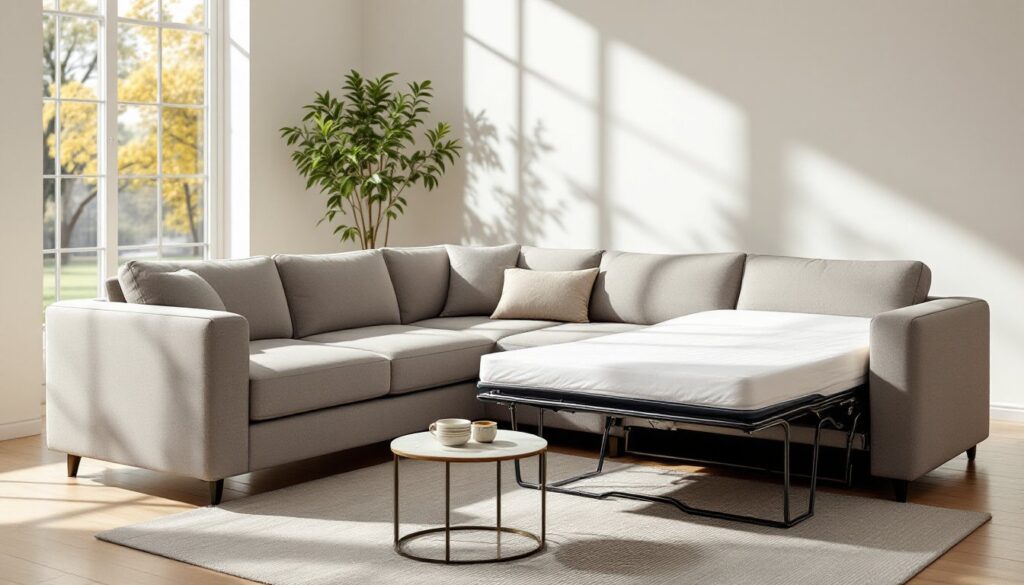
A sleeper sectional sofa is an L-shaped or multi-piece seating arrangement with a built-in bed mechanism tucked inside the seat or back. Unlike a traditional sofa bed that folds out flat, a sleeper sectional sofa gives you generous seating for everyday lounging while hiding a full or queen mattress underneath or behind a hinged frame.
The mattress types vary. Some sectional sofas with pull out beds use innerspring mattresses (firm, affordable, but heavier), memory foam (comfortable for side sleepers, though pricier), or hybrid constructions. The best sleeper sectionals feature a queen-size mattress at minimum, anything smaller than a full gets cramped for actual sleeping.
The mechanics matter. A high-quality sofa sleeper sectional uses a steel frame that pulls or folds smoothly without binding. Budget models often use flimsy hinges that fail after a few cycles. You’ll notice the difference immediately when you test it in the showroom.
Key Benefits For Modern Homes
The real draw of a corner sectional sleeper sofa is space efficiency. A traditional guest bedroom eats 10×12 feet of real estate: a sectional sofa bed sectional couch occupies the footprint of regular living room furniture. This matters in tight urban apartments or homes where every square foot counts.
Guest comfort is another win. A pull-out bed feels more like a real bed than an air mattress or futon. Overnight visitors, especially older guests or anyone with back issues, will appreciate a firm sleeping surface that doesn’t deflate mid-sleep.
Cost-wise, a quality sectional with sleeper sofa runs $1,200 to $2,500 for decent construction with a good mattress. That’s less than building out a guest room (flooring, walls, furniture, decorating) and takes up half the footprint. Flexibility is built in too. Reconfigure the seating for movie nights, work-from-home nooks, or actual sleeping without changing the room’s footprint.
How to Choose the Right Style and Size
Start with your actual floor dimensions. Measure the wall where you plan the sectional sofa bed with storage setup, and don’t forget doorways, windows, and heating vents. An L-shaped sectional needs at least 8 feet along one wall and 6 feet along the other: anything tighter and it won’t fit without blocking traffic flow.
Width matters for sleeping. A queen mattress (60″ wide) is the practical minimum for comfortable overnight use. Full mattresses (54″ wide) work if you’re the only regular sleeper: couples should stick with queens or look for sectionals offering queen-size sleeping surfaces.
The chaise configuration affects both seating and sleep comfort. A right-facing chaise (armrest on the right) suits rooms where you approach from the left. A left-facing setup reverses this. Some sectional with sleeper sofa models let you swap the chaise side: others don’t. Know before buying.
Configuration Options
L-shaped sectionals are the most common. The chaise end pulls or rolls to reveal the mattress underneath. You lose the chaise temporarily, but the sleeping surface is usually queen-sized and centered, so both people have equal space.
Modular sectionals (separate pieces that connect) offer flexibility. You can rearrange them later if your room layout changes. The downside: more moving parts means more potential points of failure. Inspect the connector hardware carefully.
Sleeper loveseats (two-seat sectionals with a pull-out bed) suit smaller spaces. Expect a full mattress, not queen, and you sacrifice some seating depth for the bed mechanism. Test the transition from sofa to bed in-store: some models have a pronounced lip or gap that creates an uncomfortable sleeping surface.
Roomier configurations with built-in storage (a sectional sofa bed with storage feature) let you stash bedding, guest linens, or seasonal items beneath the seat cushions or in a compartment. This adds functionality but also weight and cost.
Upholstery and Durability Considerations
Fabric choice determines how long your sectional sofa sleeper couch actually lasts. Microfiber is affordable, stain-resistant, and family-friendly, but it pills easily and shows wear quickly under heavy use. Microsuede hides stains better but costs more.
Woven fabrics (cotton blends, linen, performance fabrics) breathe better for sleeping but stain more easily. If you have pets or young kids, a performance fabric, often marketed as pet-proof or stain-resistant, costs 20-30% more but justifies it. High-end names like Crypton or Sunbrella offer solution-dyed synthetic fabrics that resist fading and repel liquids.
Leather is durable and easy to clean, yet it’s cold to sleep on and expensive. Faux leather avoids those issues but can crack over time, especially in temperature swings.
The frame underneath is where long-term durability lives. Solid hardwood or engineered wood beats MDF or particle board every time. Check the manufacturer’s spec sheet: if they don’t list the frame material, that’s a red flag. A reinforced eight-way hand-tied spring system costs more upfront but supports the mattress and extends its life significantly compared to sinuous springs or foam alone.
Seam strength matters too. Double-stitched seams hold up better than single-stitch, especially where the chaise connects to the main sofa.
Placement Tips and Room Layout Ideas
Position your sectional sofa bed sectional couch to maximize natural light and minimize foot traffic through the seating area. Placing it opposite a window or TV works well: avoid positioning it under a ceiling fan or near heating vents that’ll make sleeping uncomfortable.
Leave 18 inches of clearance in front of the sofa for walking and setting down a coffee table. If the chaise pulls out into the bed position, you need at least 5 feet of clear floor space extending from the chaise end for the mattress to lie flat. Measure this before purchase: it’s the most common “doesn’t fit” mistake homeowners make.
Flooring underneath matters. A low-pile rug or hard surface is easier to clean if spills happen. High-pile carpet or jute rugs can snag the fabric or hide dust/debris that accumulates under a sectional, important since it’s heavy and doesn’t move often. For inspiration on how sectionals fit into modern room layouts, Houzz showcases thousands of real living rooms where homeowners integrate corner sectional sleeper sofas alongside existing décor.
Room color plays a subtle role. A light gray or tan sectional works with most palettes and hides dust: darker fabrics show every speck. If the room is small (under 250 square feet), a sectional with a lower profile and exposed legs makes the space feel less cramped than a model that sits flush to the floor.
Clarity on guest comfort matters here too. Test the mattress firmness yourself. What feels comfortable for a weekend visit might be too soft or too hard for you at 2 a.m. when you’re sleeping on it. Many showrooms let you lie down and test: if not, ask about return policies or trial periods before committing.
Maintenance and Care for Long-Lasting Use
Vacuum weekly with an upholstery attachment to prevent dust and crumbs from settling into seams and the bed mechanism. Don’t skip the crevices where the mattress folds into the frame, lint and debris there accelerate wear on moving parts.
Spill cleanup is immediate. Blot (don’t rub) with a clean, damp cloth. If it’s water-soluble, cool water usually works: for grease or wine, a fabric-safe cleaner applied sparingly does the job. Always test the cleaner on a hidden corner first. Strong solvents can discolor or damage certain fabrics.
When guests sleep on it, put a waterproof mattress protector underneath. A quality protector costs $50-100 and guards against accidents, dust mites, and moisture. This is the single best investment you can make for mattress longevity.
Rotate cushions monthly if the manufacturer allows it. This distributes wear and prevents one section from compressing prematurely. For the bed itself, use the same logic: change sleeping positions if you use it regularly, or at minimum flip the mattress every three to six months, check the mattress tag for specific guidance.
Operate the bed mechanism gently. No slamming or forcing. If it sticks or binds, check for debris in the tracks and apply a silicone-based lubricant (furniture wax spray works too). Never use WD-40 or oil: these attract dirt and gunk up the mechanism.
For styling and practical organization once your sectional is in place, Young House Love offers budget-friendly decoration ideas and DIY furniture care tips. If you’re planning a bigger room refresh, HGTV features design segments on making sectional sofas a room’s anchor piece.
Winter storage requires care. If you’re closing up a seasonal home, leave the bed mechanism in the closed position, cover the sectional with a breathable cloth (not plastic, which traps moisture), and ensure the space stays dry. Moisture and mold are the real killers for upholstered furniture.