Table of Contents
ToggleClutter has a way of creeping into every corner of a home, closets, garages, pantries, and spare rooms. Stackable open front storage bins have become a game-changer for homeowners tired of digging through boxes or wasting shelf space on opaque containers. Unlike closed storage, open front bins let you see exactly what’s inside at a glance, making them ideal for frequently accessed items. They stack efficiently to maximize vertical space, fit standard shelving units, and come in enough styles and materials to work in just about any room. Whether you’re organizing a kids’ craft station, a garage workshop, or a pantry, these bins offer a practical, affordable way to reclaim order without the headache of a full renovation.
Key Takeaways
- Stackable open front storage bins eliminate the frustration of opaque containers by letting you see exactly what’s inside at a glance, making them ideal for frequently accessed items in kitchens, garages, pantries, and bedrooms.
- Choosing the right material matters—plastic bins are durable and affordable (lasting 5–10 years), while wood or bamboo offer aesthetics but require moisture protection, and fabric bins work best for lightweight, decorative storage only.
- Proper stacking strategy requires placing heavier bins on lower shelves, limiting stacks to 2–3 bins with heavy loads, and ensuring shelves can support at least 50 pounds for standard medium-size plastic bins.
- A clear labeling system with a label maker or permanent marker prevents clutter from returning and ensures family members know where items belong, making organization maintainable long-term.
- The 80/20 rule keeps frequently used items at eye level to waist height while seasonal or overflow items go higher, maximizing both accessibility and vertical space efficiency.
Why Stackable Open Front Bins Are Perfect for Modern Home Storage
Open front bins solve one of the biggest frustrations with traditional storage: you can’t see what’s inside without opening or removing the container. When bins are stacked three or four high, a closed design forces you to pull out the top bin just to peek at what’s in the middle. Open front bins eliminate that friction. You grab what you need without disturbing the rest of the stack.
They’re also modular, meaning you can buy one or two bins now and add more as your storage needs expand. This flexibility is perfect for DIYers who test a system before committing to a full overhaul. Unlike built-in shelving or cabinetry, bins don’t require installation, just place and stack. If you move or redesign a room, the bins move with you.
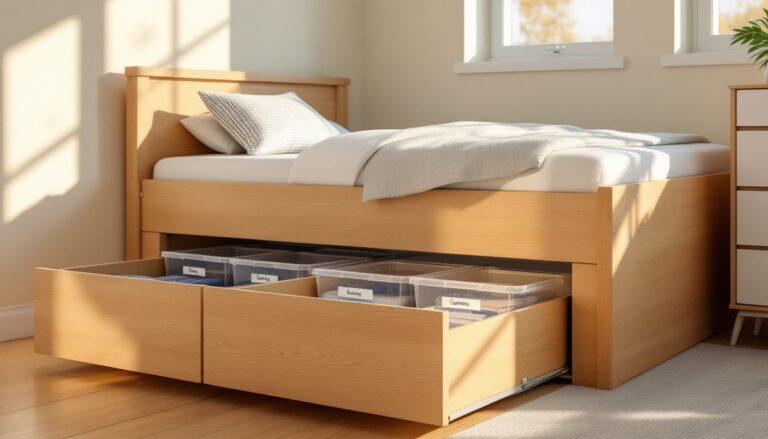
Versatility is another major draw. Open front bins work in kitchens for snack storage, bedrooms for seasonal clothes, garages for small tools and supplies, and nurseries for toys. They’re equally at home in a mudroom, craft room, or laundry area. Home organizers and storage experts frequently recommend open bins because they encourage accountability, when items are visible, family members are more likely to return things to their designated spot.
Choosing the Right Size, Material, and Style for Your Needs
Bin sizing matters more than most people realize. Standard dimensions fall into a few categories: small (roughly 10×6×5 inches for pens, small hardware, or accessories), medium (around 14×8×6 inches for pantry items or folded clothes), and large (18×12×8 inches or bigger for bulkier supplies). Before buying, measure your shelf depth and height to ensure bins fit comfortably with room to pull them out.
Consider what you’re storing too. Heavy items like tools demand durable plastic or reinforced wood bins with solid bottoms. Lightweight items like scarves or kitchen linens can go in thinner plastic or fabric options. Don’t stack lightweight bins under heavy loads, the bottom ones may warp or crack over time.
Material Options and Durability Considerations
Plastic bins dominate the market for good reason. Polypropylene or high-density polyethylene resists moisture, cleans easily, and costs less than alternatives. Clear or translucent plastic lets you see contents without opening the bin, but colored or opaque plastic hides dust and looks cleaner on open shelves. Plastic bins typically last 5–10 years with normal use.
Wood or bamboo bins offer a warmer aesthetic that suits living spaces better than plastic. Bamboo is lightweight and naturally antibacterial, making it great for kitchen or kids’ areas. But, wood absorbs moisture, keep these bins away from sinks, humidifiers, or damp areas like basements. They also cost more (roughly double plastic) and require occasional oiling to prevent splintering.
Fabric or woven bins (canvas, felt, or wicker) look stylish in bedrooms and living rooms but struggle in moisture-prone areas. They don’t stack as securely as rigid bins and don’t withstand heavy loads as well. Reserve these for decorative storage of lightweight items.
Color and style should match your room’s design, but remember that open storage is visible storage. Neutral colors (white, gray, natural wood) stay timeless. Bright colors work in kids’ rooms but may feel dated or cluttered in other spaces. Match the number of colors, too many different colors or styles makes shelves look chaotic.
Practical Organization Ideas for Every Room
The real payoff from stackable bins comes when you have a system. A bin without a purpose becomes just another place clutter hides. Start by identifying what you want to store in each location, then choose bins sized and labeled accordingly.
Kitchen, Pantry, and Garage Solutions
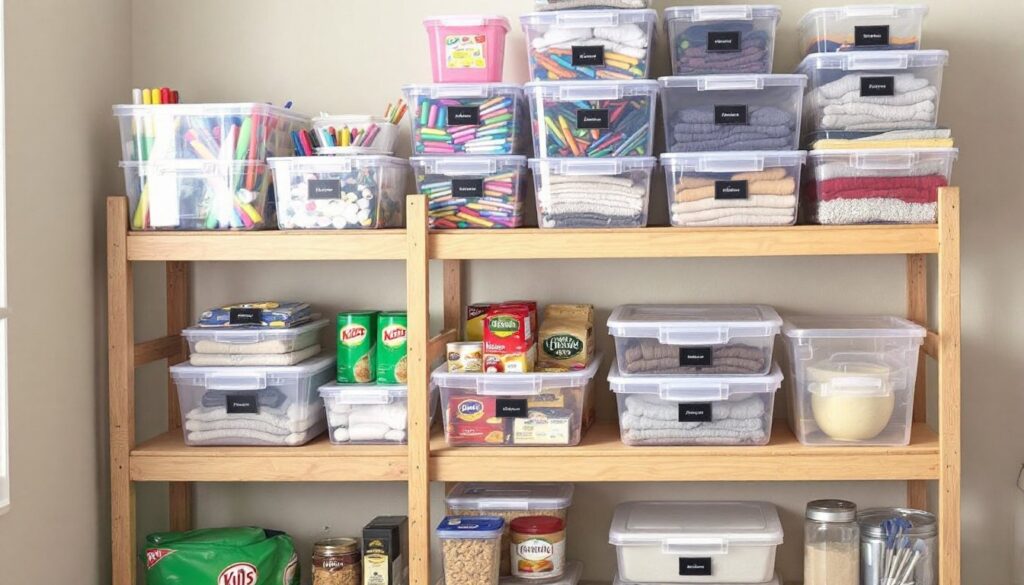
Pantries benefit massively from open front bins. Use medium-sized plastic bins for dry goods like pasta, rice, flour, and baking supplies. Group similar items, all breakfast cereals in one bin, all snack bars in another. Label bins clearly so family members know where to find items and where to return empties. In a small pantry, stack two or three bins per shelf to maximize vertical space. Deep bins work better than shallow ones here because you can layer items front-to-back without losing visibility.
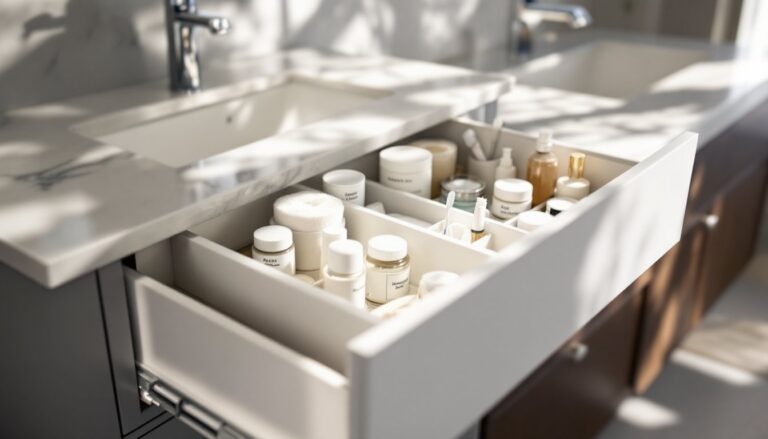
Kitchens with under-sink or open shelving can use smaller bins for organizing dish towels, cleaning supplies, or pet food. Keep cleaning products in a separate bin away from food storage, and consider a bin with a handle for easy pulling, wet hands are common in kitchens.
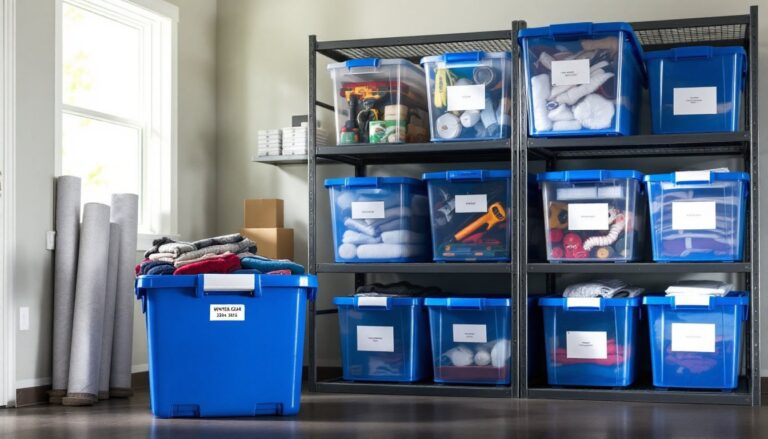
Garages are where open bins really shine. Use large bins for seasonal décor, holiday lights, or garden tools. Hang labels on each bin so you can spot what you need without pulling everything apart. Keep frequently used items (fasteners, basic hand tools) in medium bins at eye level: store bulkier seasonal items higher or lower. A workshop corner benefits from several small plastic bins organized by category, one for screws, one for nails, one for bits, one for fasteners. Martha Stewart’s home organization guides often emphasize sorting by function rather than by room, and that rule applies perfectly to garage bins.
For any room, the 80/20 rule helps: 80% of what you use should be easily accessible (eye level to waist height), and 20% of overflow or seasonal items can go higher or lower. Open front bins make that organization visible and maintainable.
Installation and Stacking Tips for Maximum Efficiency
Stackable bins don’t require installation in the traditional sense, but placement and stacking strategy matter. Start by confirming your shelves can handle the weight. A standard metal or wood shelf rated for 50 pounds should support several medium-size plastic bins: heavier materials like full wooden bins or loaded plastic crates need more robust support. If you’re building shelves specifically for bins, use at least 3/4-inch plywood and support it with studs or a sturdy frame every 24 to 36 inches.
When stacking, place heavier, denser bins on lower shelves and lighter ones on top. Make sure the bottom bin has a flat, stable surface, a warped or dented bin won’t support upper bins safely. Don’t overfill upper bins: a top-heavy stack becomes unstable. Most plastic bins are designed to stack 4–5 high, but that assumes even weight distribution. With groceries or tools, you’re better off stacking only 2–3 bins to avoid pressure on the bottom bin’s walls.
Angled shelves or tilted unit designs (common in retail) work well for open front bins but require careful measurement. The slope must be shallow enough (usually 10–15 degrees) that items don’t slide out. If your shelf isn’t designed for an angle, don’t force it, standard horizontal stacking is safer and more practical at home.
Label every bin clearly, even if contents seem obvious. Use a label maker, printed labels, or a permanent marker. Include what’s inside and, if helpful, when it was last used (useful for seasonal items). Labeling takes 10 minutes per shelf but saves hours of searching later. Home improvement best practices consistently emphasize labeling as the one habit that keeps systems from reverting to chaos.
Conclusion
Stackable open front storage bins are one of the highest-return, lowest-effort storage upgrades a homeowner can make. They cost little, require no tools or expertise, and adapt to almost any space. The key is choosing the right size and material for your use case, setting up a logical organization system, and committing to labels and maintenance. Start small, organize one shelf or one closet with bins, then expand once you see the system working. That simple approach turns chaotic storage into a functional, visible, and genuinely maintainable part of your home.