Table of Contents
ToggleA king size bed dominates a master bedroom, so why not make it work harder? A wood bed frame with built-in storage solves the eternal problem: clutter. Whether you’re storing seasonal bedding, extra pillows, or items you rarely use, a king size wood bed frame with storage tucked underneath or integrated into the frame keeps everything accessible without sacrificing floor space. This guide walks you through what’s available, how to pick the right one, and what to expect during setup.
Key Takeaways
- A king size wood bed frame with storage maximizes bedroom space by reclaiming floor real estate while replacing a separate dresser or cabinet, costing $500–$1,200 versus $400–$800 for standalone furniture.
- Solid wood frames outlast particleboard alternatives and support a king mattress with capacities of 300–500 lbs. total load, making them ideal for long-term durability without flex or noise.
- Choose between under-bed drawers (hidden, organized, hold 30–50 lbs. each), platform beds with shelving (stylish, flexible, ideal for baskets), or hybrid designs depending on whether you need concealment or display.
- Material quality significantly impacts price and longevity: solid wood costs $1,500–$3,000+ but lasts decades, while plywood-core frames with hardwood veneers offer excellent value at $600–$1,200.
- Proper assembly requires clearing the floor, reading the manual twice, confirming smooth drawer operation, and using a level to ensure shelves sit flush before loading, preventing premature wear on hardware.
- Wood species and finishes define style: oak suits farmhouse ($800–$1,500), cherry complements traditional rooms ($1,200–$2,000), walnut delivers modern sophistication ($1,500–$2,500), and lacquer or polyurethane finishes eliminate maintenance compared to natural oils.
Why Choose A Wood Bed Frame With Built-In Storage
King size bedrooms rarely have wasted real estate. Every square inch counts, especially when closet space is limited or you live in an older home without built-in cabinetry. A wood bed frame with storage lets you reclaim floor space by tucking items where the bed already sits.
Wood construction offers longevity over particleboard alternatives. Solid wood or quality plywood-core frames support a king mattress (76″ × 80″) without flex or noise over years of use. Storage-equipped frames typically handle 300–500 lbs. total load (mattress plus contents), which matters when you’re stacking linens or winter gear.
Cost is another factor. A dedicated dresser or low storage cabinet might run $400–$800: many king bed frames with drawers or shelving cost $500–$1,200, replacing furniture and the bed in one purchase. Style-wise, wood adapts to any bedroom aesthetic, farmhouse, modern, mid-century, or traditional, without the plastic feel of metal frames.
Types Of King Size Wood Bed Frames With Storage
Under-Bed Drawer Systems
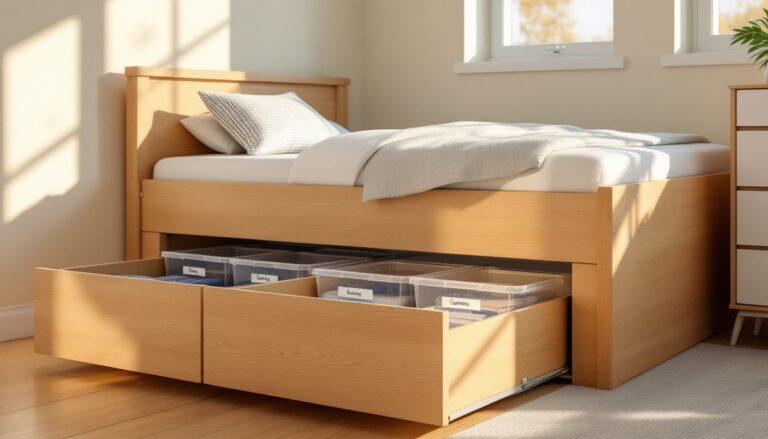
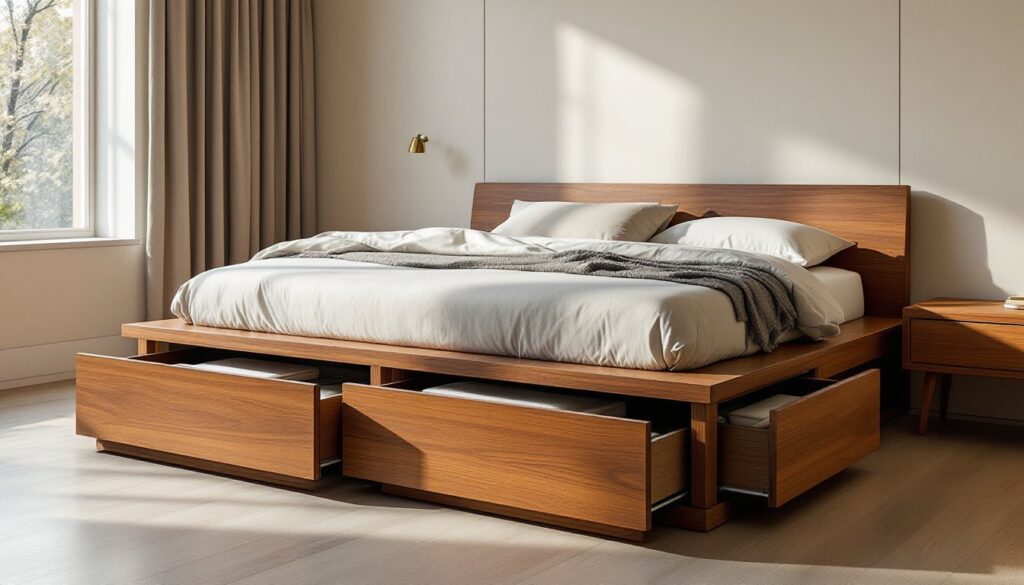
Drawers mounted beneath the frame slide out on heavy-duty ball-bearing glides. Most king frames offer two to four drawers, each holding roughly 30–50 lbs. of storage. Heights typically run 12–18 inches from floor to mattress, providing clearance for standard drawer box depth (8–12 inches).
Advantages: drawers hide clutter completely, organize items by category, and you needn’t remove the mattress to access them. Disadvantages: you can’t store tall items, and dust buildup requires periodic vacuuming. Ensure the frame includes quality glides rated for repeated opening and closing: cheap hardware fails within a year.
Platform Beds With Integrated Storage
Platform frames feature a solid or slatted base that spans the entire frame, sometimes incorporating shelving, cubbies, or open-shelf storage on the headboard or footboard. Some designs include a shelf unit built into one side, mimicking a nightstand and storage bench combined.
Platform beds support the mattress directly, you don’t need a box spring, saving height and cost. They’re ideal if you prefer an industrial or contemporary look. Open shelving works well for baskets or decorative storage boxes, though items are visible. If you want concealment, look for frames with cabinet doors or drawer units integrated into the base itself. A Metropolitan Home Storage Bed exemplifies this hybrid approach, combining stylish storage with functional bedroom furniture.
How To Select The Right Frame For Your Bedroom
Start with measurements. Confirm your room’s floor dimensions and doorway width, a king frame is 76″ wide and up to 80″ long (plus a few inches for the headboard), and you’ll need at least 24″ on two sides for walking clearance. Check ceiling height if the headboard has a tall back.
Next, assess your storage needs. Storing seasonal items? Drawers work. Displaying baskets and bins? Open shelving. Both? Hybrid frames exist but cost more and occupy more floor space. Consider what you’re storing: heavy winter coats suit sturdy drawers with high load ratings: lightweight linens fit open shelves.
Material quality matters. Solid wood (oak, cherry, walnut) lasts decades but costs $1,500–$3,000+. Plywood-core frames with hardwood veneers cost $600–$1,200 and look indistinguishable if well-finished. Avoid particle board in bed frames, it sags under a king mattress’s weight. Check weight capacity: reputable makers list load limits. A 500-lb. capacity isn’t excessive for a king frame stuffed with storage.
Read assembly requirements honestly. Some frames require two people and 4–6 hours: others need an electrician or carpenter if they involve custom finishes or structural modifications. Budget time and help before purchase.
Design Styles And Wood Options To Match Your Décor
Wood species set the tone. White oak and red oak have bold grain, work in farmhouse or rustic schemes, and cost moderately ($800–$1,500 for a king frame). Cherry offers warm reddish tones, suits traditional rooms, and runs $1,200–$2,000. Walnut delivers dark sophistication, fits modern or contemporary settings, and commands $1,500–$2,500. Cheaper frames use birch or rubberwood with stain, looking fine if the finish is smooth and even.
Finishes matter as much as wood. A natural oil finish feels warm but requires maintenance (occasional recoating). Lacquer or polyurethane provides durability and sheen without upkeep, ideal for active households. Matte finishes hide dust better than gloss: satin splits the difference.
Style intersects with storage. Drawers under a mission-style frame (straight lines, recessed panels) look coherent, while drawers on a low-profile modern frame echo Scandinavian or mid-century design. Platform beds with open shelving suit industrial lofts: frames with ornate headboards pair with carved storage cubbies in traditional bedrooms. Project guides on platforms like Instructables show how finishes and hardware, wood knobs vs. brushed steel pulls, shift a frame’s personality entirely.
Assembly And Setup Tips For Maximum Functionality
Preparation begins before the first screw. Clear your bedroom floor completely and lay down a clean tarp or blanket to protect the frame finish during assembly. Identify all hardware, screws, dowels, and panels before starting, missing pieces mean delays.
Read the manual twice. Seriously. Bed frame manuals often show ambiguous illustrations: a second read catches which end is the head vs. foot, where supports go, and whether slats or a box spring belong underneath.
Assembly order: build the headboard and footboard panels first, then attach side rails. Drawer frames slide in last. Use a power drill with the correct bit size, stripped screw holes are hard to fix. Tighten fasteners firmly but don’t over-torque: wood can crack or strip.
Once assembled, don’t place the mattress immediately. Slide drawers in and out a few times, confirm smooth operation, and check that shelves are level using a 2-foot level. Wobbly shelves distribute load unevenly and wear ball-bearing glides prematurely. If the frame sits uneven, shim one or two legs with thin hardwood shims under the base until everything sits flush.
Loader capacity tips: don’t cram drawers past their limit. A drawer rated for 40 lbs. will bind and fail if stuffed with 60 lbs. Distribute weight across drawers rather than loading one heavily. Resources like Fix This Build That offer detailed woodworking setup guides if you’re building from scratch or customizing an existing frame. If you’re unsure about structural integrity or load ratings, a brief consultation with a furniture maker or carpenter costs little and prevents costly mistakes. And if you find yourself considering a custom build, explore simple storage bed designs with free plans that are genuinely beginner-friendly.