Table of Contents
ToggleA storage queen bed frame does more than just hold a mattress, it reclaims valuable square footage in bedrooms where every inch counts. Whether you’re furnishing a tight master suite, a guest room, or a studio apartment, underbed storage transforms wasted space into functional real estate for seasonal items, extra linens, or off-season gear. This guide walks through the types of storage queen bed frames available, how to select the right one for your space and lifestyle, and practical tips for installation and organization that actually work. If you’ve ever struggled to fit everything into your bedroom closet, you’re about to discover why storage bed frames have become a smart upgrade for modern homes.
Key Takeaways
- A storage queen bed frame reclaims 60 to 80 cubic feet of underbed volume—equivalent to a small closet—without consuming additional wall or floor space in tight bedrooms.
- Drawer-style storage offers easy access for frequently used items, while built-in shelving works best for tight quarters and rotating seasonal bins; choose based on your access patterns and available floor space.
- Solid wood frames rated for 1,000+ pounds and lasting decades are worth the upfront investment compared to budget metal or particleboard options that flex and limit load capacity.
- Proper leveling with a 4-foot level, secure drawer slides, and wall-bracing for tall designs ensure your storage bed frame remains stable, functional, and safe for years.
- Labeling bins clearly, using uniform containers, and maintaining a simple inventory system—like phone photos of bin labels—transforms underbed storage from chaotic catch-all into organized, retrievable space.
Why Storage Bed Frames Are Game-Changers for Small Bedrooms
A standard queen bed consumes roughly 80 square feet of floor space. Now add nightstands, a dresser, and a closet, and most bedrooms are already cramped. A storage queen bed frame eliminates the need for a bulky under-bed storage container or additional furniture by integrating storage directly into the bed’s structure.
The math is simple: a queen bed with 12 to 16 inches of clearance underneath holds anywhere from 60 to 80 cubic feet of volume, equivalent to a small closet. That’s room for bedding sets, off-season clothing, board games, photo boxes, or luggage without taking up wall or floor space.
Beyond square footage, storage beds reduce clutter visibility. A storage chest or plastic bins under the bed aren’t just unsightly: they collect dust and create obstacles when you need to sweep or vacuum. Integrated drawers or shelving keep contents contained and protected while maintaining sight lines that make small rooms feel bigger.
For families managing hand-me-downs, seasonal decor, or shared guest-room duty, a storage queen bed frame pays for itself in peace of mind and convenience.
Types of Storage Queen Bed Frames to Consider
Drawers Underneath vs. Built-In Shelving
The two main configurations each have trade-offs worth understanding before you buy or build.
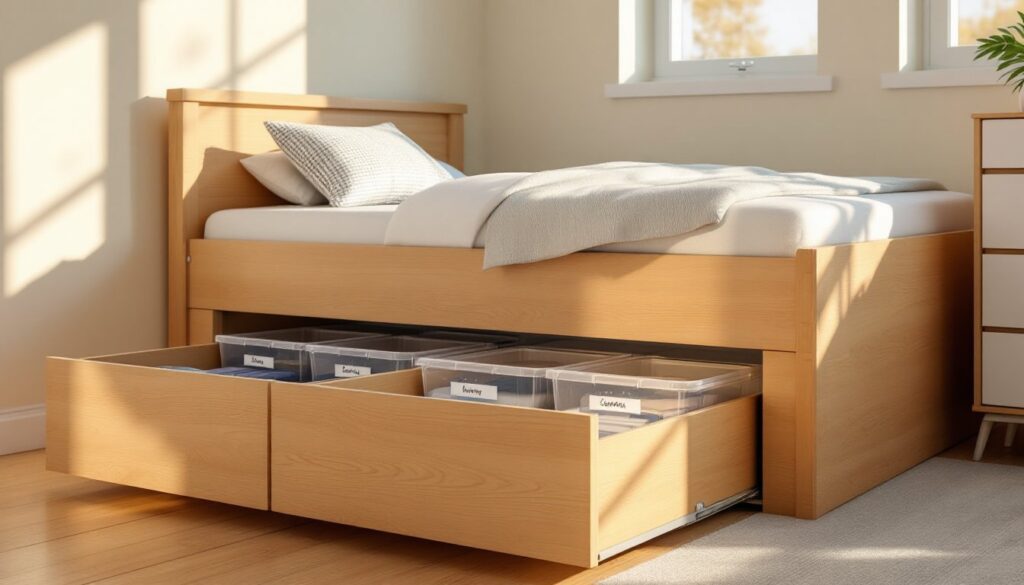
Drawer-style storage is the most common. Drawers sit on ball-bearing slides or simple wood runners beneath the platform and roll out for easy access. Depths typically range from 12 to 20 inches. The advantage is simplicity, you grab what you need and slide it back. Drawers work best for items you access regularly: extra pillows, blankets, or off-season clothes. The catch: full-extension drawers take up floor space when open, and shallow drawers limit what fits inside. If you plan to store heavy items like textbooks or tools, verify that the frame and slides are rated for the weight you’ll load, many budget frames max out around 50 pounds per drawer.
Built-in shelving or cubbies provide open compartments where you can see contents at a glance. These frames are typically lower-profile and work well in tight quarters because they don’t require pull-out space. Shelving is ideal for rotating storage, pulling out one bin at a time rather than drawers. The trade-off is dust accumulation on open shelves and fewer weight limits if the design uses thin plywood.
A third, less common option is a hybrid frame combining a small drawer or two with open shelving below. These work for people who want quick-access storage (drawer) plus seasonal overflow (shelf).
Consider your most-used items, floor space, and how often you’ll access underbed storage when deciding which type suits your bedroom.
How to Choose the Right Storage Queen Bed Frame for Your Space
Start with your bedroom layout. Measure the floor space available, not just the footprint you think you need. A standard queen mattress is 60 inches wide by 80 inches long (actual dimensions). Add frame depth, typically 8 to 12 inches on three sides, and confirm clearance around doors, windows, and dressers. In tight rooms, pushing the bed against a wall saves walking space.
Next, assess your ceiling height and mattress. If you have 8-foot ceilings and plan to use a thick mattress (12 inches or more), the underbed storage opening shrinks significantly. Measure from the floor to your mattress bottom when placed on the frame to understand usable height. Many storage frames sit 12 to 16 inches high, meaning you’ll need roughly a 16- to 20-inch clearance to access and pull out drawers comfortably.
Think about weight and durability. A solid wood frame (oak, pine, or hardwood plywood) costs more upfront but handles 1,000+ pounds and lasts decades. Budget metal or particleboard frames are cheaper but flex under mattress weight and may not support heavy contents long-term. Check the frame’s weight rating and read reviews about long-term durability.
Finally, decide: Buy or build? Pre-assembled frames from furniture stores are convenient but often cost $400 to $1,200 for quality. DIY plans, available free or for $20 to $50, let you use wood you choose and customize dimensions. Woodworking resources like Ana-White’s classic storage bed plans provide step-by-step instructions for building a sturdy queen frame with cubby storage from dimensional lumber.
DIY Installation and Setup Tips
If you’re assembling a flat-pack frame or building from scratch, follow these steps to ensure stability and safety.
Prep your space. Clear the bedroom floor and lay down a protective cloth or cardboard to avoid damaging flooring. Assemble the frame on the floor before moving it into position, attempting to assemble it in place invites mistakes and frustration.
Check for level. Before adding the mattress, place the assembled frame in its final location and use a 4-foot level to verify it sits evenly. Uneven frames lead to drawer binding and mattress rolling. Use shims, thin plastic wedges or wood shingles, under frame legs to level if your floor slopes. This is tedious but critical.
Install drawers or shelving carefully. If using drawer slides, ensure they’re fully engaged in their tracks and test them without weight first. Open and close each drawer a few times to confirm smooth operation. If you notice resistance, stop and check for misalignment, don’t force it, as this damages the slides.
For built-in shelving, verify shelves are secured to the frame with screws or dowels rated for your intended load. A 20-inch-deep shelf holding a tote of winter clothes, blankets, and storage boxes easily exceeds 100 pounds: undersized fasteners will sag or fail.
Secure the frame to the wall if it’s a tall design or sits in a household with children. Use L-brackets and wall anchors, especially important if the frame has a high center of gravity. Check local building codes: some jurisdictions require wall-securing for beds over a certain height.
Once assembled, test the entire structure. Push firmly on all corners and edges to detect wobble or creaks. A solid frame should feel immobile. If you hear popping or feel movement, tighten all bolts and fasteners before loading it.
Styling and Organizing Your Underbed Storage
Underbed storage only works if you can find what you need. Organization prevents turning your storage space into a catch-all graveyard.
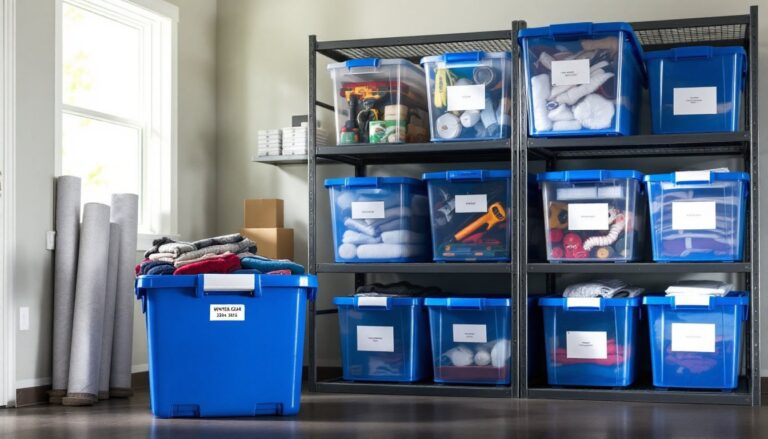
Label everything clearly. Use a permanent marker on storage bins or hang adhesive labels on drawer fronts. Write not just what’s inside (e.g., “Winter Coats”) but also the season or date. This sounds obvious, but the moment you forget what’s in a bin is the moment you buy duplicates.
Use uniform containers. Mismatched plastic bins look sloppy and make stacking awkward. Invest in 2 to 4 matching clear plastic bins, clear so you see contents without opening, in sizes that fit your drawer or shelf dimensions. Standard tote sizes (27×18×12 inches) fit most underbed storage: measure yours before buying.
Rotate seasonal items systematically. Pack away off-season clothing, holiday decor, or sports gear in labeled bins at the start and end of each season. Establish a simple rule: one bin per category, or a maximum of three bins per drawer. This prevents overstuffing and makes swapping quick.
For drawers specifically, avoid overloading. A 50-pound weight limit is common: distribute weight evenly and don’t stack bins on top of items already in the drawer. Heavy items like textbooks belong on lower shelves, not stacked high, to maintain center of gravity.
Create a simple inventory. Snap a phone photo of bin labels and store them in a note app. Takes 30 seconds, saves 30 minutes of searching later. Resources like The Handyman’s Daughter and Fix This Build That offer practical organization tips for DIY projects and home storage systems.
Conclusion
A storage queen bed frame solves the bedroom storage puzzle by converting wasted underbed space into functional capacity. Whether you buy a pre-made frame or build one using plans and standard lumber, the key is choosing a design that fits your space, load requirements, and access patterns. Proper installation, leveling, securing slides, wall-bracing where needed, ensures durability and safety. Once in place, simple organization with labeled bins and a rotation system keeps everything findable and protects your investment. In a 2026 bedroom, wasted space isn’t an option. A storage queen bed frame delivers practical storage without sacrificing style or floor space.